Property acquisition procedure in Thailand, what you need to know
- What buying real estate in Thailand means for a foreigner
- What a foreigner can buy and what they cannot
- Ownership structures for foreigners
- Freehold: full ownership of a condominium unit
- Leasehold: 30‑year lease
- What to require in a leasehold contract
- Purchase through a Thai legal entity
- Comparison of the three structures
- The 49% quota: how it works and how to verify it
- Regions: where foreigners buy
- Step‑by‑step transaction procedure
- Step 1. Property reservation
- Step 2. Due diligence on the property and transaction
- Step 3. Main contract
- Step 4. Payment
- Step 5. Registration of title at the Land Department
- Remote transaction
- Transaction costs
- Registration fees
- Other buyer costs
- Installments and financing for foreigners
- Does owning real estate give the right to live in Thailand
- Investment visa for real estate from 3 million baht
- Alternatives: LTR and Privilege
- What becomes the owner's obligation
- Annual land and building tax
- Recurring payments
- Questions and answers
- Can a foreigner buy land in Thailand under any circumstances?
- Can a condominium unit or house be registered in the name of a Thai spouse?
- How much did foreign demand decline in 2026?
- Do I need to pay taxes in Thailand if I rent out my condominium unit?
- Should I wait for reforms on the quota and lease term before buying?

This material covers what a foreigner is entitled to buy and under what terms, the three ownership structures and their costs, the step‑by‑step transaction procedure with timelines and documents, a full cost and tax breakdown, as well as the visa implications of the purchase.
The rules for foreign buyers in Thailand do not change often, but over the past year and a half, three pillars of the market have shifted at once. In March 2025, the Supreme Court declared the "30+30+30" structure void — the scheme on which villa sales had been built for decades. In October 2025, an official link between "condominium purchase" and "long‑term visa" appeared for the first time. In the summer of 2026, the concession on registration fees was extended, but it still does not apply to foreigners. A significant portion of Russian‑language materials describe the rules that were in effect before these changes, which is why we address each of them separately with a reference to the source document.
Thailand remains the most popular market in Southeast Asia for foreign buyers, and demand is highly concentrated: over 60% of all foreign condominium transactions are in Phuket and Pattaya, with Bangkok as the third center.
The data is current as of July 2026. Sources: Real Estate Information Center (REIC), Supreme Court of Thailand, Immigration Bureau, Department of Business Development.
What buying real estate in Thailand means for a foreigner
A foreigner in Thailand cannot own land. This is a direct provision of the Land Code, and there is no legal way around it — not through a visa, not through the amount of investment, not through marriage to a Thai citizen. Everything else derives from this prohibition: a condominium unit can be held in full freehold ownership, a house can be owned, but the land beneath it — only leasehold.
The scale of the market is nonetheless significant. In 2025, foreigners acquired ownership of 14,899 condominium units worth 60.92 billion baht. The number of units rose by 2.2%, while total value fell by 10.7% — buyers shifted to a lower‑priced segment, with the average transaction dropping to 4.1 million baht (approximately $117,000). The foreign share accounted for 14.7% of all transferred condominium units and 25% of the monetary turnover.
Russians hold a stable position in this statistic. In 2025 — 1,172 units (+8.6% from 2024) worth 4.77 billion baht (+30.3%). In the first quarter of 2026, Russians moved up to second place among all foreign buyers, surpassing Myanmar: 383 units, a 33% increase amid a 17.3% market decline. On Phuket, Russians accounted for 44% of the total value of all foreign condominium transactions.
What a foreigner can buy and what they cannot
| Property type | Freehold ownership | Leasehold | What to know |
|---|---|---|---|
| Condominium unit | yes, within the 49% quota | yes, if the quota is full | the only property type with full freehold ownership for a foreigner |
| Apartments (not condominium) | no | yes | the building is not registered under the Condominium Act — no quota at all |
| House, villa, townhouse | building only | land — leasehold only | the building and the land are registered separately, under two documents |
| Land plot | no | yes, up to 30 years | exception — a 40 million baht investment in approved assets with ministerial permission |
Ownership structures for foreigners
Freehold: full ownership of a condominium unit
Freehold is perpetual ownership with the right to sell, gift, and bequeath the property. For a foreigner, it is available only in a condominium — that is, a building registered under the Condominium Act B.E. 2522.
A mandatory requirement: the funds must come into Thailand from abroad in foreign currency. The receiving Thai bank issues an FET (Foreign Exchange Transaction Form) certificate, without which the Land Department will not register the transfer of ownership. The transfer must be made in the buyer's name with the payment purpose stated — the purchase of the specific unit.
Leasehold: 30‑year lease
Leasehold is a registered lease agreement under Section 540 of the Civil and Commercial Code. The maximum term is 30 years. Leases longer than three years must be registered at the Land Department (Section 538); otherwise, they are valid for only three years.
The most significant change in recent years. On March 18, 2025, the Thai Supreme Court issued ruling No. 4655/2566 in a Phuket case and declared the "30+30+30" structure void. Pre‑signed and pre‑paid extensions for the second and third 30‑year terms are invalid — regardless of the parties' initial agreement, regardless of a single lump‑sum payment covering all 90 years, and regardless of registration with the Land Department. Lower courts have been applying this position since 2026.
The conclusion is stark: a foreigner has 30 years, not 90. Anything marketed as "90 years," "99 years," or "effectively perpetual ownership" is, beyond the first 30 years, merely a promise from a specific lessor, not a right in rem. The lease can be renewed, but only as a new agreement at the end of the term; if the land changes ownership by then, the new owner is not bound by the previous owner's promises. Lawyers recommend starting renewal negotiations 12–24 months before expiration.
The second nuance, rarely mentioned in Russian‑language materials: under Thai law, a lease generally terminates upon the death of the lessee unless inheritance and transfer rights are explicitly stated in the contract. The statement "the property can be bequeathed" is true only if such a clause exists.
What to require in a leasehold contract
- Registration at the Land Department with an endorsement on the title deed — oral or simple written leases provide no protection.
- The right of assignment without the lessor's consent — otherwise, the property cannot be resold.
- Explicitly stated transfer of rights to heirs.
- A right of first refusal to purchase the land if the lessor decides to sell it.
- A superficies right to the building — registered separately and allows ownership of the house on someone else's land independently of the lease.
Purchase through a Thai legal entity
The structure works as follows: a Thai company is registered, in which the foreigner holds up to 49% of the shares, Thai citizens hold 51%, and management control remains with the foreigner through the voting structure. The land is registered in the company's name. The structure is lawful only if the company conducts genuine business activity. If the Thai shareholders are nominees, this is a criminal offense, not a gray area.
Enforcement has tightened in 2026. More than 46,000 companies have been caught in the campaign against nominee structures. Department of Business Development Order No. 2/2568 has been in effect since January 1, 2026, and Order No. 1/2569 since April 1, 2026. Both require documented proof of the Thai shareholders' source of funds and the signing of an Investment Confirmation Letter upon company registration and upon any changes to its composition. The Land Department cross‑checks corporate data against the title register. Penalties for nominee shareholders include imprisonment, and the transaction may be voided.
Maintaining such a company costs money regardless of risks: registration — $2,000–3,000, accounting — approximately $1,000 per year, and reporting is mandatory even with zero activity.
Comparison of the three structures
| Criteria | Freehold | Leasehold | Thai legal entity |
|---|---|---|---|
| Duration of right | perpetual | 30 years, renewal not guaranteed | as long as the company exists |
| Transfer fee | 2% of assessed value | 1.1% (1% registration + 0.1% stamp duty) | 2% plus company costs |
| Funds requirement | international transfer, FET certificate mandatory | any payment method | proof of shareholders' source of funds |
| Legal risk | minimal | moderate: limited to a 30‑year horizon | high with a nominee structure |
| Best suited for | investors and condominium buyers | villa buyers comfortable with a 30‑year horizon | only those genuinely doing business in Thailand |
The 49% quota: how it works and how to verify it
Foreigners may own no more than 49% of the total saleable floor area of a condominium building. This rule has been in effect since 1999 and has not changed.
The quota is calculated by floor area, not by the number of units: a building with large "foreign‑owned" units hits the limit faster than it appears from the number of units sold. Leasehold units do not consume the quota — which is why popular developments, having sold out the freehold quota, continue selling the same units on a leasehold basis. Only a limited number of projects have reached the full limit; saturation is localized — certain Phuket developments, central Bangkok, and Pattaya.
What to do before paying a deposit. Request from the developer or the management company a written certificate of the remaining foreign quota for the building as of a specific date. A unit advertised as "freehold" qualifies as freehold for a foreigner only if quota is available. Since the start of 2026, the Land Department has maintained a digital record and flags buildings approaching the limit.
Regarding proposals to raise the quota to 75% and extend lease terms to 99 years, one thing should be clear: in April 2024, the Cabinet approved a study of these ideas, not their implementation. As of mid‑2026, no bill has passed parliament, both initiatives face Senate opposition, and the public debate in 2026 has shifted toward tightening controls rather than liberalization. Factoring a 99‑year horizon into the price of a transaction that is legally secured for 30 years means overpaying for a promise.
Regions: where foreigners buy
Beyond the two main resorts, the markets are niche, and each has its own demand logic — resort‑driven in some places, expat‑driven in others, and almost entirely domestic elsewhere. This also determines the property's liquidity upon resale.
| Region | Who buys | Market profile | What to watch for |
|---|---|---|---|
| Phuket | Russians — 44% of foreign transaction value | resort, the highest concentration of branded residences and villas | high proportion of leasehold on villas, quotas in popular projects often exhausted |
| Pattaya and Chonburi | Chinese, Russians | the most affordable resort entry, large secondary market | much of the 2010s stock with worn common areas |
| Bangkok | Chinese, Myanmar nationals, Indians | long‑term rental to expatriates, no resort demand | yields lower than resort areas, but occupancy is year‑round |
| Hua Hin | Russians, Europeans | quiet, geared toward long‑term living | short season, weak short‑term rental market |
| Samui | Europeans | premium‑segment villas, very few condominiums | very little freehold available, so almost always a 30‑year horizon |
Срочная продажа
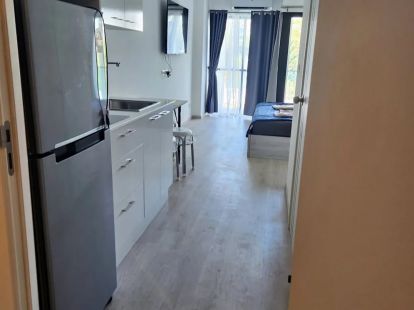
- 24m2
- 4
- 1
- 1
 Pattaya, Thailand
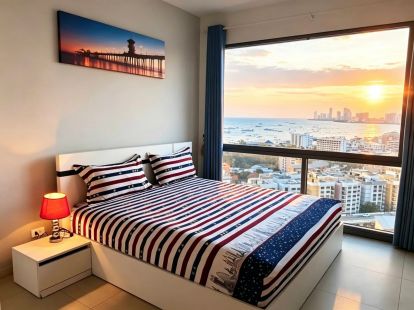
- 27m2
- 20
- 1
- 1
Pattaya, Thailand
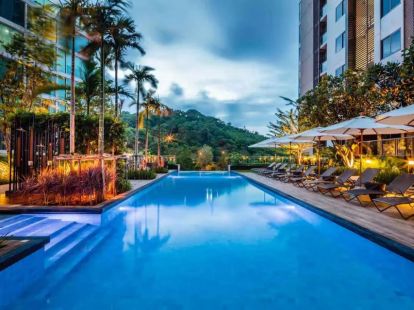
- 35m2
- 33
- 1
- 1
Pattaya, Thailand
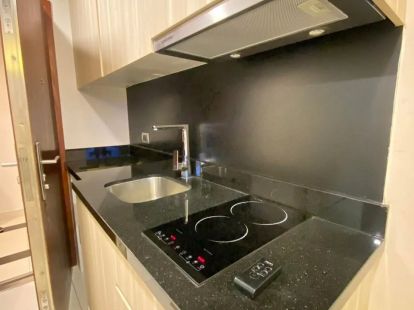
- 26m2
- 3
- 1
- 1
Pattaya, Thailand
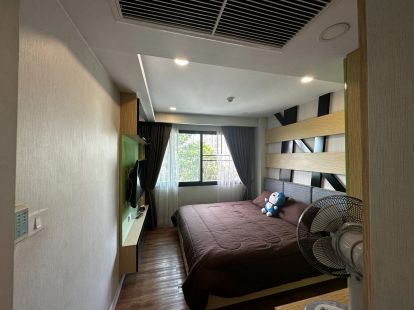
- 63m2
- 4
- 2
- 2
Pattaya, Thailand
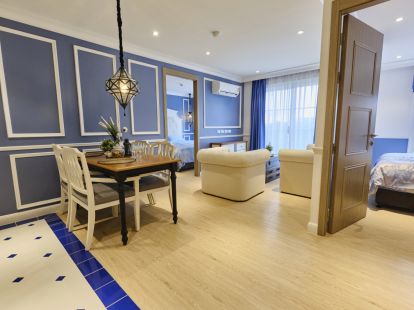
- 52m2
- 2
- 2
- 2
Pattaya, Thailand
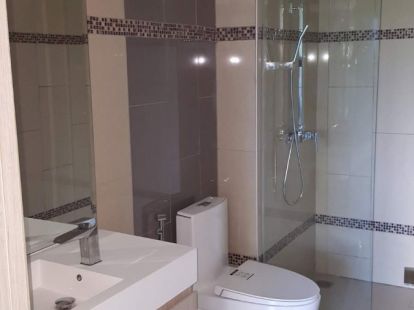
- 37m2
- 2
- 1
- 1
Pattaya, Thailand
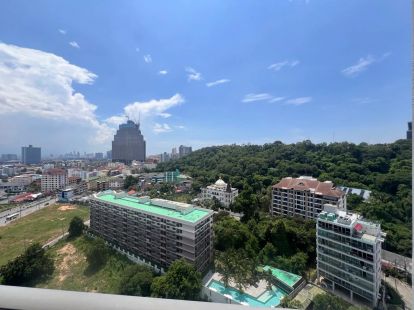
- 62m2
- 20
- 2
- 2
Pattaya, Thailand
Step‑by‑step transaction procedure
Step 1. Property reservation
The parties sign a reservation agreement. The buyer needs to provide a copy of their passport, email address, phone number, and mailing address. The document specifies the property, price, payment schedule, and bank details.
The deposit — typically around 1% of the purchase price on the primary market, and on the secondary market more often a fixed amount of $2,000–5,000. It takes the property off the market and is generally non‑refundable if the buyer withdraws. Since January 2025, the Office of Consumer Protection Board (OCPB) rules have been in effect, limiting arbitrary deposit forfeiture by developers when purchasing off‑plan properties: forfeiture conditions must be explicitly stated in the contract; references to "internal company rules" are no longer enforceable.
Red flag. If you are being rushed to pay the deposit before receiving a written certificate of the remaining foreign quota and before title verification — this is not a "hot deal" but a standard sales technique. The deposit is made after verification, not before.
Step 2. Due diligence on the property and transaction
The scope of due diligence depends on the market. On the primary market, only the contract and the developer's license are typically checked. On the secondary market, full legal due diligence is required, and the buyer bears the cost.
| Legal service | Cost | What is verified |
|---|---|---|
| Land title verification | from $700 | title, owner, encumbrances, easements, access to the plot |
| Seller company verification | from $700 | signatory authority, shareholder structure, registered capital, debts |
| Contract review and revision | from $500 | terms, penalties, assignment and inheritance rights |
| Transaction registration | from $300 | representation at the Land Department |
A separate point for villas — the type of land title. Chanote (Nor Sor 4 Jor) is the only one with precise satellite‑surveyed boundaries and is freely transferable, mortgageable, and leasable with registration. Nor Sor 3 Gor confirms possession, but boundaries are less precisely established, and the transaction requires a 30‑day public notice. Nor Sor 3 is an even weaker document. For purchasing a villa, practically only Chanote is acceptable.
Step 3. Main contract
Within one to two weeks after the deposit, the buyer receives the preliminary contract. For developers, the document is standard, and revisions are limited; if the seller is an individual, the contract is prepared by a law firm or agency. In addition to the price and timeline, the contract specifies the ownership structure (freehold or leasehold), a complete list of transaction costs and ongoing holding costs, penalties for construction delays, and the handover procedure.
Step 4. Payment
On the primary market, funds are transferred to the developer's account as specified in the contract. The account may be in a bank in any country, but it must be in the buyer's name or in the name of a legal entity of which the buyer is a founder.
On the secondary market, a Thai bank account is more commonly opened, and on the registration day a cashier's check is handed to the seller. A foreigner has the right to open an account, but since 2025, tourists and temporary residents regularly face rejections. Check the terms at the specific branch well in advance and do not structure your transaction on the assumption that the account will be opened.
About the FET certificate. If the property is being acquired as freehold, the funds must come into Thailand from another country in foreign currency. The receiving bank issues the FET form, which the Land Department checks at registration. Without it, freehold registration will not be completed. For leasehold, this requirement does not apply — settlement can be made by any method. If the transfer is made through services such as Wise, separately request a document from the Thai bank confirming the foreign origin of the funds.
Cryptocurrency as a means of payment has been prohibited by the regulator since April 1, 2022. In practice, crypto‑related transactions are only possible through conversion to fiat and subsequent bank payment, meaning with a full trace in the banking system.
Step 5. Registration of title at the Land Department
All transactions are registered. The documentation is in Thai, and staff rarely speak English, so foreigners attend with a representative: on the primary market, registration is usually handled by the developer's representative under the buyer's power of attorney; on the secondary market, by a lawyer.
When purchasing a condominium unit as freehold, the buyer receives:
- a standard‑form sale‑and‑purchase agreement in Thai, with signatures and official stamps;
- a Condominium Unit Title Deed — the title to the unit, indicating the share in the common property;
- a Yellow Tabien Baan house book; the Blue Book is issued only to Thai citizens.
Remote transaction
Travel to Thailand is not mandatory: Thai agencies perfected this procedure back in 2020 when borders were closed. The steps are the same, with three differences.
The contract is sent by courier (usually DHL), and payments follow the schedule via the bank in the country of residence. Property handover inspection is best done in person — it is at this point that construction defects are identified and documents are issued. If travel is not possible, a power of attorney is executed: notary in the country of residence, translation into English, legalization, then a sworn translation into Thai in Thailand.
A limitation rarely mentioned. The visa for investment in real estate from 3 million baht requires the condominium unit to be completed and transferred in the Land Department into the buyer's name. An off‑plan property does not qualify. If long‑term residency status is part of the purchase plan, a remote transaction at the foundation stage postpones that plan for the duration of construction.
Transaction costs
Registration fees
| Fee | Rate | Who pays |
|---|---|---|
| Transfer fee (freehold) | 2% of assessed value | typically split 50/50 between the parties |
| Lease registration (leasehold) | 1% of contract value | buyer |
| Stamp duty on leasehold | 0.1% | buyer |
| Specific Business Tax (SBT) | 3.3% | seller, if held for less than 5 years |
| Stamp duty on sale | 0.5% | seller, if SBT does not apply |
| Withholding tax | 1% for companies, sliding scale 0–35% for individuals | seller |
The 0.01% concession does not apply to foreigners. The government reduced registration fees for transfer and mortgage from 2% and 1% to 0.01% for properties under 7 million baht (approximately $200,000). The Cabinet extended the measure on June 30, 2026, with publication in the Royal Gazette on July 1, 2026, valid until June 30, 2027. However, the concession is available only to natural persons holding Thai nationality: foreigners and Thai companies are not covered. Russian‑language materials regularly cite this figure without the caveat — when budgeting, base your calculations on the full 2%.
Other buyer costs
| Item | Amount | Comment |
|---|---|---|
| Agency services | typically 0 for the buyer | commission is paid by the seller, on the primary market — always |
| Lawyer | approximately $1,000 for a standard transaction | mandatory on the secondary market, usually not needed on the primary |
| Sinking fund contribution | $15–25 per m² | one‑time payment, only for new builds |
| Thai company registration | $2,000–3,000 | only for the legal‑entity structure, plus ~$1,000 per year for accounting |
Approximate total additional costs: a freehold condominium on the primary market adds roughly 2–3% to the price; a secondary‑market transaction with a lawyer — 3–4%; a villa through a legal entity — from 5% with ongoing annual costs.
Installments and financing for foreigners
Mortgage lending from Thai banks to non‑residents is virtually unavailable. The viable options are offered by developers.
- Interest‑free installment plan during the construction period — one to two years, tied to construction milestones as set out in the contract. This is the basic and most common option.
- Developer financing — the first 50% of the purchase price (including during construction), with the remaining half paid over one to five years at 5–7% per annum. The maximum term is approximately seven years.
An installment plan during construction creates a separate risk: payments are made while the property does not yet exist. The check should focus not on the construction permit itself, but on the developer's completed projects, actual handover track record, and the availability of a bank guarantee or an escrow mechanism.
Does owning real estate give the right to live in Thailand
Automatically — no. The purchase does not grant citizenship or permanent residency, and there is no "residency by investment" program in Thailand along the lines of Portugal or Greece. However, the statement "real estate gives nothing at all," which still appears in Russian‑language articles, has been outdated since autumn 2025.
Investment visa for real estate from 3 million baht
On October 1, 2025, Immigration Bureau orders No. 237/2568 and No. 238/2568 came into force. They created, for the first time, an official path from property purchase to long‑term stay. Formally, this is not a "golden visa," but a Non‑Immigrant "B" (Investment) category with a 12‑month extension, renewable annually as long as the investment is maintained.
Qualifying options:
- a completed freehold condominium unit worth at least 3,000,000 baht, registered in the applicant's name at the Land Department, with the transfer date no earlier than October 1, 2020;
- a registered long‑term lease agreement with a prepayment of at least 3,060,000 baht;
- a residential lease of at least 85,000 baht per month.
The bottleneck that almost all advertising overlooks. The reduced threshold of 3 million baht applies only if you have a certification letter from the Ministry of Tourism and Sports, arranged through Thailand Longstay Service Co. Without that letter, the threshold reverts to the previous 10 million baht. The administrative procedures for issuance were being refined throughout 2026, so check the current timelines at the time of your transaction, not against an article from six months ago.
Alternatives: LTR and Privilege
| Program | Cost | Duration | Requirements and features |
|---|---|---|---|
| Real estate investment visa (Non‑B Investment) | government fees plus processing | 12 months with annual renewal | property from 3 million baht and a Ministry of Tourism letter; investment must be maintained |
| LTR (Long‑Term Resident) | approximately 50,000 baht in government fees | 10 years | income from $80,000 per year or assets from $1 million; for some categories — PIT 17% and foreign income exemption |
| Thailand Privilege (formerly Elite) | from 650,000 to 5,000,000 baht | from 5 to 20 years | no income requirements; does not grant work rights, tax benefits, or additional property rights |
If you qualify by income or assets, LTR is roughly 13–18 times cheaper than Privilege for twice the duration. Privilege fills the niche for those who do not meet LTR requirements and want a predictable status without qualification hurdles. None of the programs expand property rights: the 49% quota is the same for a Bronze holder and a Reserve holder.
What becomes the owner's obligation
Annual land and building tax
For residential property, the rates are minimal — hundredths and tenths of a percent of the assessed value, and deductions apply for primary residences. For a foreigner with a single condominium unit, the amount is typically measured in thousands of baht per year. A separate rate applies to vacant and unused properties: an apartment left closed for years costs more to hold than one that is rented out.
Recurring payments
| Payment | Estimate | How it is calculated |
|---|---|---|
| Common area maintenance (CAM fee) | 40–120 baht per m² per month | depends on the project class and the range of facilities; higher in branded residences |
| Electricity and water | by meter | the main item is air conditioning; in some developments, the water rate is set by the management company |
| Property management for rentals | 20–30% of rental income | management company fees when leasing out the property |
On guaranteed yields. Developer programs are calculated on the purchase price and operate for a limited period, typically 3–5 years. The guarantee is backed by the developer's financial standing, not by a bank or by law. The check should focus on how the company has performed similar obligations on completed projects — not on the figure in the presentation itself.
Questions and answers
Can a foreigner buy land in Thailand under any circumstances?
There is a narrow exception: an investment of 40 million baht in approved assets, plus ministerial permission, grants the right to a plot of up to 1 rai for residential use. In practice, it is rarely used and requires individual approval. A second channel — land in industrial zones through projects promoted by the Board of Investment (BOI) — is a business tool, not for purchasing a house.
Can a condominium unit or house be registered in the name of a Thai spouse?
Formally yes, and this is common practice. Legally, the property will belong to her, not to you: in the event of divorce, the foreign spouse has no claim to the land. Furthermore, when purchasing land in the name of a Thai spouse, the Land Department requires a joint declaration that the funds are her personal property — meaning the foreign spouse provides a written waiver of rights to the plot.
How much did foreign demand decline in 2026?
In the first quarter of 2026, 3,241 condominium units were transferred to foreigners — 17.3% fewer than a year earlier, with value falling by 17.9%. The main reason is the withdrawal of Chinese buyers: down 38.8% in volume and 42.9% in value. At the same time, the Russian segment grew by 33%, while the foreign share of the overall condominium market fell to 13.6%.
Do I need to pay taxes in Thailand if I rent out my condominium unit?
Yes. Rental income derived from Thailand is subject to Thai personal income tax regardless of your tax residency, and the management company typically withholds tax at source when making payments. Separately, note that Thai tax residency arises when you stay 180 days or more in a calendar year, and this affects the declaration of foreign‑source income as well.
Should I wait for reforms on the quota and lease term before buying?
Waiting is a bet on a parliamentary decision with no fixed timeline: initiatives have been under discussion since 2024 and have not moved beyond desk‑level review in two years. If the property fits the price and is legally clean today, there is no reason to wait. If the transaction only makes sense with a 99‑year horizon — that is a signal that it does not make sense at all.