Cost of living on Phuket in 2026: how much money you need
- Phuket — expensive or affordable?
- Rent by area: 2026 price table
- DAILY EXPENSES
- Food: street food vs restaurants
- Transport: why Phuket is more expensive than it seems
- Utilities and communications
- BUDGETS AND HIDDEN COSTS
- How much money you need: scenarios by lifestyle
- Hidden costs that break the budget
Phuket — expensive or affordable?
Phuket is the most expensive island in Thailand. That's a fact, not a warning from marketers. According to data from the first quarter of 2026, living costs here are 20–40% higher than in Chiang Mai or Pattaya, and roughly comparable to an average European resort town. The minimum realistic budget for one person starts at 40,000 baht per month. At the same time, Phuket is more expensive than Bali and cheaper than Dubai — it occupies a stable place in the "comfortable Asian premium" segment.
The main misconception of newcomers: people confuse Phuket with the cheap Thailand from guidebooks of ten years ago. Poor public transport forces you to rent a bike or a car — this is a regular expense item that is often not taken into account when initially planning the budget.
Rent by area: 2026 price table
Housing is the main and least predictable expense item. The price depends on the area, distance to the beach, season, and type of property. Below are current ranges for long-term rent (from 1 month) in the low season (May–October 2026).
Area Studio (THB/month) 1 bedroom (THB/month) Villa 3BR (THB/month) Patong 20,000–35,000 30,000–60,000 80,000–120,000 Karon / Kata 18,000–30,000 25,000–50,000 70,000–100,000 Bang Tao 25,000–40,000 35,000–65,000 90,000–200,000 Rawai / Nai Harn 15,000–25,000 20,000–40,000 55,000–90,000 Phuket Town 10,000–18,000 15,000–30,000 no listings Chalong 12,000–20,000 18,000–35,000 50,000–80,000
Important: in the high season (December–February), short-term rent becomes 1.5–2 times more expensive. With a long-term contract of 6–12 months, negotiating a 10–20% discount is standard practice outside the peak demand. The deposit is usually 1–2 monthly payments.
Families with children will find Karon, Kata, Rawai suitable — quiet areas with beaches and infrastructure. For digital nomads — Chalong and Rawai because of co-working spaces and the expat community. For those looking for nightlife — Patong, but with the highest price tag.

Срочная продажа
- 407m2
- 2
- 4
- 4
 Phuket, Thailand
- 436m2
- 4
- 4
Phuket, Thailand
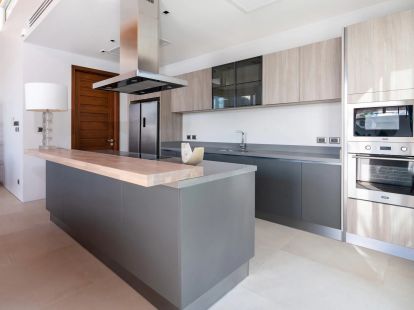
- 381m2
- 1
- 3
- 3
Phuket, Thailand

- 352m2
- 3
- 3
- 3
Phuket, Thailand
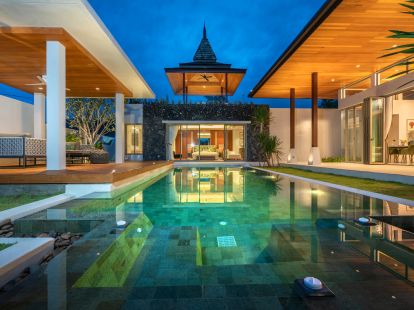
- 517m2
- 4
- 5
Phuket, Thailand

- 332m2
- 3
- 4
- 2
Phuket, Thailand
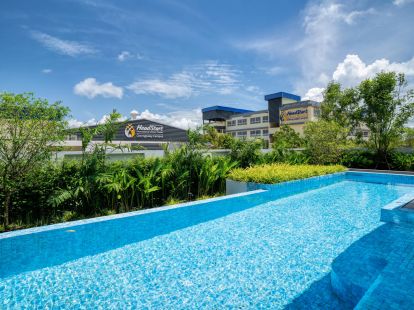
- 403m2
- 2
- 3
- 3
Phuket, Thailand
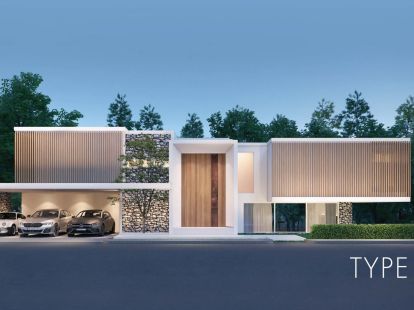
- 771m2
- 2
- 5
- 6
Phuket, Thailand
DAILY EXPENSES
Food: street food vs restaurants
Food on Phuket covers the entire range — from 50 baht for a plate of pad thai at a street stall to 2,000 baht for a dinner at a seaside restaurant. For a long‑term budget, everyday expenses matter, not the prices at first‑line tourist establishments. A dish at a local cafe (tom yam, fried rice) costs 80–120 baht. Pad thai with chicken — 100 baht, with shrimp — 180 baht. Breakfast for two at an ordinary cafe (2 dishes + 2 drinks) comes to 400–500 baht.
A European‑style coffee shop charges 80–150 baht for a cappuccino. Dinner at a mid‑range restaurant for one — 400–700 baht including a drink. Supermarkets Big C and Makro allow you to cook at home with noticeable savings: a monthly grocery budget when partially cooking at home — 8,000–15,000 baht per person.
Transport: why Phuket is more expensive than it seems
Public transport on the island is poorly developed. The Smart Bus system covers a few tourist routes but does not solve the problem of everyday travel. Taxis operate via the Grab and Bolt apps, but a trip from Patong to Chalong costs 250–400 baht. A tuk‑tuk for tourists — 300–600 baht for a short ride.
The most rational option for long‑term living — renting a motorcycle: 3,000–5,000 baht per month with a long‑term contract. Renting a car costs from 15,000 to 25,000 baht per month. Petrol is about 45 baht per litre. For a family with a child, a car is effectively a mandatory expense, immediately adding 18,000–25,000 baht to the monthly budget.
Utilities and communications
Electricity — the main variable in the utility budget. An air conditioner running around the clock during the hot months (March–May, October) drives the bill up to 3,000–5,000 baht per month. In condominiums, the tariff is often higher than the government rate — management companies add their own margin. Water costs 200–500 baht per month.
Internet: a dedicated line or a package in a condo — 600–1,000 baht per month. Mobile communications with a data package — 300–500 baht. Swimming pool maintenance when renting a villa — an additional 2,000–4,000 baht per month. These are expenses that are often absent from advertising descriptions, but are real upon moving in.
BUDGETS AND HIDDEN COSTS
How much money you need: scenarios by lifestyle
Below are realistic budgets based on data from the first quarter of 2026. All amounts in Thai baht per month, including rent, food, transport and utilities.
Scenario THB/month RUB/month (≈) Key conditions Solo, economy (studio not on the first line, bike, cooking at home) 35,000–50,000 87,000–125,000 Chalong / Rawai Solo, comfort (1BR with pool, car, restaurants) 60,000–80,000 150,000–200,000 Kata / Karon Couple, standard (1BR, bike, 50/50 eating out & cooking) 80,000–120,000 200,000–300,000 Rawai / Chalong Couple, comfort (1BR premium or small villa) 120,000–150,000 300,000–375,000 Bang Tao / Kata Family with a child (villa 2BR, car, international school) 180,000–250,000 450,000–625,000 Bang Tao / Kata
International schools (British International School, Headstart) add 30,000–60,000 baht per month per child. This is the lower bound — higher grades are more expensive.
Hidden costs that break the budget
Most miscalculations when moving to Phuket are not about food and rent, but about expense categories that do not appear in standard reviews. Health insurance for long‑term living costs 40,000–90,000 baht per year per person: without it, treatment at a private hospital will cost 5,000–15,000 baht even for a routine visit. Skipping insurance is a mistake that proves expensive.
Visa expenses depend on the chosen type. Tourist visa with one extension — about 30,000–45,000 baht per year including fees. Elite Visa (Thailand Privilege) — 600,000–900,000 baht upfront. A visa run every 60 days — a waste of time and 5,000–8,000 baht per trip. Initial setup costs (furniture, appliances, household items) when moving into an unfurnished property — 30,000–50,000 baht. A financial cushion of 3 months of expenses — a necessary reserve, not a recommendation.