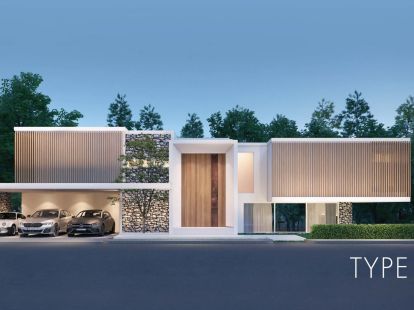
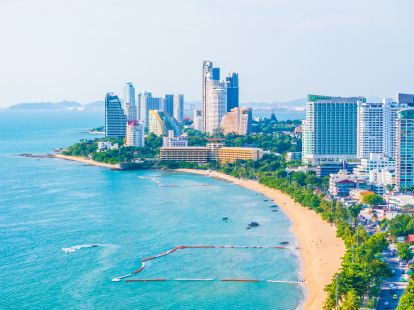
House purchase structures for foreigners
The building and the land in Thailand are registered separately, and this determines the entire transaction. The foreigner acquires the house itself as freehold property without restrictions. The land beneath it — no: Article 86 of the Land Code prohibits foreign ownership of land. Therefore, the plot is taken on a 30‑year registered lease at the Land Department. Such a contract is entered into the Tor Dor 11 document and noted on the reverse side of the title deed, visible to any future buyer, and it protects you regardless of whom the land passes to later. An unregistered lease is valid for only three years, no matter how many years are stated in the text.
The second structure is a Thai company, where 51% of shares are held by Thai citizens. It provides full ownership of the land, but since 2026 it has become significantly riskier: DBD orders No. 2/2568 of January 1 and No. 1/2569 of April 1 require source‑of‑funds verification and signed investment confirmation letters, and the Land Department cross‑checks company owners against title deeds. A company makes sense only when a business is actually operated in Thailand; as a wrapper for a single house, it creates more problems than it solves. The third option for those who need perpetual rights is a condominium: the only type of property available to a foreigner in full freehold, within the 49% building‑area quota.
Step‑by‑step purchase process
The transaction procedure is the same for new builds and the secondary market. The first step is a reservation deposit from 50,000 to 200,000 baht: the property is taken off the market. The second is document verification: a lawyer examines the land title (only Chanote is considered full title), the construction permit, the absence of encumbrances and debts, and for a condominium requests written confirmation of the remaining foreign quota. The third is the contract: a sale‑and‑purchase agreement for the building and a lease agreement for the plot, with an assignment clause included. The fourth is payment: funds are transferred from abroad in foreign currency to an account in a Thai bank, and the bank issues an FET certificate — without it, condominium registration cannot be completed, and repatriating proceeds after sale becomes more difficult. The fifth is registration at the Land Department.
Costs on top of the house price
At registration, costs arise in addition to the house price. A land lease costs 1.1% of the contract amount for the entire term: 1% duty and 0.1% stamp duty. Transfer of full ownership of a condominium is about 6% of the Land Department assessment: 2% duty, 3.3% specific business tax if the seller has held it for less than five years, or 0.5% stamp duty instead, plus withholding tax. The reduced rate of 0.01%, extended until June 30, 2027, applies only to buyers who are Thai nationals — a foreigner pays the full rate. On Phuket, costs are customarily split 50/50 between the parties — this is negotiable.
What it costs to own a house
Ownership also costs money. 2026 is the first year that property tax is collected at the full rate: the rate for residential property is 0.02–0.1% of the assessed value. The owner of a house together with the land receives an exemption on the first 50 million baht, while the owner of only the building on a leased plot receives an exemption on the first 10 million — and only if their name is entered in the house book as of January 1.