Temporary residence in Montenegro through property purchase

- Who can obtain temporary residence in Montenegro through property purchase
- Why €150,000 in the contract does not equal €150,000 for the Ministry of Interior
- Which property qualifies and which does not
- How the share is calculated
- How to obtain temporary residence in Montenegro: documents and application procedure
- How much money must be shown in the account
- Stages and timelines
- Residence permit renewal, limitations, and the path forward
- The absence rule — the thing people learn about last
- The tax residency trap
- What the status gives
- What the status does not give
- Residence permit refusal and cancellation of status
- Permanent residence in Montenegro and citizenship
- If you need a path to a passport — a different basis is required
- What happens when a child turns 18
- Why the status has become more important in 2026

Who can obtain temporary residence in Montenegro through property purchase
Temporary residence in Montenegro through property is an annual resident status issued by the Ministry of Interior to the property owner. Montenegro grants residence on the basis of actual ownership: the status is not tied to the amount of investment in the economy and does not require renouncing previous citizenship, but since 2026 it has had a price threshold.
Property purchase provides a basis for application, but there are five requirements for the applicant. The property's assessed value — at least €150,000. The ownership share — at least half. The right must be registered in the cadastre: a sale‑and‑purchase agreement is not sufficient; the applicant must hold a certificate of ownership (List nepokretnosti) in their name. The property must be free of encumbrances — mortgages, liens, tax arrears, or utility debts. Documents are submitted at the property's location, not at the applicant's place of residence.
The threshold does not apply to citizens of the EU, Norway, Switzerland, Iceland, or Liechtenstein — for them there is no price condition at all.
Why €150,000 in the contract does not equal €150,000 for the Ministry of Interior
They do not count the amount you paid. The threshold is verified against the taxable value from the municipal assessment, which in Montenegro is regularly below the market price. A property bought for €165,000 may be assessed at €120,000 — and status will not be granted, even though the money was spent. The certificate of taxable value must be requested from the tax authority before signing the preliminary contract, not after the transaction: you cannot revisit the choice of property later.
Which property qualifies and which does not
Qualifying properties include an apartment, house, villa, holiday home (vikendica), office‑residential building, office premises, and a property for hotel services. A land plot does not entitle the owner to residence at any price. A unit in a building under construction also does not qualify: until the building is completed and the title is registered in the cadastre, there is no certificate of ownership, and without it the application will not be accepted. Installment plans from developers and resident status are incompatible until the property is handed over.
How the share is calculated
The threshold is calculated per applicant, not per property. A €300,000 apartment owned equally by two people gives status to both — each has €150,000. The same apartment owned by three gives status to no one — €100,000 per person. The same rule works in reverse: spouses may choose not to co‑own the property but register it in one name and bring the other through family reunification.
A spouse and minor children obtain status through family reunification, but only after the owner themselves has received residence — they cannot apply in parallel. Other relatives do not qualify as immediate family members.
Those who purchased property before the threshold was introduced and fall short of €150,000 are given a transitional year: during this time they can purchase a second property or combine several into one qualifying investment so that the total assessed value reaches the threshold.

Срочная продажа
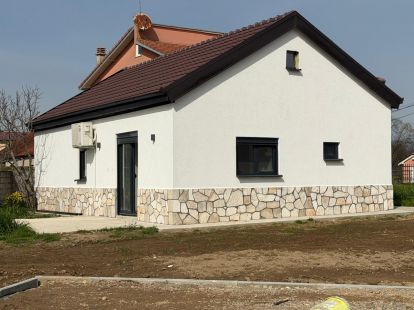
- 80m2
- 1
- 1
- 1
 Podgorica, Montenegro
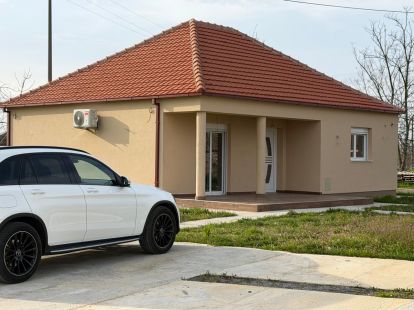
- 99m2
- 1
- 2
- 1
Podgorica, Montenegro
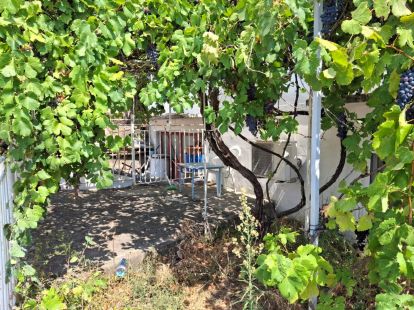
- 91m2
- 1/2
- 2
- 1
Sutomore, Montenegro
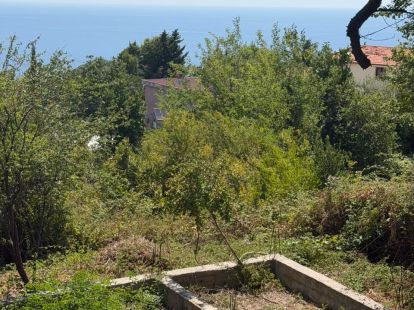
- 332m2
Sutomore, Montenegro
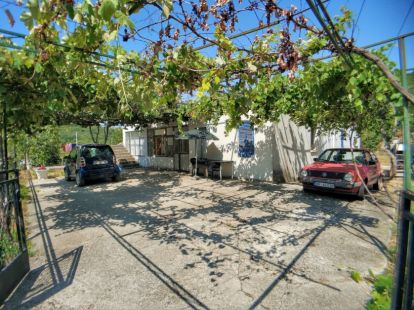
- 192m2
- 1
- 4
- 3
Sutomore, Montenegro
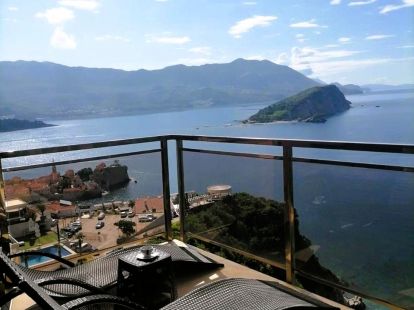
- 78m2
- 5/6
- 1
- 1
Budva, Montenegro
- 130m2
- 1
- 2
- 1
Bar, Montenegro
- 37m2
- 1/4
- 1
Baošići, Montenegro
How to obtain temporary residence in Montenegro: documents and application procedure
The application is submitted in person to the interior affairs department of the Ministry of Interior of Montenegro at the property's location. Fingerprints are taken, a photograph is taken, and a signature sample is collected there, so the procedure cannot be completed by power of attorney — unlike the property purchase itself.
| Document | Where to obtain | Validity period | What to note |
|---|---|---|---|
| Passport | Country of citizenship | Valid for the entire duration of residence | If the passport expires before the resident card, the status will be issued for the period until the passport expires |
| Certificate of ownership | Cadastre of Montenegro | Must be a recent extract | Ordered immediately before submission: an extract one month old may be rejected |
| Certificate of taxable value | Tax authority at the property's location | As required by the inspector | Ordered in the municipality where the property is located — not at the seller's place of registration |
| Certificate of no criminal record | Country of citizenship and country of residence | Usually up to 6 months | Requires an apostille and sworn translation; if residing in a third country, certificates are obtained from both |
| Bank statement | Any bank | Fresh as of the submission date | Confirms financial means for the year ahead |
| Health insurance | Insurance company | from 30 days | Covers the application review period; costs from €20 per year |
| Marriage and birth certificates | Country of issue | Indefinite | Only for family members; apostille and sworn translation are mandatory |
All foreign documents must be submitted with an apostille and a translation by a sworn translator of Montenegro. Translations made in the country of origin are not accepted.
How much money must be shown in the account
Here the sources diverge, and this is a case where the figure should be verified before submission. Some practicing lawyers cite a standard of €10 per day, i.e. €3,650 for the year. Others work with €20 per day and an amount of €7,300. The difference is twofold, and the consequences are the same: insufficient balance is grounds for refusal. The safe approach is to keep €7,300 in the account and request the current standard from the interior affairs department where you will be applying — regional practices vary.
Stages and timelines
Purchasing the property and registering the title take from one to two months; the certificate of ownership is issued within three to five days after registration. The document package for temporary residence is prepared in parallel with the purchase — this saves weeks. Submission takes one day, the state fee is €25 per applicant, including family members. The review period is 40 calendar days. Altogether, from property selection to resident card, the process fits into two to three months.
From the moment of submission until the decision, you may remain in the country legally: the acknowledgement of receipt of documents serves as a permit to stay. Applications for family members are submitted separately and only after the primary applicant has received the card — this adds approximately another 40 days.

Residence permit renewal, limitations, and the path forward
The resident card is issued for one year. Temporary residence can be renewed an unlimited number of times as long as the property remains in ownership, and renewal documents must be submitted no later than 30 days before expiration. Missing the deadline means submitting a new application from scratch.
The absence rule — the thing people learn about last
The Foreigners Act allows staying outside of Montenegro for no more than one month per year without a valid reason and no more than three months with one, provided that the migration police is notified. Exceptions apply only to executive directors of companies, sole proprietors, and yacht crews.
This leads to a conclusion that runs counter to most buyers' expectations. The scenario of "buying an apartment, coming for the summer, and keeping the status" is not provided for by law: residence based on property is built on the assumption that you actually live here. In practice, many get renewals without questions in the first year, but when transitioning to permanent residence, actual stay is checked, and accumulated months of absence close that path.
The tax residency trap
Two rules work against each other, and together they produce a consequence that is rarely mentioned. To maintain the status, you may be absent for no more than one month per year — meaning you must live in the country for at least eleven months. However, a foreigner who stays in Montenegro for more than 183 days automatically becomes a tax resident, and tax residents must declare all their income here, including that earned abroad. Personal income tax is progressive from 9% to 15%, and income up to €700 is exempt.
This creates a fork: complying fully with the absence rule means accepting Montenegrin tax residency with all the consequences for foreign income. For those whose primary income is in another jurisdiction, this calculation should be made with a tax consultant before submitting the application, not after the first renewal.
What the status gives
The right to live in the country for the entire validity period of the card and to renew it. Free education for children in public schools. Residents find it easier to open a local bank account, obtain a mortgage, register a car or vessel in their name, and get a local driver's license. Renting out the property is possible even without residence, but it is easier for a resident to receive and transfer income through a local account.
What the status does not give
It does not permit employment with a Montenegrin company or opening a sole proprietorship on this basis — a different type of permit is required for work. Free state healthcare does not cover holders of this residence permit; treatment goes through insurance. The status does not grant visa‑free entry to Schengen — Montenegro is not part of the zone. And most importantly, years spent under this basis do not count toward the naturalization period — there is no direct path to citizenship through property purchase.
Residence permit refusal and cancellation of status
Refusal is issued in cases of incomplete documents, false information in the application, a criminal record or pending criminal case, violation of the visa regime, or insufficient proof of financial means. Cancellation of status occurs in three cases: the owner sells the property, violates the absence rule, or violates the country's laws.
The point about sale should be kept in mind from the very beginning. As long as the status is needed for you or your family, the property cannot be sold, gifted, or transferred to settle a debt — otherwise, the basis for residence disappears on the same day. If resale in two to three years is planned, the exit strategy should be considered before purchase — for example, through a second property that would take over as the basis.
Permanent residence in Montenegro and citizenship
Permanent residence in Montenegro is available after five years of stay, and during those five years you cannot be absent for six consecutive months or ten months in total. Permanent residence is issued indefinitely, with the card renewed every five years; it already permits work and business setup, but does not allow employment in the civil service or participation in elections.
Montenegrin citizenship is considered after ten years — five with temporary status and five with permanent status — with an exam in the language, history, and culture. Montenegro does not recognize dual citizenship, so the previous passport must be renounced. The citizenship‑by‑investment program, which was in effect until the end of 2022, is closed and no longer accepts new applications.
If you need a path to a passport — a different basis is required
Since years under property ownership do not count toward naturalization, those aiming for citizenship obtain status through their own company. As of 2026, this path has a financial requirement: to renew the residence permit for a director of their own company, the company must have paid at least €5,000 in taxes and contributions over the year — approximately €417 per month. This requirement does not apply to citizens of the EU, Norway, Switzerland, Iceland, or Liechtenstein. The practical conclusion: property and a company are not competing options but different tools. The first gives the right to live, the second — the prospect of a passport, and they are often combined.
What happens when a child turns 18
The status based on family reunification is intended for minor children. Upon reaching adulthood, the basis ceases, and the residence permit can no longer be renewed on the same terms — a separate basis will be required: studies at a Montenegrin university, employment, one's own company, or a separate property in their name with the same valuation of at least €150,000. Families with teenage children should calculate this timeline in advance: if the child is currently sixteen, the issue will arise in two years, while admission to a university requires a certificate of proficiency in Montenegrin.
Why the status has become more important in 2026
Montenegro is aligning its visa policy with EU standards: from November 1, 2026, a visa regime will be introduced for citizens of countries whose entry rules have not yet been aligned with EU policy — including China, Turkey, Saudi Arabia, and several others. For a property owner from such a country, this changes the calculus: if previously you could travel to your own apartment with just a passport, now a visa or a residence permit will be required. Resident status becomes not a bonus to the purchase, but a condition for visa‑free entry to your own property.