Properties in Thailand
Property in Thailand — apartments (condominiums), villas, and townhouses that foreigners buy for investment, winter stays, or relocation. Popular regions serve different purposes: Phuket leads in price growth and tourist rentals, Pattaya offers the most affordable entry point and is 2 hours from Bangkok, Bangkok is the business hub for rentals to locals and expats, and Samui offers a more intimate island setting. A foreigner can purchase a condominium under freehold ownership (within the 49% foreign quota per building) or a villa with land under a 30-year leasehold with renewal rights. Starting from 2026, a freehold purchase of 3 million baht or more grants the right to a new Non-B investor visa — this was not available before. Below is a comparison of property types, prices, the purchase process, and taxes.
- 27m2
- 20
- 1
- 1
- 24m2
- 4
- 1
- 1
- 35m2
- 33
- 1
- 1
- 26m2
- 3
- 1
- 1
- 63m2
- 4
- 2
- 2
- 52m2
- 2
- 2
- 2
- 37m2
- 2
- 1
- 1
- 62m2
- 20
- 2
- 2
- 129m2
- 16
- 2
- 1
- 407m2
- 2
- 4
- 4
- 436m2
- 4
- 4
- 381m2
- 1
- 3
- 3
- 352m2
- 3
- 3
- 3
- 517m2
- 4
- 5
- 332m2
- 3
- 4
- 2
- 28m2
- 21
Thailand в цифрах
| Property Type | Ownership Form | Price from | Suitable for |
|---|---|---|---|
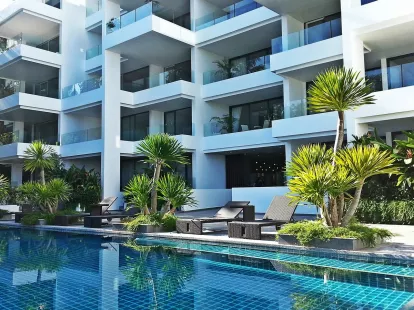
| Studio in a condominium | Freehold (within the 49% building quota) or leasehold | ≈5 million RUB (Pattaya, budget Phuket) | First investment with self-management and tourist rentals |
| 1-bedroom condo | Freehold or leasehold | ≈8–12 million RUB | Price-to-liquidity balance for long-term rental |
| Seafront / premium condo | Freehold or leasehold | ≈15–20 million RUB | Stable rental income and high resale liquidity |
| Townhouse | Leasehold on land, freehold on the building | from 2.5 million THB (≈7 million RUB) | Compromise between villa budget and private entrance privacy |
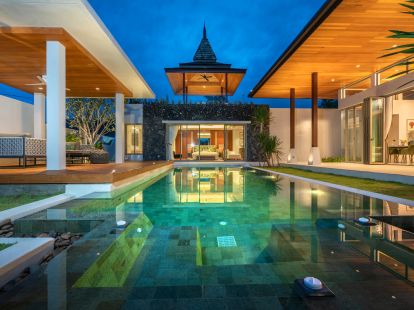
| Villa in Pattaya | Leasehold (land), freehold only on the building itself | ≈15–20 million RUB | Privacy, private pool, permanent family living |
| Villa in Phuket | Leasehold (land) | ≈25–40 million RUB | Premium segment: tourist rentals and prestigious locations |
Property Selection and Deposit
After selecting a property independently or through an agency, a deposit is paid, usually 2,000–5,000 USD, to reserve the property and remove it from the market. Agent services are typically free for the buyer: the seller pays the commission.
Due Diligence: Pre-Contract Verification
A lawyer checks the legal cleanliness of the transaction. They review the developer's title documents and check for any encumbrances on the property. When buying off-plan, they also check the developer's reputation and track record of completing previous projects. For projects of 80 units or more, or buildings above 23 metres, an Environmental Impact Assessment (EIA) is mandatory: the report is published on the ONEP website, and its absence for a project of this scale means construction is illegal.
Contract, Payment, and the FET Certificate
The contract specifies the payment schedule for off-plan properties or the transfer conditions for secondary market properties. Funds must come from abroad in foreign currency: the Bank of Thailand issues an FET (Foreign Exchange Transaction) certificate, and without it, the Land Department will not register the transfer of ownership into the foreigner's name.
Registration at the Land Department and the Chanote
The final stage: transfer of rights at the Land Department and obtaining the Chanote, the title deed. It is the date of registration at the Land Department, not the date of contract signing, that determines the moment of ownership transfer. For existing secondary market properties, the entire process from deposit to Chanote typically takes 4–8 weeks; for off-plan properties, the timeline extends over the entire construction period, which developers specify separately in the contract.
Just before registration for off-plan properties, there is a handover inspection: the buyer inspects the unit and records any defects in a written report attached to the key handover. Fixing defects after this stage usually requires separate arrangements with the developer — it is essential to document everything during the inspection, not retroactively.
Additional Costs and Taxes
Transfer Fee, Stamp Duty, and Specific Business Tax
At registration, the Land Department charges a transfer fee of 2%, calculated not on the contract price but on the appraised (cadastral) value of the property, which can differ from the market price by 20–40%. Additionally, either a Stamp Duty of 0.5% or a Specific Business Tax (SBT) of 3.3% is charged in its place if the seller has owned the property for less than 5 years. Thai law does not specify who pays what: the allocation of costs between seller and buyer is determined by the contract, not by law. This is a matter of negotiation, not an automatic 50/50 rule.
What to check: before agreeing to the contract terms, request the appraised value of the property from the Land Department separately from the seller's price. A 20–40% difference directly changes the amount of the transfer fee, which you may have to partially cover.
Withholding Tax: Usually the Seller's Responsibility
Withholding tax is a progressive tax on the seller, ranging from 5% to 35%, which the Land Department withholds directly at the time of the transaction. For the buyer, this is not a direct expense, but it is worth understanding: if the seller factors the tax into the property price, the final price for the buyer ends up higher than the nominal amount.
Sinking Fund and Monthly Common Fees
Upon moving into a condominium, a one-time payment is usually required into the sinking fund for major building repairs. Thereafter, there is a monthly common fee for services: security, grounds maintenance, and pool — typically 40–80 baht per m² per month. Water (30–35 baht per m³) and electricity (5–6 baht per kWh) are paid separately based on actual consumption.
Mortgages for Foreigners in Thailand
Thai banks practically do not lend to foreigners without residency status or Thai income: a mortgage for a non-resident is a rare exception rather than a standard scenario. Therefore, 70–80% of transactions with foreign buyers in Phuket in 2026 go through instalment plans directly from the developer: an initial payment of 10–30% of the price, with the remaining balance interest-free over 24–36 months during the construction phase. This scheme does not require a credit history or income certificates, but works only for off-plan properties, not for existing secondary market homes.
Residence Permit and Permanent Residency When Buying Property: What Changed in 2026
Until 2026, owning property in Thailand did not in itself grant the right to a visa or residency. Owners lived for years on tourist visas and visa runs, regularly crossing borders.
New Non-B Investor Visa Through Purchase from 3 Million Baht
In 2026, Thailand's immigration authorities officially launched the Non-B investor visa directly linked to property ownership. Conditions for the purchase option: a unit in a registered condominium, freehold ownership, property value from 3,000,000 baht, full payment, and a Chanote in the applicant's name. The annual visa costs 40,000 baht for the applicant and 40,000 baht for each family member (spouse, children under 20, parents over 50) plus 4,000 baht for participation in the programme. The visa is issued without leaving Thailand: first a 90-day Non-B, then an extension to a one-year multi-entry visa.
LTR Visa: For Larger Investors
The LTR (Long-Term Resident) visa is a separate programme for wealthy investors and pensioners, requiring assets of 1 million USD or annual income of 40,000–80,000 USD, and grants residency for up to 10 years with tax benefits. Purchasing a freehold condominium in Phuket can count as part of the investment portfolio for LTR purposes, but the entry threshold here is incomparably higher than the new Non-B visa through property ownership.
Risks: What Most Often Goes Wrong
Developer Delays in Handover
When buying off-plan, the main risk is delayed completion. Due diligence before signing the contract should include a review of the developer's track record on previous projects: whether they delivered on time and to the stated quality, not just a glossy presentation of the current project. The financial statements of the developer company itself can be ordered from the DBD (Department of Business Development) for 500 baht: these show the debt-to-asset ratio and cash flow. Debt above 70% of assets or negative cash flow for three consecutive years is a signal of increased risk of delay or project freeze.
Cadastral Valuation Differs from the Contract Price
The transfer fee and withholding tax are calculated on the Land Department's appraised value, not the contract price. A 20–40% discrepancy is common practice in the region, and it is worth clarifying in advance rather than on registration day, so the tax budget does not come as a surprise.
Real case: a buyer budgeted for taxes based on a contract price of 5 million baht, but the Land Department appraised the property at 6.5 million — the transfer fee and some other charges were recalculated on the higher amount right on registration day, and the allocated budget fell short.
Where to Buy: Phuket, Pattaya, Bangkok, Samui
The choice of region in Thailand depends on your goal: investment for rental income, permanent relocation, or winter stay. On the three main resort destinations — Phuket, Samui, and Bangkok — the average rental yield is 5–8% per annum, and property prices have increased by 20–30% over the last five years. If your plan is short-term tourist rentals, Phuket or Pattaya are the better options. For long-term rentals to local professionals and expats, Bangkok is the right choice. If rental income is not a priority and privacy matters more, Samui is the answer.
Phuket: Price Growth and Tourist Rentals
Phuket leads in price growth among Thailand's resort destinations. Condominiums here cost between 60,000 and 180,000 baht per m², while villas in popular areas such as Bang Tao and Kata start at 25–40 million rubles. The island receives a steady flow of tourists year-round, keeping rental yields above the national average. In 2026, Airports of Thailand announced a 80 billion baht expansion of Phuket Airport, increasing its capacity to 18 million passengers per year by 2029, which should ease the persistent queues at passport control during peak season.
Pattaya: Affordable Entry and Proximity to Bangkok
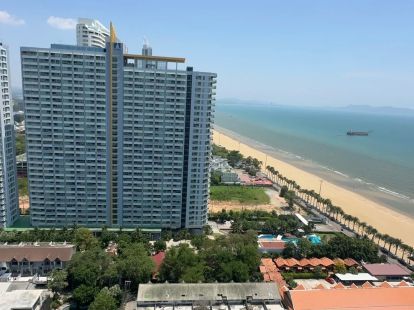
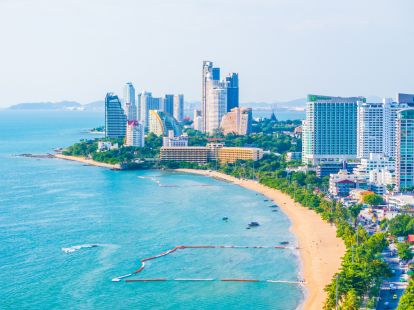
Pattaya offers the most affordable entry point into the seaside property market: studios here start from 500,000 baht in neighbouring towns, while standard houses and townhouses start at 2.5 million baht. The drive to Bangkok takes about 2 hours, making the city convenient for those working remotely with business in the capital.
Bangkok: Business Hub and Expat Rentals
In Bangkok, properties are purchased primarily for rental to local professionals and expats, rather than tourists. Demand is stable throughout the year. However, rental rates are lower than at resort destinations during peak season.
Samui: An Intimate Island Format
Samui is a closed market: tropical-style villas predominate here rather than high-rise condominiums. This is a less liquid but more private format for those seeking seclusion rather than turnover from rental tourists.
Ownership Structures for Foreigners
In Thailand, foreigners have access to two forms of property ownership, each covering different types of assets.
Freehold and the 49% Quota
Freehold means full and unconditional ownership. A foreigner can register a property in their own name only if it is a unit in a registered condominium, and only if the total share of foreign owners in that building does not exceed 49%. This quota is monitored by the juristic person managing the condominium, which is required to issue written confirmation of available quota upon request before a deposit is made. In new developments at the start of sales, the quota is usually available, but in popular completed complexes, it may already be fully allocated.
Leasehold for 30 Years with Renewal Rights
Leasehold is a long-term land lease, typically for 30 years with the right to renew twice, giving a total of up to 90 years. Foreigners most often use leasehold for villas, townhouses, and the land beneath them: the building itself can be registered as freehold in the foreigner's name, while the land underneath can only be held under leasehold.
Important: renewal of the leasehold for the second and third terms is not automatically guaranteed by law. The right must be explicitly stated in the contract, and not every developer includes this condition by default.
A Thai Company as an Alternative: Why It Is Risky in 2026
Historically, foreigners circumvented the ban on land ownership through a Thai company, where the foreigner holds up to 49% of shares and Thai "partners" hold the remaining 51%. Thai law permits this structure only if the Thai shareholders have actually invested capital and participate in management. If they only hold shares nominally without real capital, the scheme is illegal under the Foreign Business Act.
In 2026, enforcement has noticeably tightened: the Land Department and the Department of Special Investigation (DSI) cross-check shareholders' bank statements, and on Koh Phangan, there have been actual arrests of foreign owners along with their nominal Thai partners. Penalties include up to 3 years in prison, fines, company liquidation, and land confiscation in favour of the state.
How Much Does Property Cost in Thailand in 2026
For most buyers, prices in rubles are of greater interest than prices in baht. Below are indicative figures in ruble equivalent as of mid-2026. The baht exchange rate fluctuates, around 2.3–2.5 rubles per 1 baht: check the current rate on the date of your transaction.
From 5 million rubles: studios in Pattaya or budget options in Phuket. From 8 to 12 million rubles: one-bedroom units in a liquid project, the optimal segment in terms of price-to-rent-demand ratio. From 15 to 20 million rubles: seafront apartments with higher liquidity. Villas start from 15–20 million rubles in Pattaya and from 25 to 40 million rubles in Phuket. Since the start of 2026, the ruble has strengthened against the baht — a year ago, 1 baht was around 2.4 rubles, now closer to 2.25–2.3, meaning the same price in baht has become cheaper in ruble terms for buyers.
In short: the price spread within a single region can be greater than the spread between regions. Specific urbanisation levels and distance from the sea matter no less than the choice between Phuket and Pattaya.
Is It Legal for a Foreigner to Buy Property in Thailand
Yes, property purchases by foreigners in Thailand are permitted by law and are not tied to the citizenship of any particular country: the rules are the same for all foreign buyers. The restriction is not about who buys, but about what they buy: a condominium unit can be registered as full freehold ownership, while land cannot, except in the case of investment visas with a high entry threshold.
Thailand has not officially imposed sanctions, and the Bank of Thailand does not restrict inbound transfers at the regulatory level — this is a fundamental difference from European destinations. Practical difficulties arise at the compliance level of individual Thai banks: under pressure from Western correspondent banks, direct SWIFT transfers in US dollars from some countries are unstable, succeeding in approximately 30–40% of cases. Transfers in Chinese yuan bypass US correspondents and work more reliably. An additional obligation for tax residents (those who spend more than 183 days per year in their home country) is to notify their tax authority of the opening of a Thai bank account within one month of opening it.
Mortgage calculator
Questions from property buyers
Yes, there are no special restrictions specifically for foreigners — the rules are the same as for nationals of any other country, and there is no separate permit or additional quota that applies exclusively to one group. In practice, a Thai bank or developer may request specific documents regarding the source of funds before a large transfer: a tax return, a sale contract for an asset (apartment, business), or a bank statement from the previous period. It is known that Bangkok Bank, Kasikornbank, and SCB verify transfers from different countries differently — this should be taken into account when choosing the payment recipient.
From 36,000 € — a studio in Pattaya or a budget option in Phuket. From 58,000 to 86,000 € — a one-bedroom apartment in a liquid project. From 108,000 € — seafront property with high resale liquidity. Keep in mind: if you pay in instalments over 24–36 months, the baht exchange rate may change by 10–15% during this time, and the payment schedule in the contract is usually fixed in baht, not in euros. Some developers, targeting international buyers, are willing to fix the price in euros for the entire instalment period as a separate clause in the contract — this should be clarified before signing, rather than taken for granted.
From 2026 — yes, provided the conditions of the new Non-B investor visa are met: purchase of a freehold condominium from 3,000,000 baht with full payment and a Chanote in the applicant's name. Until 2026, buying property in itself did not grant the right to a visa — this is one of the most significant changes in Thailand's immigration policy in recent years.
A Thai bank mortgage is a rare option without a residency permit or verified local income. In practice, buyers more often combine schemes: an instalment plan from the developer during the construction period, and for the final payment upon completion — a consumer loan or a loan secured by property in their home country, followed by transferring the funds to Thailand.
The difference lies in the entry threshold and duration. The Non-B visa through property requires a purchase of 3,000,000 baht and is issued for one year with renewal, while the LTR visa requires assets of 1 million USD or annual income of 40,000–80,000 USD and grants residency immediately for 10 years with tax benefits. The Non-B is more affordable in terms of money, while the LTR offers more status and privileges.
There is no double taxation agreement between Thailand and most European Union countries, with the exception of a few individual states (such as Germany, France, Spain, the Netherlands, and Poland). Tax paid in Thailand on rental income is not automatically credited when filing a tax return in an EU country unless that country has a treaty with Thailand — it can only be partially claimed as a foreign tax credit, which does not exempt the same amount from being taxed again. An annual property ownership tax (Land and Building Tax) does exist in Thailand, but its rate for most properties does not exceed 0.10% of the appraised value, while the main costs come from one-off transaction fees: transfer fee (2%) and Specific Business Tax (3.3% if sold within 5 years of ownership).
Property acquisition procedure in Thailand, what you need to know
This material covers what a foreigner is entitled to buy and under what terms, the three ownership structures and their costs, the step‑by‑step transaction procedure with timelines and documents, a fu...
Our offices in Thailand