- What Are Spanish Real Estate Portals
- Passport of the Three Platforms
- What Happened to Platform Owners in 2025–2026
- How Much Supply Each Platform Covers
- Four Signs the Property Is No Longer Available
- Milanuncios: Where Exactly the Risk Increases
- Three Technical Barriers to Independent Searching
- What Happened to the Spanish Market in 2025
- Where Foreigners Buy: Share of All Provincial Transactions, 2025
- Who Exactly Is Buying: Nationalities, 2025
- The Tax Is Calculated on a Different Figure Than What You Agreed Upon
- ITP in the Valencian Community Reduced to 9% from June 1, 2026
- Full Cost Breakdown: How Much on Top of the Property Price
- Mortgage for a Non-Resident: The Real Entry Threshold
- Timeline: From First Contact to Keys
- What the Registry Extract Shows — and What It Does Not
- Debts That Transfer with the Property, Not Remain with the Seller
- Deposit: Three Types of Contracts, of Which Only One Is Suitable
- Questions and Answers
- Has Spain introduced a 100% tax on home purchases for non-residents from outside the EU?
- Can I obtain Spanish residency by purchasing real estate?
- Who pays the agency commission in Spain?
- Is an NIE required just to view properties?
- Is it possible to buy remotely without traveling to Spain?
- What taxes does an owner pay if they do not rent out the property?
- How do I check a property for okupas before buying?

What Are Spanish Real Estate Portals
Idealista, Fotocasa, and Milanuncios are not real estate agencies and not parties to transactions. They are classifieds: display windows for listings that earn money from agency subscriptions, not from sales commissions. The platform connects supply and demand and does not interfere in either negotiations or the transaction itself — no portal verifies property ownership, debts, or legal clarity of the property.
One feature distinguishes the Spanish market from, for example, the British one: here portals allow listings from private individuals without an agency. Direct owner offerings on these platforms actually exist, and this changes the search strategy.
Separately about “sales figures.” Portals do not sell real estate and do not publish transaction volumes — they are measured by listings, audience, and revenue. Transactions are counted by the Property Registry (Registradores) and the Notary. These are two different sets of numbers: the combined annual revenue of Fotocasa and Habitaclia is about €60 million, while the market beneath them is measured in hundreds of thousands of transactions per year (breakdown — in the second part).
Passport of the Three Platforms
| Parameter | Idealista | Fotocasa | Milanuncios |
|---|---|---|---|
| Year founded | 2000 | 1999 | 2005 |
| Headquarters | Madrid | Barcelona | Spain |
| Platform type | real estate portal | real estate portal | general classifieds board |
| Countries of operation | Spain, Italy, Portugal | Spain only | Spain only |
| Owner in 2026 | Cinven — 70%, EQT — 18%; founder Jesús Encinar | German Scout24 (ImmoScout24) | Swedish fund EQT |
| Valuation or transaction amount | €2.9 billion (2024) | €153 million for Fotocasa and Habitaclia (2025) | part of Adevinta Spain, approximately €2 billion (2025) |
| Scale | over 1.2 million listings; 38+ million unique monthly visitors across Southern Europe; approximately 60,000 agencies | together with Habitaclia: 8+ million active monthly users, approximately 1 million properties, approximately 14,000 agency clients | six Adevinta Spain portals: 18 million unique users and 146 million monthly visits |
Idealista is the only one of the three that operates outside Spain. The Portuguese and Italian versions of the portal grew after the acquisition of Italian Casa.it.
What Happened to Platform Owners in 2025–2026
The Spanish classifieds market changed owners twice in a year and a half:
- June 2024. Fund Cinven buys 70% of Idealista at a company valuation of €2.9 billion. EQT, which had held the portfolio since 2020, retains 18%.
- July 2025. Adevinta under the control of Permira and Blackstone sells its entire Spanish business — Fotocasa, Habitaclia, Milanuncios, InfoJobs, coches.net, motos.net — to fund EQT for approximately €2 billion. Deal closing is scheduled for the first quarter of 2026.
- September 2025. EQT almost immediately resells Fotocasa and Habitaclia to German Scout24, owner of ImmoScout24, for approximately €153 million. The reason is transparent: EQT remains a shareholder of Idealista, and holding simultaneously the first and second portals of the country is a direct conflict of interest and a risk of regulatory claims.
What this means for the buyer. Fotocasa has for the first time come under a specialized European operator rather than a financial fund, and Scout24 has publicly named Spain one of the main focuses of international demand. Brands and management teams are being preserved. In 2026–2027, Fotocasa should see interface updates and a push for exclusive listings. Milanuncios remains with a financial investor without specialized expertise in real estate — this directly affects listing moderation.
How Much Supply Each Platform Covers
This refers to the share of supply, not the share of transactions — transactions are covered in the second part. According to estimates from listing monitoring services:
| Platform combination | Supply coverage | What it adds |
|---|---|---|
| Idealista only | approximately 70% | agency properties, priority placement |
| Idealista + Fotocasa | approximately 90% | up to 40% of Fotocasa listings — from private owners, not found on Idealista |
| + Habitaclia | approximately 91% | approximately 93% of the database duplicates Fotocasa: common owner and common platform |
| + Milanuncios and niche | approximately 95% | direct private listings, but also maximum clutter |
You need to monitor two platforms, not eight. Habitaclia after Fotocasa adds single-digit percentages — it is not a fourth source, but a display window for the same inventory. The exception is Catalonia and the Balearic Islands, where Habitaclia is historically strong.
Four Signs the Property Is No Longer Available
Portals do not automatically remove listings upon sale: a listing remains active as long as the agency pays for placement. What to check before sending the first message to an agent:
- The label “reservado” or “vendido” in the description text, not in the card status. Agencies add it at the end of the text, while the card remains active.
- Publication date older than 6–9 months at market price. A liquid property at market price does not stay listed that long: either the price is off-market, the property is reserved, or there is a documentation issue.
- One property listed by three to five agencies with a price spread of 5–15%. In Spain, non-exclusive contracts are common, and each agency adds its own markup. These are not five options, but one apartment. The benchmark for negotiation is the lowest published price, so the property should be searched by address and photos on both major platforms simultaneously.
- Photos without windows, views, or floor plan. Usually means it was photographed for rental and the listing has been reposted.
Milanuncios: Where Exactly the Risk Increases
The risk here is not the abstract “there are scammers there,” but three specific mechanics:
- Prepayment before document signing. On a board without mandatory seller verification, this occurs incomparably more often. There is no legal scenario in Spain where money is transferred before a document with party identification.
- The seller refuses to show the property in person and offers a “remote reservation.”
- The price is 30% or more below the cadastral benchmark. Almost always this is a mistake, a bait, or a legal defect: okupas, disputed inheritance, illegal renovation.
That said, monitoring Milanuncios makes sense: owner offerings without agency markup do appear there. One rule — the Registry extract is ordered before any discussion of money.
Three Technical Barriers to Independent Searching
- Push notification delay. Both Idealista and Fotocasa send alerts about new listings with a delay, not instantly. For liquid properties, this means that by the time you send your message, the first wave of inquiries has already been handled.
- Language filter. Regional agencies in Torrevieja, Guardamar, Orihuela Costa respond in Spanish, not always in English, and almost never in Russian.
- No NIE in the first contact. An agent who hears “I don’t have an NIE yet” moves the inquiry to the bottom of the queue: they know it will be at least a month before the notary.
Who independent searching suits: those who speak Spanish, already have an NIE, and have three to four weeks in Spain.
Who it does not suit: those buying remotely or on a single short trip — here the three barriers above stack up and eat up any gain from skipping the intermediary.
Срочная продажа
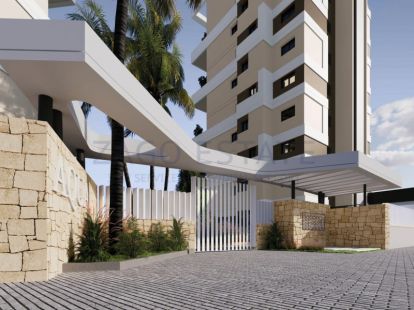
- 90m2
- 3
- 2
 Calpe, Spain
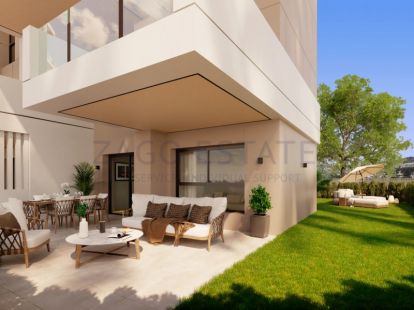
- 60m2
- 2
- 2
Calpe, Spain

- 150m2
- 2
- 2
Marbella, Spain

- 87m2
- 3
- 2
Estepona, Spain
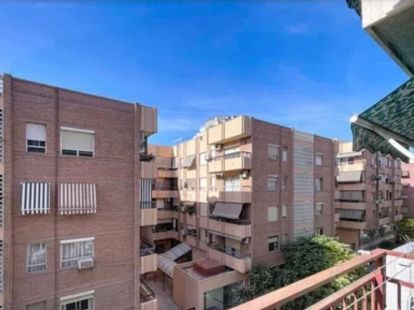
- 75m2
- 2
- 3
Alicante, Spain
- 72m2
- 3
- 2
- 2
Alicante, Spain
 Lloret de Mar, Spain

- 491m2
- 4
- 5
Benidorm, Spain
What Happened to the Spanish Market in 2025
According to the College of Property Registrars (Registradores):
| Indicator | 2025 | Trend |
|---|---|---|
| Total home purchase-sale transactions | over 705,000 | +10.4% — record since 2008 |
| Resale market | 556,091 transactions, 78.9% of volume | +10.1%, highest since 2006 |
| Average property price | €214,581 | +8.2%, all-time high |
| Average price per m² | €2,303/m² | +9.6%, 26% above the 2007 peak |
| Purchases by foreigners | 97,300 | absolute series record |
| Foreigner share | 13.8% | slightly below 14.6% in 2024 |
| Mortgages taken out by foreigners | 39,485, or 7.92% | +20.7%, series record |
The absolute number of foreign purchases grew, but the share declined: the market grew faster than foreign demand. Within the foreign segment itself, a reversal occurred in the second half of 2025 — purchases by foreign residents of Spain rose by 3.3%, while purchases by non-residents fell by 15.1%. Property in Spain is increasingly being bought by those already living there.
Where Foreigners Buy: Share of All Provincial Transactions, 2025
| Province | Foreign Buyer Share | Comment |
|---|---|---|
| Alicante | 43.29% | Torrevieja, Guardamar, Orihuela Costa — the core of Russian-speaking demand |
| Málaga | 32.80% | Costa del Sol, the most expensive of the mass resort markets |
| Santa Cruz de Tenerife | 30.04% | Canaries, ITP rate of 6.5% — below the mainland |
| Balearic Islands | 29.86% | average property price €410,322 — highest in the country |
| Girona | 25.00% | Costa Brava |
| Las Palmas | 21.72% | Gran Canaria, Fuerteventura, Lanzarote |
| Murcia | 21.42% | Costa Cálida, cheaper than Alicante |
| Almería | 17.47% | Costa de Almería |
| Tarragona | 15.86% | Costa Dorada |
| Barcelona | 14.21% | city and coastline, by absolute transaction volume — first in the country |
| Valencia | 12.23% | city and province |
| Madrid | 6.90% | domestic market, foreign demand is secondary |
| Seville | 2.50% | virtually a national market |
By autonomous communities, the leaders are the Balearics (29.86%), the Valencian Community (27.65%), the Canaries (25.65%), Murcia (21.42%), Catalonia (15.57%), and Andalusia (13.34%).
How to use this. The higher the foreigner share in a province, the higher the chance of finding an agency and notary with English-speaking staff and a streamlined procedure for non-residents — and the higher the price premium for an “international” showcase. Alicante and Málaga offer convenience; Murcia and Almería offer price.
Who Exactly Is Buying: Nationalities, 2025
| Nationality | Share of All Foreign Purchases |
|---|---|
| British | 7.97% |
| German | 6.52% |
| Dutch | 6.31% |
| Moroccan | 5.74% |
| Romanian | 5.24% |
| French | 5.11% |
| Italian | 5.05% |
The British hold first place, but the gap is narrowing: the difference with Moroccan buyers shrank to just over two percentage points over the year. More than half of all foreign purchases are made by EU citizens; over 60% when counting all Europeans, including the British. No single nationality exceeds 8%: Spain's foreign demand is highly fragmented, with no monopolistic buyer — you will be competing not with one stream, but with a dozen different ones.
The Tax Is Calculated on a Different Figure Than What You Agreed Upon
The most expensive surprise for a buyer who found the property themselves on a portal and negotiated the price themselves.
Since January 1, 2022 (Law 11/2021), the basis for calculating ITP, AJD, and inheritance tax is the valor de referencia — the reference value that the Cadastre assigns to each property annually.
Tax base = the greater of two figures: the price in the escritura OR the valor de referencia.
Example. An apartment on Idealista for €200,000, negotiated down to €180,000. If the property's valor de referencia is €195,000, ITP will be charged on €195,000. You got a discount on the price, but not on the tax. By declaring €180,000, you will receive an additional assessment from Hacienda, typically within 6–12 months after the transaction, already with interest.
The reference value can be challenged, but the burden of proof lies with the taxpayer, not the tax authority. In February 2026, the Spanish Constitutional Court (STC 13/2026 of February 12, 2026) rejected the question of unconstitutionality of the mechanism and confirmed its legality — there is no longer any reason to expect the rule to be overturned.
The valor de referencia is public and free: it can be checked on the Sede Electrónica del Catastro using the cadastral reference number. It should be checked before negotiating. If the property has no assigned reference value, a certificate of its absence is included in the escritura.
ITP in the Valencian Community Reduced to 9% from June 1, 2026
The property transfer tax rate is regional. In the Valencian Community (Alicante, Torrevieja, Valencia, Benidorm, Guardamar, Dénia), it had remained at 10% for over a decade.
From June 1, 2026, under Law 5/2025, the general rate has been reduced from 10% to 9% — for the first time in over a decade. Conditions:
- the rate applies to transactions executed by notarial deed from June 1, 2026 onward; those signed earlier are taxed at 10%;
- for properties over €1,000,000, 11% remains, and it applies to the entire value, not the excess;
- reduced rates of 6% and 3% apply to certain categories — buyers under 35, large families, buyers with disabilities; a non-resident investor is generally not eligible for these;
- extends to garages, storage rooms, and commercial premises on the resale market.
On a €200,000 property, the difference between 10% and 9% is €2,000; on a €300,000 property, it is €3,000. For a deal that is at the deposit stage in May, this is a direct argument for postponing the signing date before the notary.
The reduction does not apply to new builds: primary transfers are subject not to ITP, but to VAT (10%) plus AJD (1.5% in the Valencian Community).
Full Cost Breakdown: How Much on Top of the Property Price
| Expense Item | Resale Market | New Build |
|---|---|---|
| ITP (Valencian Community, from 06/01/2026) | 9%, for prices over €1 million — 11% | — |
| VAT | — | 10% |
| AJD (stamp duty) | — | 1.5% |
| Notary | €600–900 | €600–900 |
| Property Registry | €400–650 | €400–650 |
| Gestión (declarations, registration) | €300–500 | €300–500 |
| Lawyer (review and representation) | €1,500–3,000 or 1–1.5% | €1,500–3,000 or 1–1.5% |
| Nota Simple (Registry extract) | approximately €11 incl. VAT per property | approximately €11 |
| Total on top of property price | approximately 10–12% | approximately 13–14% |
The ITP rate in other autonomous communities differs — the range across Spain is roughly 6–11% depending on the region and price. In the Canaries, the general rate is 6.5%, which on a €250,000 property makes a difference of over €6,000 compared to the Valencian Community. Check the rate of the specific community before budgeting.
Mortgage for a Non-Resident: The Real Entry Threshold
Spanish banks have long and willingly lent to foreigners — in 2025, foreigners took out a record 39,485 mortgages. But the terms differ from those for residents:
| Borrower Category | Maximum Financing (LTV) |
|---|---|
| Spanish resident | up to 80% |
| Non-resident — EU or EEA citizen | 60–70% |
| Non-resident outside the EU | typically 50–60% |
LTV is calculated on the lower of two figures: the purchase price or the bank appraisal (tasación). For a €200,000 property with 60% LTV, you need €80,000 for the down payment plus another €20,000–24,000 for taxes and expenses — totaling approximately €100,000. The loan term for non-residents is usually shorter than for residents, and application review during document translation can stretch to two to three months.
Timeline: From First Contact to Keys
| Stage | Timeline | Comment |
|---|---|---|
| Obtaining NIE | 2–6 weeks | Consulate (form EX-15) or Policía Nacional in Spain; payment — Modelo 790, código 012 |
| Opening a Spanish bank account | 1–3 weeks | NIE required, plus proof of source of funds |
| Property selection and due diligence | 2–4 weeks | Registry extract for each finalist, check valor de referencia |
| Viewings | 1–3 days per block | Realistically 5–8 properties per trip |
| Deposit (arras) | 1 day | After document checks, not before |
| Until escritura | 30–60 days | Deadline set in the deposit contract |
| Escritura and key handover | 1 day | Notary, payment, handover |
| ITP filing (Modelo 600) | 30 working days after escritura | Saturdays, Sundays, and holidays — both national and regional — are excluded from the deadline. Late filing incurs penalties, interest, and in certain cases fines |
| Registry registration | 1–3 months | Handled by the gestoría |
Total 2.5–4 months, if the NIE is processed in parallel with the search. The main time reserves are the NIE and the bank account, not the property search.

What the Registry Extract Shows — and What It Does Not
Nota Simple — an extract from the Property Registry (Registro de la Propiedad), the electronic version costs approximately €11 incl. VAT. This is the first document to obtain for any property found on a portal, and it should be requested before viewing.
It shows: the owner and their share, description and area according to the Registry, mortgage and its outstanding balance, liens and judicial encumbrances (embargos), easements, the tenant's right of first refusal.
It does not show:
- debts to the comunidad — they are not registered anywhere;
- IBI (municipal property tax) arrears;
- discrepancies between the actual layout and the registered one — additions, enclosed terraces, subdivided apartments may not be recorded in the Registry;
- whether a tourist rental license exists — critical when purchasing for short-term rentals;
- persons living in the property (okupas), unless there is a court ruling regarding them.
Each item must be requested separately: from the comunidad administrator, from the Ayuntamiento, and from the Cadastre.
Debts That Transfer with the Property, Not Remain with the Seller
Under Article 9.1.e of the Horizontal Property Law (LPH), the acquired property itself is liable for the previous owner's debts to the comunidad — limited to the elapsed portion of the current year and the three preceding calendar years. Debts older than this window do not transfer to the buyer: the comunidad can only claim them from the former owner.
In practice: if a property has accumulated four years of arrears, the buyer receives a bill for three years plus the current year — regardless of what the listing says or what the seller promised.
The mandatory document is the certificado de estar al corriente de pago, a certificate from the comunidad administrator confirming no outstanding debt. By law, it must be presented at the signing of the escritura, but it should be requested at the deposit stage: at the notary, you no longer have leverage. A similar mechanism applies to IBI — unpaid municipal tax is also secured by the property itself.
Deposit: Three Types of Contracts, of Which Only One Is Suitable
| Deposit Type (arras) | If Buyer Defaults | If Seller Defaults |
|---|---|---|
| Confirmatorias | seller may seek specific performance through court | buyer may seek specific performance |
| Penales | deposit is retained as penalty | return in the agreed amount |
| Penitenciales (Art. 1454 Civil Code) | buyer forfeits the deposit — and that is the end | seller returns double the amount |
A non-resident buyer needs penitenciales: it limits the risk to the amount of the deposit. The key detail — Spanish courts by default construe a deposit as confirmatorias. Wording such as "€10,000 is transferred as arras" is insufficient: the court will read it as a confirmatory deposit and open the door for the seller to seek specific performance.
The contract must expressly cite Article 1454 of the Civil Code and state the consequences for each party: the buyer forfeits the deposit, the seller returns double. The second typical mistake is a long period to the notary without a renewal clause: the buyer remains bound for months if a financing issue arises.
The standard deposit amount is approximately 10% of the price, with the period to escritura being 30–60 days.
Questions and Answers
Has Spain introduced a 100% tax on home purchases for non-residents from outside the EU?
No. As of July 2026, this is not an active tax, but a bill. It was announced by Pedro Sánchez on January 13, 2025, and submitted to Parliament on May 22, 2025. Since then, it has not been brought up for debate in Congress once, and it was excluded from the government's January 2026 housing package. The government lacks a majority to pass it, and lawyers are challenging its compatibility with constitutional law and EU law. There is no need to factor this rate into your purchase budget today, but monitoring its status is advisable.
Can I obtain Spanish residency by purchasing real estate?
No. The "golden visa" for an investment of €500,000 or more was abolished on April 3, 2025, with the entry into force of Ley Orgánica 1/2025. Some Russian-language websites still advertise it — this is outdated information. Current routes are the digital nomad visa, the non-lucrative visa, and the student visa. Property purchase does not grant residency rights.
Who pays the agency commission in Spain?
Typically, the seller: the Spanish agency commission is usually 3–5% plus VAT and is already built into the listed price. This is precisely why a buyer almost never succeeds in "removing the commission" by simply contacting the owner directly — the seller is not obliged to reduce the price by that amount and generally will not agree to it. The buyer's real leverage lies elsewhere: comparing the property price to the valor de referencia and to the average price per m² in the area.
Is an NIE required just to view properties?
No. An NIE is needed to open a bank account, sign the escritura, and pay taxes. You can view properties, negotiate, and sign a deposit contract without one.
Is it possible to buy remotely without traveling to Spain?
Yes, via a notarial power of attorney (poder notarial), executed before a Spanish consul or before a local notary with an apostille and sworn translation. Viewings can be replaced by video walkthroughs with measurements. The limitation is the bank: when opening an account for a non-resident, many branches require an in-person visit or video identification, and some refuse to do it remotely as a matter of policy.
What taxes does an owner pay if they do not rent out the property?
Two. The first is IBI, an annual municipal tax, the rate of which depends on the municipality and is calculated on the cadastral value. The second is IRNR, the non-resident income tax: even if the property is vacant, the tax authority imputes notional income of 1.1% or 2% of the cadastral value (depending on when it was last revised) and taxes it at 19% for EU and EEA citizens or 24% for others. Add to this the comunidad fees and utility bills.
How do I check a property for okupas before buying?
There will be no court rulings about them in the Registry extract, so the check involves three steps: an in-person or video viewing with access to the interior (refusal to allow entry is a stop signal), a conversation with the comunidad administrator about who actually lives in the property, and a request for information on persons registered at the address (padrón) through a lawyer. The highest risk properties are bank-owned properties, properties from inheritance disputes, and properties sold "from photos only."