
Halkidiki, Greece — Towns & Regions, Excursions, Map Location
- What is Halkidiki? Geography, Logistics & 2026 Market Analysis
- Regions, Towns & Technical Data for an Ideal Vacation
- Kassandra — The First "Finger": Rhythm and Hedonism
- Sithonia — The Second "Finger": Greenery and Seclusion
- Mount Athos (Agion Oros) — The Third "Finger": Spirituality and Myths
- Excursions, Activities & Practical Tips
- Top 5 Excursions in 2026 (Prices & Technical Details)
- Who is a Halkidiki Vacation Good For?
- Documents & Useful Tips
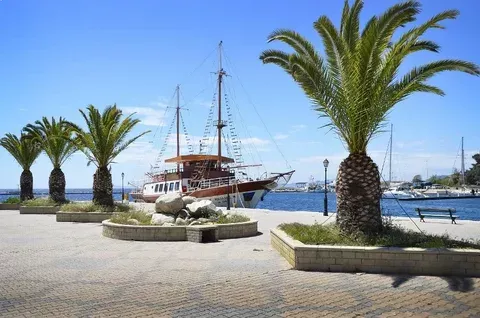
What is Halkidiki? Geography, Logistics & 2026 Market Analysis
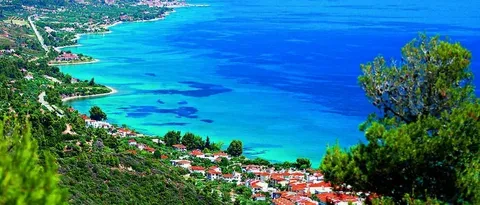
What is it? Halkidiki is not just a resort, but a unique geographical phenomenon in the northern Aegean Sea, just 80 km from Thessaloniki. The peninsula is famous for its "three-fingered" shape: three narrow promontories — Kassandra, Sithonia, and Mount Athos (Agion Oros) — jut into the turquoise waters, creating a coastline stretching over 500 km. It is the mainland's premier resort area in Greece, which, unlike the southern islands, is lush with greenery even in high summer thanks to pine forests, olive groves, and vineyards.
Where is it and why is choosing the right area important? On the map of Greece, Halkidiki is located in Central Macedonia, southeast of Thessaloniki. Understanding the geography is critical: each of the three "fingers" offers a fundamentally different type of vacation. Kassandra is a continuation of Thessaloniki's "Macedonia" International Airport (SKG), the most accessible and party-oriented area. Sithonia is the "green" peninsula for seclusion, while Athos is a spiritual center with closed monasteries. The distance from the airport to the resorts ranges from 60 to 150 km, directly affecting transfer costs and travel time (from 1 to 3.5 hours).
2026 Prices & Market Analytics. In 2026, the Halkidiki tourism market shows clear polarization. On one hand, there is growing demand for luxury complexes integrating wellness services (e.g., the renovated Sani Asterias with its "Home away from home" concept). On the other, the budget segment remains strong. Current season price analytics are as follows:
-
Flights: With no direct flights from many countries, connecting flights start from approximately €500–€700 round trip (economy class).
-
Transfers: Taxi from Thessaloniki Airport to the resorts costs between €30 and €150 depending on the hotel's distance.
-
Accommodation (Average Prices 2026):
-
Budget (2nd-line apartments in Kassandra): from €25–€35 per night.
-
Mid-Range (3-star hotels on the first line): €40–€100 per night.
-
Premium (5-star hotels in Sithonia, e.g., Porto Carras complex): from €120 to €400 per night.
-
Luxury Villas: up to €900 per night.
-
-
Beach Infrastructure: Sunbeds with umbrella — standard €3–€7 per set (2026 prices remain at last season's levels).
What to expect from 2026? Experts note a trend towards "slow" travel and deep immersion in local culture. Tourists are increasingly choosing not just "all-inclusive" hotels, but authentic programs: yacht cruises with Greek lunch, wine tours at the Porto Carras vineyards, and gastronomic dinners in tavernas with live music. A second important trend is the growing popularity of "green" hotels and eco-tourism, especially in the protected areas of Sithonia.
Срочная продажа
- 60m2
- 2
- 1
 Kassandra, Greece
- 100m2
- 3
- 1
Kassandra, Greece
- 78m2
- 2
- 2
Kassandra, Greece
- 345m2
- 5
- 4
Kassandra, Greece
- 179m2
Kassandra, Greece
- 240m2
- 4
- 3
Kassandra, Greece
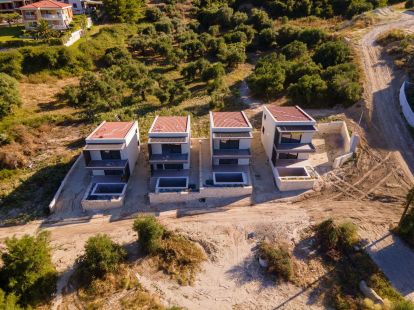
- 108m2
- 3
- 3
Kassandra, Greece
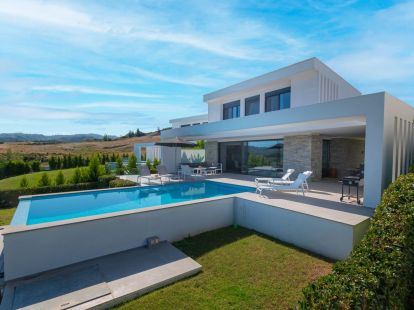
- 260m2
- 5
- 4
Kassandra, Greece
Regions, Towns & Technical Data for an Ideal Vacation
Kassandra — The First "Finger": Rhythm and Hedonism
This is the westernmost, most populous, and party-oriented peninsula. It is closest to Thessaloniki (about 60 km), making it logistically convenient.
-
Key Towns and Their Specialization:
-
Kallithea: The epicenter of nightlife and youth vacation. Here lie the famous ruins of the Sanctuary of Zeus Ammon, which you can explore between bar visits.
-
Hanioti: A resort for family and quiet relaxation, despite having bars. It features a beautiful pedestrian square with plane trees and well-kept parks. The beach is a narrow strip of sand and pebbles stretching 5 km.
-
Afytos: The most photographed village on the peninsula. Located on a cliff (not on the first line!), it is known for its stone mansions and breathtaking views of the Kassandra Gulf. This is where you'll find the best sunsets.
-
Pefkohori: A resort surrounded by a pine forest (hence the name — "pine place"). Popular for Turtle Lake and picturesque beaches.
-
-
Technical Data and Features:
-
Beaches: Long, sandy and sandy-pebble, with a gentle slope. Ideal for children and water sports.
-
Transport Accessibility: KTEL buses from Thessaloniki run regularly (up to 7 times a day), covering all key villages. Transfer from the airport takes about 1–1.5 hours.
-
Pros: Developed infrastructure, wide choice of accommodation from budget to premium, proximity to the airport.
-
Cons: High density of buildings and tourists during peak season (July-August).
-
Sithonia — The Second "Finger": Greenery and Seclusion
The middle peninsula is considered the most picturesque. The landscape here is more hilly (up to 800m high), covered with dense pine forests that come right down to the water's edge.
-
Key Towns and Their Specialization:
-
Neos Marmaras: The most cosmopolitan resort in Sithonia, founded by refugees from Asia Minor in 1922. It's home to boutiques, yacht marinas, and restaurants. Nearby lies the giant Porto Carras complex with its own 18-hole golf course, vineyards, and the only casino in Halkidiki.
-
Nikiti: An old town divided into the old part (traditional houses) and the new tourist zone along the coast. The most popular sea cruises to Kelifos Island (Turtle Island) depart from Nikiti port.
-
Sarti: A resort at the foot of Mount Athos, known for its long beach and views of the "Holy Mountain". Popular among windsurfing enthusiasts due to steady winds.
-
Vourvourou: A bay with a complex of nine small islands (Diapori). An ideal place for those seeking secluded coves and crystal clear water.
-
-
Technical Data and Features:
-
Beaches: The most scenic on the peninsula. Kavourotripes — a series of rocky coves with turquoise water and white sand. Kalogria — a beach with a gentle slope. Karidi — a heart-shaped beach with natural shade from pine trees.
-
Dive Sites: The waters around Sithonia are ideal for snorkeling. Visibility reaches 20–25 meters. Octopus, starfish, moray eels can be found. PADI centers offer introductory dives from €45 to €55.
-
Pros: Untouched nature, cleanest sea, numerous wild beaches.
-
Cons: Poorly developed public transport (buses run infrequently). A rental car is essential for exploring the coves. Accommodation prices are on average 20-30% higher than in Kassandra.
-
Mount Athos (Agion Oros) — The Third "Finger": Spirituality and Myths
The eastern peninsula, over 80 km long, is an autonomous monastic republic existing since 972 AD.
-
Access Specifics:
-
Entry is forbidden to women. This is the only strict rule. Men can obtain a special permit (diamonitirion) to visit the monasteries.
-
For women and family tourists, a sea cruise (Athos Cruise) is available from the port of Ouranoupoli. The boat sails along the southwestern coast about 500 meters offshore, allowing you to see the Great Lavra, Vatopedi Monastery, Dionysiou Monastery, and the famous Russian Monastery of St. Panteleimon.
-
Ouranoupoli: The border town from which all excursions depart. Here you can visit the Byzantine tower and try local wine.
-
Excursions, Activities & Practical Tips
Top 5 Excursions in 2026 (Prices & Technical Details)
-
Yacht Cruise (Sithonia): A 6-hour journey from Nikiti with stops at Kalogria beach, Kelifos Island (underwater caves), and Agios Georgios beach. Includes: snorkeling, SUP, open bar, and lunch (traditional Greek meze with fish). Standard price per person is around €80–€100.
-
Meteora Excursion: The most popular "whirlwind" tour. Departure at 6 am, return at 10 pm. Visit 2-3 monasteries (e.g., Great Meteoron and Varlaam). Cost: from €60 to €90 per person.
-
Jeep Safari on Mount Holomontas: An off-road tour through the national park with visits to traditional mountain villages (Arnea, Taxiarchis), tasting local honey and ouzo. Price: around €70–€90.
-
Petralona Cave: An archaeological site of global importance. The oldest European human skull (archanthropist) was found here, estimated to be 700,000 years old. Entrance: about €8–€10. Important: it's cool inside (about 17°C), bring a jacket.
-
Gastronomic Tour in Porto Carras: Visit the winery with a tasting of 5 wine varieties and a walk through organic vineyards on the slopes of Mount Meliton.
Who is a Halkidiki Vacation Good For?
-
For Families with Children: Kassandra (Kallithea, Hanioti, Pefkohori) with sandy beaches, hotels with animation, and water parks. June and September are optimal months (water +23..+25°C).
-
For Divers and Snorkelers: Sithonia (Vourvourou, Porto Carras, Kelifos Island). Clear water and rich marine fauna (octopus, cuttlefish, moray eels).
-
For Yachtsmen: The coast of Sithonia with its coves and marinas (Neos Marmaras, Nikiti).
-
For Pilgrims: Mount Athos (men only) and cruises for all.
-
For Active Travelers: Trekking on Mount Holomontas and through olive groves, windsurfing on Sarti beaches.
Documents & Useful Tips
-
Visas: Greece is part of the Schengen Area. A valid Schengen visa (category C) and health insurance with coverage of at least €30,000 are required for entry.
-
Connectivity: Local operators (Cosmote, Vodafone) offer tourist SIM cards with internet packages (€5–€15). Free Wi-Fi is available in hotels and some taverns, but public hotspots are rare.
-
Car Rental (Critically Important): For exploring Sithonia and wild beaches, a rental is essential. Prices: from €30–€50 per day at international agencies (Avis, Hertz) and from €15–€20 at local ones. Roads in Halkidiki are paved, signs are in Greek and English. Parking is mostly free, except in Thessaloniki city center (paid parking ~€3.50/hour).
-
What to Try: Retsina (white wine with pine resin aroma), Halkidiki olive oil, fresh mussels, and grilled octopus. Average bill in a taverna is €20–€30 for two without alcohol.