The end of the Chinese era? Indians are entering Thailand's residential property market
For most of the past decade, the conversation about foreign buyers in Thailand's property market began and ended with China. Developers in Phuket and Bangkok built their sales funnels around Chinese investor demand — compact studios, short-stay rental programs, and payment structures that suited buyers treating condominiums as financial instruments rather than homes. That conversation is shifting.
The May 2026 edition of the Juwai IQI Global Real Estate Newsletter, published yesterday and tracking cross-border property search and transaction data across Asia, identifies Indian buyers as the fastest-growing foreign segment in Thailand's residential market this year. The shift is not just in volume. It is in what is being purchased and why. Where Chinese buyers have historically concentrated in compact city-centre units with strong rental yield projections, Indian buyers are gravitating toward larger family-sized apartments — two and three bedrooms — with an emphasis on long-term living rather than short-term income. The distinction matters for developers, who have spent years calibrating product around a buyer profile that is now evolving.
The structural context behind this shift is not difficult to read. Thailand's government has leaned heavily into its Long-Term Resident visa scheme, which offers foreigners with qualifying income or assets a ten-year residency pathway linked to minimum property investment. For Indian professionals — particularly those in technology, finance, and regional management roles — Thailand represents a combination of tax environment, climate, and lifestyle access that has become increasingly competitive with Singapore and the UAE. Both markets have experienced significant cost increases; Bangkok and Phuket have not.
The distinction between Bangkok and Phuket remains sharp. Bangkok's condominium market is carrying the weight of years of oversupply — the city ended 2025 with approximately 235,000 unsold condo units — and developers are increasingly selective about new launches, concentrating on high-end product above THB 100,000 per square metre where foreign demand is strongest. Phuket tells a different story. Annual condo transfers to foreign buyers on the island have grown at roughly 10 percent year-on-year, and analysts at KKP Bank are projecting price growth of 8 to 10 percent through the end of 2026 — the strongest forecast of any Thai market. The west-coast corridor from Bang Tao through Cherng Talay to Layan is the specific geography driving these numbers.
One timing signal worth noting: Thailand's government reduced transfer fees to 0.01 percent of purchase value for eligible properties in April 2025. That incentive is legislated to expire on June 30, 2026. Buyers who have been watching the market have approximately eight weeks to close a transaction under the reduced-fee framework before standard rates — 2 percent for transfer, 1 percent for mortgage registration — return.
Properties for sale in Thailand — Phuket and Bangkok: discount-house.com/thailand
More articles
Properties in Thailand
Popular properties in Thailand
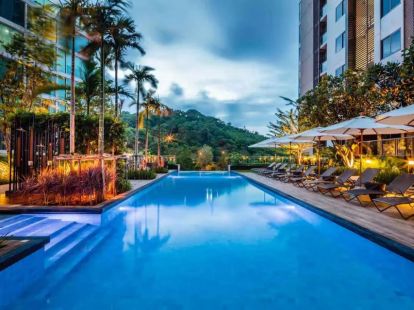


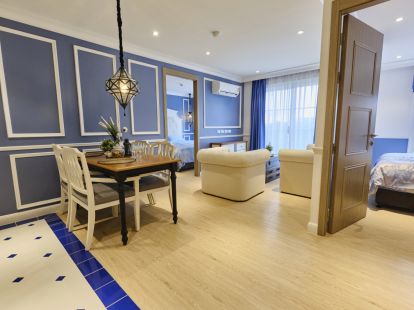
- 52m2
- 2
- 2
- 2