
Green island of Mykonos
- What is Mykonos and why is it called the green island
- What is Mykonos and where is it located
- History of the island from antiquity to the present day
- How to get to Mykonos in 2026
- Architecture of Chora and the unique appearance of the capital
- Main attractions and cultural heritage
- Panagia Paraportiani and architectural treasures
- Sacred Island of Delos: journey into antiquity
- Museums and cultural life of the island
- Traditional village of Ano Mera and monasteries
- Beaches, gastronomy and practical information
- Best beaches of Mykonos for every taste
- Gastronomy and local culinary traditions
- Modern Mykonos in 2026 and practical tips
What is Mykonos and why is it called the green island
What is Mykonos and where is it located
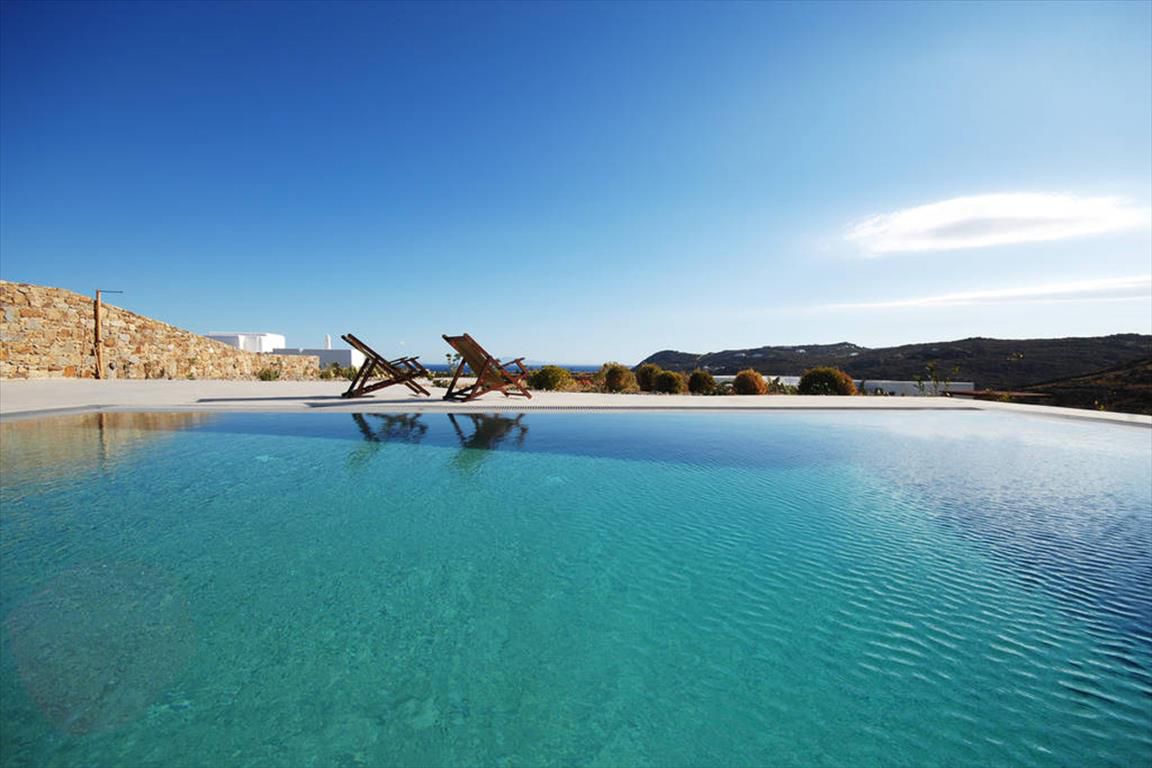
Mykonos is one of the most famous islands in Greece, part of the Cyclades archipelago, located in the very heart of the Aegean Sea. The island is situated 150 kilometers southeast of Athens and covers an area of 86 square kilometers. The coastline stretches for 89 kilometers, and the permanent population is about 10,000 people, which increases to 50,000 during the peak tourist season. Despite the common perception of Mykonos as a center of nightlife and luxury holidays, the island received its poetic name "green" due to the amazing contrasts of nature. Unlike many neighboring Cycladic islands with almost desert landscapes, Mykonos delights the eye with emerald hills in spring and early summer, when after winter rains the land is covered with lush vegetation, wildflowers and aromatic herbs. This is especially evident in the central part of the island, around the traditional village of Ano Mera, where olive groves and cypress alleys have been preserved.
History of the island from antiquity to the present day
The history of Mykonos goes back to ancient times. According to ancient Greek mythology, the island was named after the hero Mykonos, son of King Anios who ruled on the neighboring island of Delos. It is believed that here the battle of Zeus with the Titans took place, and the giant stone blocks scattered across the island are the petrified bodies of defeated enemies. Archaeological finds indicate that the first settlements appeared here as early as the 3rd millennium BC. Ionian Greeks settled the island around 1000 BC, and since then Mykonos has been inextricably linked with the history of the neighboring sacred island of Delos, which in ancient times was the largest religious and commercial center of the Mediterranean. The heyday of Mykonos came in the 7th-6th centuries BC, when it became an important transshipment point on sea routes. During the Byzantine period, the island was repeatedly attacked by pirates, which forced residents to build fortified settlements in the interior of the island. In the 13th century, Mykonos came under the control of the Venetians, who owned it for almost three centuries, and in 1537 it was conquered by the Ottoman Empire. Liberation from Turkish rule occurred in 1821 during the Greek War of Independence, and since 1830 the island officially became part of the newly formed Greek state.
How to get to Mykonos in 2026
Mykonos occupies a strategically advantageous position in the central Aegean Sea, serving as a kind of gateway to the Cyclades archipelago. The island is located at the intersection of major sea routes between mainland Greece, Crete and the islands of the eastern Mediterranean. The closest neighbors of Mykonos are the sacred island of Delos, located just two kilometers to the west, as well as popular tourist destinations — Naxos, Paros and Santorini. This location makes Mykonos an ideal starting point for exploring the entire archipelago, many travelers choose it as a base for sea excursions to neighboring islands.
There are several ways to get to Mykonos. Mykonos National Airport named after Queen Elizabeth II with code JMK is located just four kilometers southeast of the island's capital — Chora town. The airport receives regular flights from Athens, Thessaloniki and other major cities in Greece, as well as many international flights in the summer season from London, Paris, Rome, Frankfurt, Milan and other European capitals. Flight time from Athens is only 35-40 minutes, making air travel the fastest and most comfortable way to get to the island. In 2026, the launch of a direct New York-Mykonos flight is expected, which will significantly expand opportunities for travelers from North America. For those who prefer sea travel, regular ferry services connect Mykonos with the port of Piraeus in Athens, as well as with neighboring islands. The ferry journey from Athens takes from 2.5 to 5.5 hours depending on the type of vessel. During the high season, ferries depart several times a day. Many cruise ships, including Astoria Grande, include Mykonos in their itineraries, giving passengers the opportunity to spend one day on the island. Cruise ships dock at the new port of Tourlos, located three kilometers from Chora, from which free shuttles run regularly to the city center.
Architecture of Chora and the unique appearance of the capital
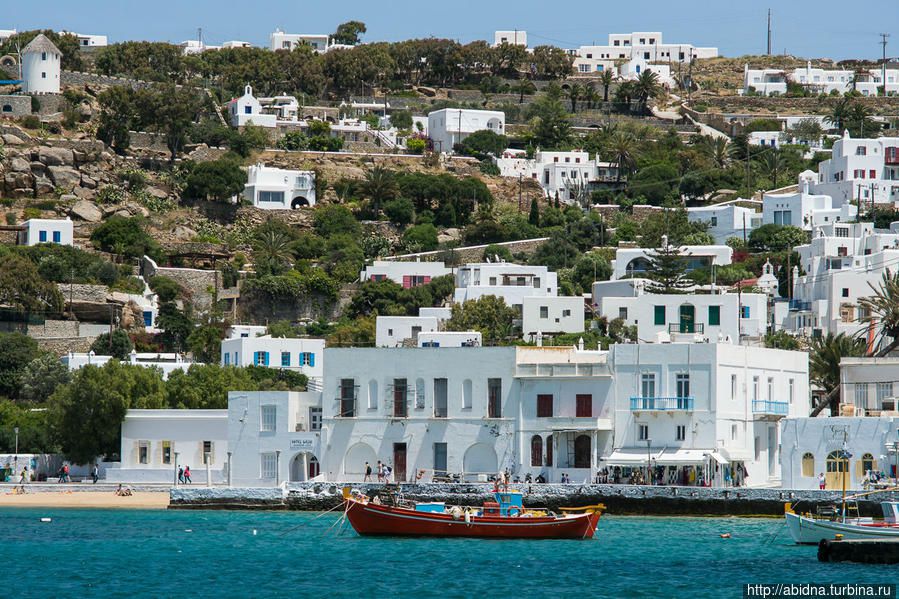
The capital of Mykonos, which locals call Chora and tourists often simply call Mykonos Town, is a unique architectural ensemble recognized as one of the most picturesque in the entire Mediterranean. The city arose in the 18th century as a fortified settlement protected from pirate raids. Its layout is deliberately chaotic — narrow winding streets were designed to confuse invaders, and the high white walls of houses created natural labyrinths. Today this labyrinth, known as skalinia, has become the main attraction and object of admiration for travelers. Walking along these streets, you can get lost dozens of times, but each turn opens up new picturesque views — sometimes a sudden exit to the sea with a view of the famous windmills, sometimes a cozy square with a shady tavern, sometimes a small Byzantine church.
The architecture of Chora is a classic example of the Cycladic style with its characteristic features: whitewashed cubic houses with flat roofs, bright blue or terracotta doors and shutters, patterned paved streets entwined with bougainvillea. An interesting feature of local architecture is the mandatory presence of an external staircase leading to the second floor or flat roof, which was used for collecting rainwater and drying laundry. Many houses are decorated with wooden balconies with carved railings — kalia, which give a special charm to the urban landscape. Despite the apparent simplicity, each house is unique, and the ensemble as a whole creates a unique harmony of lines and color.
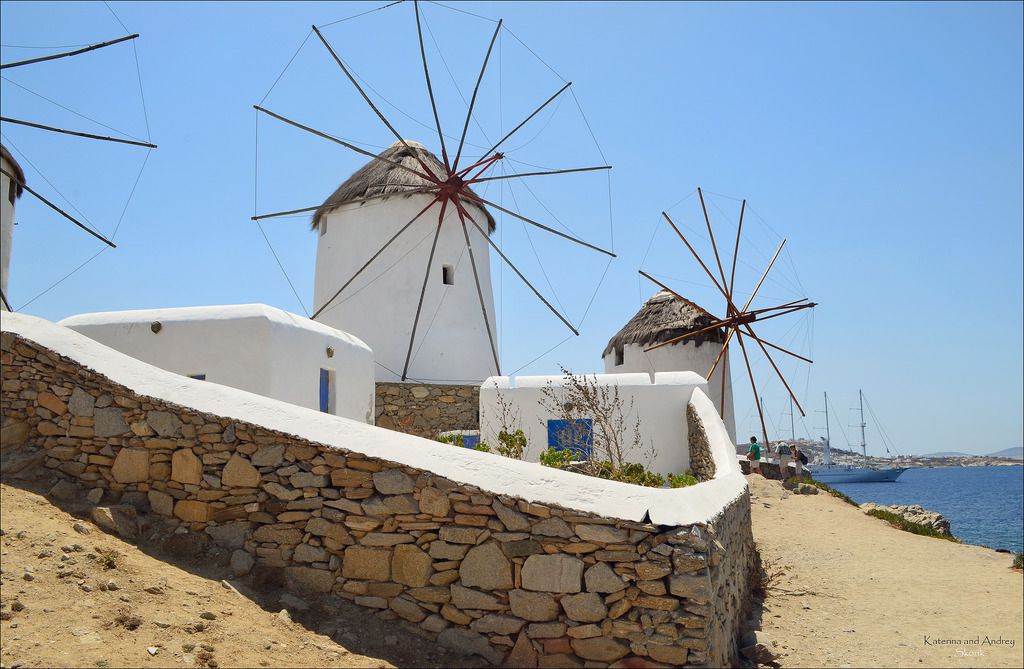
Special attention should be paid to the famous windmills of Mykonos, which have become a symbol of the island. Seven mills on a hill above Chora, built in the 16th century, still tower over the city, forming the most recognizable silhouette in all the Cyclades. The mills were used for grinding wheat until the mid-20th century, and today they are a protected historical monument and a favorite place to watch sunsets. The best view of the mills opens from the Little Venice area, located right at the water's edge, where old houses with colorful balconies literally hang over the water, reminiscent of Italian Venice.
Срочная продажа
- 350m2
- 4
- 4
 Sithonia, Greece
- 56m2
- 2
- 1
Sithonia, Greece
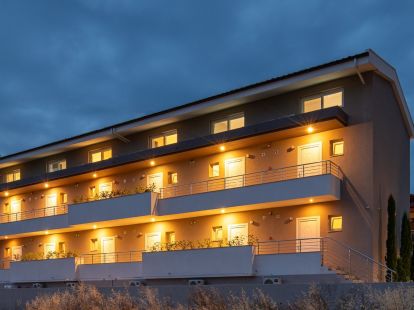
- 508m2
- 24
- 18
Sithonia, Greece
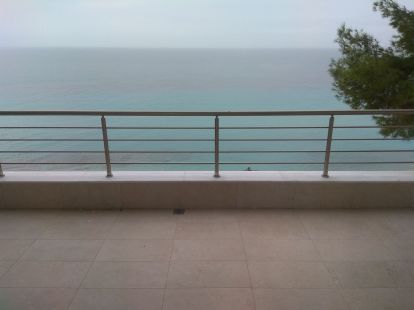
- 60m2
- 2
- 1
Kassandra, Greece
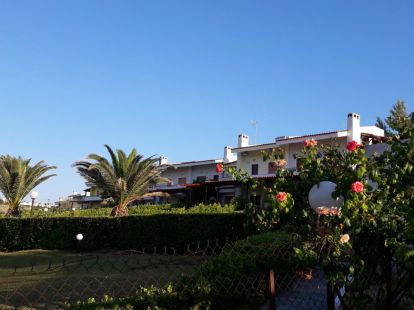
- 100m2
- 3
- 1
Kassandra, Greece
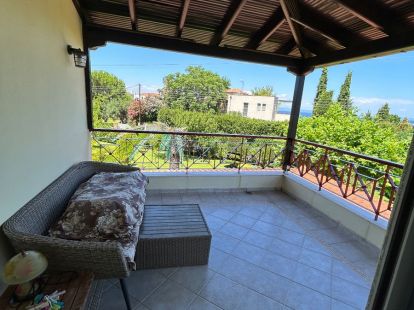
- 78m2
- 2
- 2
Kassandra, Greece
- 345m2
- 5
- 4
Kassandra, Greece
- 170m2
- 5
- 3
Sithonia, Greece
Main attractions and cultural heritage
Panagia Paraportiani and architectural treasures
Panagia Paraportiani is considered the most photographed church not only in Mykonos, but in all of Greece. This unique temple complex, located in the very heart of Chora, is an architectural phenomenon — five separate chapels, built at different times starting from the 15th century, are united into a single composition. The central church is dedicated to the Dormition of the Virgin, the others to Saints Efstathios, Anargyroi, Sozon and the Holy Cross. The name Paraportiani translates as "side door" and is associated with the fact that the main entrance to the complex was originally located on the side of the main church. According to another version, the name comes from the word "porti" — exit, since in the Middle Ages there was an exit from the city fortifications here. White domes of different heights, bizarre arches and passages create the impression that the church grew organically, without a premeditated plan. Inside, ancient icons and a carved wooden iconostasis from the 18th century have been preserved.
Little Venice is one of the most romantic areas of Chora, where houses are literally built on the edge of the sea, and waves break against their walls. In the 16th-17th centuries, wealthy captains and merchants settled here, building their mansions in the Venetian style, hence the name of the area. A characteristic feature of the local architecture is two- and three-story houses with wooden balconies painted in bright colors, which create a picturesque contrast with the white walls. Today, Little Venice is home to the most prestigious restaurants, bars and galleries on the island. In the evening, it is especially crowded here — travelers gather to watch the sunset with a glass of local wine or cocktail, observing how the sun slowly sinks into the sea behind the silhouettes of the windmills.
The windmills of Kastro, located on a hill above Chora, are the hallmark of Mykonos. Seven well-preserved mills, built in the 16th century, still tower over the city, forming the most recognizable silhouette in all the Cyclades. The mills were used for grinding wheat until the mid-20th century, and today one of them — Boni's Mill — has been turned into a museum where you can see the original mechanisms and learn about the history of breadmaking on the island. From the site near the mills, a panoramic view opens up of Chora, Little Venice and the endless expanses of the Aegean Sea. The best time to visit is an hour before sunset, when the sun's rays paint the white walls in golden and pink tones.
Sacred Island of Delos: journey into antiquity
Just two kilometers from Mykonos is the island of Delos — one of the most significant archaeological sites in Greece, included in the UNESCO World Heritage List. According to ancient Greek mythology, it was here that the goddess Leto gave birth to the twins Apollo — the god of light and arts, and Artemis — the goddess of hunting. In ancient times, Delos was considered a sacred island, the center of religious life and the largest commercial port in the Mediterranean. In the 5th century BC, the Delian League was created here — a military-political association of Greek city-states, whose treasury was kept on the island. The heyday of Delos came in the Hellenistic period, when the island's population reached 30 thousand people, and its port received thousands of ships from all over the ancient world.
Today Delos is a huge open-air museum covering about four square kilometers. Archaeological excavations, begun in 1872 and continuing to this day, have revealed unique monuments to the world: the Terrace of the Lions with five marble statues from the archaic period of the 7th century BC, the sanctuary of Apollo with temples from different eras, an ancient theater for 5 thousand spectators, ruins of residential buildings with magnificent mosaic floors — the House of Dolphins, the House of Dionysus, the House of the Trident. Special attention deserves the lake where, according to legend, Apollo was born — today it has dried up, but has preserved its sacred atmosphere. You can get to Delos only on excursion boats, which regularly depart from the old port of Mykonos from morning until early evening. It is important to remember that it is forbidden to stay on the island overnight, and the last boat leaves around 15:00. To see all significant sites, at least three to four hours will be required.
Museums and cultural life of the island
Despite its reputation as a party island, Mykonos offers a rich cultural program for discerning travelers. The Archaeological Museum of Mykonos, located in the center of Chora, was founded in 1902 and houses a unique collection of finds from Mykonos itself and neighboring Delos. Special attention deserves the ceramic products of the Mycenaean period of the 13th century BC, a collection of Cycladic idols — mysterious marble figurines from the 3rd millennium BC, as well as the famous Mykonos amphora with relief images of scenes from the Trojan War. The museum displays grave steles, sculptures from the Roman period and a magnificent collection of ancient Greek jewelry.
The Ethnographic Museum of Mykonos, located in a historic 18th-century building in the Kastro area, offers immersion into the traditional life of the island. The exhibition presents household items, traditional costumes, agricultural tools, craft implements and a rich collection of photographs of old Mykonos. Of particular interest is the reconstructed windmill with a fully preserved mechanism, as well as an exhibition dedicated to navigation and trade. In the museum courtyard, you can see a cistern for collecting rainwater — a vital element of life on the island with a shortage of fresh water.
The Aegean Maritime Museum, opened in 1983, is dedicated to the rich maritime history of Greece. Its collection includes models of ships from different eras from antiquity to the present, navigational instruments, ancient maps, marine instruments and a rich library. In the open-air exhibition at the pier, restored historical vessels are presented, including a traditional fishing boat "kaiki" and a 19th-century sailing ship. The museum regularly holds temporary exhibitions and educational programs for children.
Traditional village of Ano Mera and monasteries
Ano Mera, located eight kilometers from Chora in the central part of the island, is a unique place where the authentic atmosphere of old Mykonos has been preserved. Unlike the tourist capital, time seems to have stopped here — narrow streets, white houses with fences, small family taverns where locals gather for evening coffee. The village was founded in the Middle Ages as a refuge from pirates, and elements of fortifications can still be seen here. The main attraction is the monastery of Panagia Tourliani, founded in 1542. According to legend, the icon of the Virgin was found by a shepherd in a thorn bush, in Greek "tourliani" means thorny, and it was decided to build a monastery on this site.
The monastery of Panagia Tourliani impresses with its architecture — it is a fortress structure with powerful walls and narrow loopholes, which served not only spiritual but also defensive purposes. Inside, a unique carved wooden iconostasis from the 18th century, made by craftsmen from the island of Crete, ancient icons and a rich library with rare manuscripts have been preserved. Special attention deserves the museum at the monastery, which displays church vestments, utensils and a collection of Byzantine icons. In the courtyard grows an ancient cypress and a spring with water considered healing flows. The monastery is active, several monks still live here, and services are held on Sundays.
The surroundings of Ano Mera are ideal for walking and getting to know the nature of the island. Here begin several marked trails leading to secluded beaches on the north coast or to the top of Mount Profitis Ilias — the highest point of Mykonos with a height of 341 meters. From the summit, a panoramic view opens up of the entire archipelago — on a clear day you can discern the outlines of Naxos, Paros and even distant Santorini. In spring, these hills are covered with a carpet of wildflowers — red poppies, purple irises and yellow daisies, and the air is filled with the aroma of thyme and sage.
Beaches, gastronomy and practical information
Best beaches of Mykonos for every taste
The beaches of Mykonos are famous for their diversity and can satisfy the demands of the most discerning travelers. The south coast of the island offers the most developed beach infrastructure with golden sand and a gentle entry into the sea. Platys Gialos is considered one of the most popular beaches, where comfortable hotels, taverns and water activities are located. Ornos attracts families with children due to the calm sea and developed infrastructure — here you can find everything necessary for a comfortable holiday: sunbeds, umbrellas, showers and lifeguard towers. Psarou beach, named after the island of the same name visible on the horizon, is famous for its crystal clear water and picturesque rocks framing the bay.
For lovers of social life and parties, there are legendary beaches Paradise and Super Paradise, known throughout the world for their beach clubs and discos that operate around the clock. Here are located the famous clubs Cavo Paradiso and Paradise Club, where world DJs perform. During the day these are ordinary beaches with sunbeds and bars, and at dusk they turn into the epicenter of the island's nightlife. Elia Beach is the longest beach on the island, stretching for one and a half kilometers, popular among surfers due to constant winds and good waves. Part of the beach is designated for nudists, which attracts a corresponding audience.
For those seeking seclusion and tranquility, it is worth going to the north coast, where the wild beaches of Ftelias and Panormos are located. The road here requires some effort — often it is dirt serpentines, but the reward is worth the effort: turquoise water, almost complete absence of people and the opportunity to feel like a pioneer. Agios Ioannis, located not far from Chora, is known for the fact that scenes from the film "For Your Eyes Only" from the Bond series were filmed here. From the hill above the beach, a breathtaking view opens up of the island of Delos and the Aegean Sea. Kalafatis on the east coast attracts lovers of water sports — here there are windsurfing and kitesurfing schools.
Gastronomy and local culinary traditions
The culinary traditions of Mykonos were formed under the influence of Cycladic cuisine and the centuries-old history of the island. The basis of local gastronomy consists of fresh seafood, olive oil, vegetables grown on terraced fields, and famous cheeses. The main treasure of the island is koprenisti, a local variety of cherry tomatoes with a rich sweet taste, which have been grown here since the 16th century. During the ripening season from July to September, they can be tried in any restaurant — in salads, baked with cheese or simply fresh with olive oil and oregano. Another local delicacy is fava, puree from yellow peas, which is served with onions, olive oil and capers.
Traditional taverns of Mykonos, hidden in the labyrinths of Chora or scattered along the coast, offer dishes prepared according to recipes passed down from generation to generation. Be sure to try htapodi — grilled octopus, marinated in olive oil with herbs and grilled until crispy. Kreatika is a local version of dolmades, where caper leaves collected on rocky slopes are used instead of grape leaves. Loukanika are spicy pork sausages with orange zest and herbs, served with local wine. Among the cheeses, kefalotyri stands out — a hard salty cheese made from sheep's milk, which is fried in a pan and served with lemon, as well as mizithra — a fresh soft cheese similar to ricotta.
Winemaking in Mykonos has ancient traditions dating back to antiquity. Despite the small size of the island, several varieties of wine adapted to the local terroir are produced here. White wines from the Assyrtiko variety are characterized by freshness and mineral notes, reds from Mandilaria have a rich taste with hints of dried fruits. Local wineries offer tasting tours where you can not only try wines but also learn about the history of viticulture on the island. Special pride of Mykonos is the liqueur souma, which is produced from the plant of the same name growing on rocky slopes. The drink has a rich red color and a sweetish taste with a slight bitterness.
Modern Mykonos in 2026 and practical tips
2026 promises to be a landmark year for Mykonos in several aspects. The tourist infrastructure of the island continues to actively develop — a large-scale reconstruction of the old port is being completed, which is turning into a modern marina capable of receiving super-yachts up to 100 meters long. New restaurants and boutiques are opening on the embankment, the pedestrian zone is expanding. At the airport, the modernization of the runway has been completed, which will allow receiving heavier aircraft and increase the number of international flights. From May 2026, airlines have announced the launch of direct flights from New York, Chicago and Toronto, which will make the island even more accessible for North American travelers.
Important events are taking place in the cultural life of the island. The International Arts Festival Mykonos Art Week, which takes place in June, attracts artists, musicians and performers from all over the world. Exhibitions are held not only in the galleries of Chora, but also in unexpected places — in old windmills, on beaches and in traditional villages. In July, the third annual jazz festival will take place, to which world-class stars are invited. Local authorities actively support the preservation of traditions — in Ano Mera there is a craft center where you can see how traditional Cycladic fabrics and ceramics are created.
Ecological initiatives are becoming a priority direction for the island's development. In 2026, the Green Mykonos program was launched, aimed at reducing plastic pollution, developing waste recycling and preserving natural resources. Modern treatment facilities have been installed on the beaches, hotels are implementing water and energy saving systems. Special attention is paid to the protection of marine fauna — in the bays of the island, Mediterranean monk seals can be increasingly seen, returning to these waters due to improved environmental conditions.
When planning a trip to Mykonos, it is important to consider seasonal features. The high season lasts from June to September, when the weather is most favorable for beach holidays — air temperature reaches 28-30 degrees, water warms up to 24-25 degrees. May and October offer more comfortable temperatures for excursions of 22-25 degrees and significantly fewer tourists, and accommodation prices decrease by 30-40 percent. From November to April, the island has a low season, many hotels and restaurants are closed, but this time is ideal for those who want to see authentic Mykonos without tourist crowds.
The official currency of Greece is the euro. Major credit cards are accepted in Mykonos, however in small taverns and shops it is better to have cash. Tips in restaurants are usually 5-10 percent of the bill, if service is not included. Transport on the island is represented by buses, taxis and rental cars. Regular bus service connects Chora with the main beaches and Ano Mera. Renting a car gives maximum freedom of movement, but requires driving skills on narrow winding roads.