Greek Golden Visa in 2026: a record number of issuances and an unexpected bonus from the launch of the European EES system. What this means for property buyers.
Data published yesterday by the specialized publication Varnavas Law record a sharp acceleration of the Greek residency-by-investment program. In 2026, Greece issued 8,879 residence permits under the Golden Visa program — a figure that analysts call one of the highest since the program's launch in 2013. The previous year was notably more modest in terms of issuance volume.
The increase in approvals comes against the backdrop of a significant tightening of investment thresholds introduced in September 2024. For properties in Attica — including central Athens and Piraeus — as well as in Thessaloniki, Mykonos, Santorini, and all islands with a population exceeding 3,100 people, the minimum investment amount is now €800,000. In the remaining regions of the country, the threshold remains at €400,000, while for a special class of properties — conversion of commercial premises into residential use or restoration of historic buildings — a threshold of €250,000 applies regardless of location.
The fact that the number of approvals increased precisely after the tightening of requirements reflects the structure of new demand: the program is being used increasingly by wealthy investors from the United States, the United Kingdom, and the Middle East, for whom the €800,000 threshold is not a limiting factor. According to Buygreece.us, over the past year the number of US applicants for the Greek Golden Visa increased by approximately 49% year-on-year.
Particular attention should be paid to an event that is not officially related to the real estate market but creates a real practical advantage for holders of Greek residence permits. In April 2026, the European Union launched the Entry/Exit System (EES), requiring third-country nationals entering the Schengen Area to undergo biometric identification and registration in the border database. Holders of a valid residence permit, including under the Greek Golden Visa, are exempt from this procedure. This means that for an investor with Greek residency, crossing European borders remains as it was before April: without queues for biometrics, without restrictions on the number of days in the Schengen Area, without the ETIAS procedure, which will be launched later.
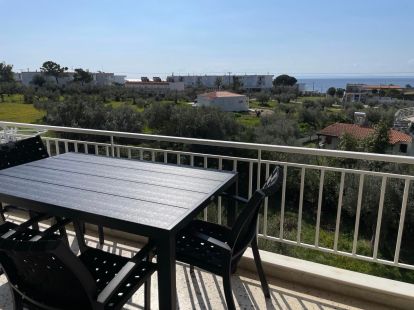
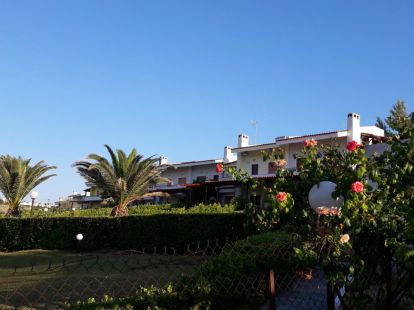
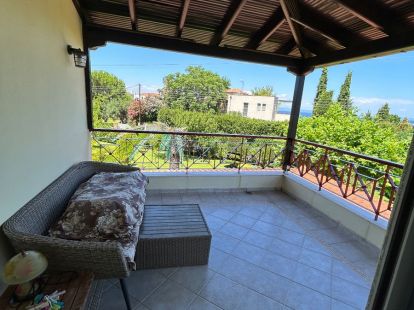
For the regional real estate market, this is practically important. Buyers considering Halkidiki, Crete, or the Peloponnese as a second home with the prospect of residency gain not only access to the European market but also a sustainable mobility advantage at a time when other non-EU citizens face new border restrictions. The total volume of residential real estate in Greece, according to the ENFIA tax register, reached €782.5 billion in 2026. Attica, which includes Greater Athens, accounts for more than half of this amount — €412.6 billion.
Real estate in Greece — Halkidiki, Corfu, mainland coast: discount-house.com/greece
More articles
Properties in Greece
Popular properties in Greece