Property purchase procedure in Montenegro 2026

- Buying real estate in Montenegro: what a foreigner can purchase
- Property due diligence before purchase: what changed in 2026
- Purchase and sale agreement and the role of the notary
- A clause often omitted from the preliminary contract
- Costs on top of the property price
- What this works out to in practice
- Settlement: the rule that changed the transaction in May 2026
- The declaration without which title will not transfer
- Tax and title registration
- Off‑plan property: where the procedure takes longer
- How to buy property in Montenegro without surprises: what to request before the deposit
- Remote transaction
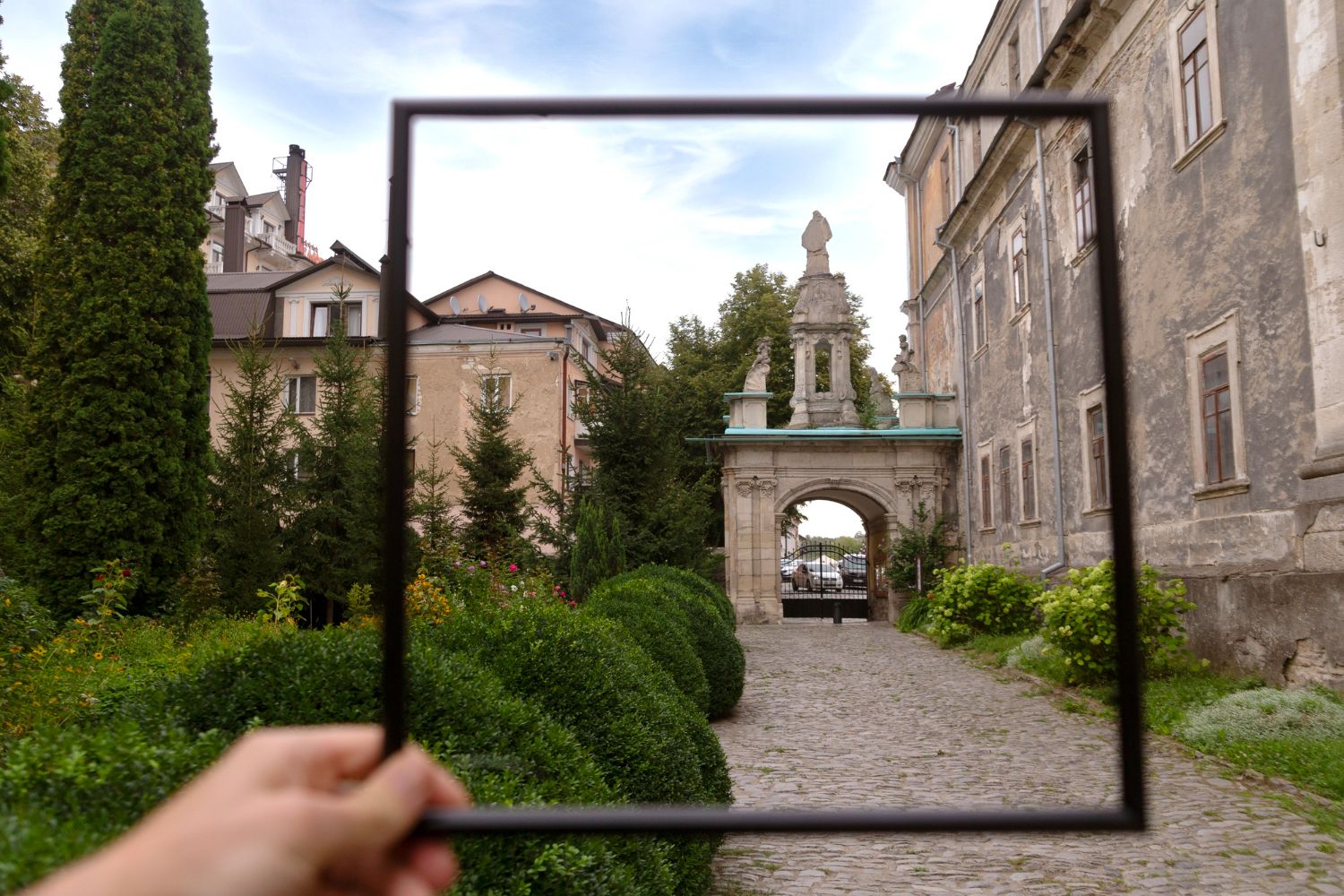
Montenegro is a small state in the southern Adriatic, between Croatia and Albania: roughly 13,800 km² of territory, about 620,000 residents, and 293 kilometers of coastline. The country is not a member of the European Union, but it has been an official candidate since 2010, and transactions here have long been conducted in euros — including real estate deals. For the buyer, this means a familiar currency, European property rights, and prices that remain noticeably lower than in neighboring Croatia and Italy.
What can a foreigner buy, and what is off‑limits? How do you verify a property so you don't end up with a house you can't resell? How much is added to the purchase price on top of the property's cost? How do you transfer money now that cash payments are banned? Can you close the deal without ever setting foot in the country? We break down the procedure step by step — with figures, timelines, and two rules that have changed over the past year.
Buying real estate in Montenegro: what a foreigner can purchase
No government approval is required to buy real estate in Montenegro, and citizenship plays no role: an apartment, house, or commercial property can be registered either in the buyer's name as an individual or under a company. The only types of land closed to foreigners are defined in Article 415 of the Property and Legal Relations Act of March 25, 2009. The prohibition covers agricultural land, forested areas, national park territories, cultural heritage sites, anything designated as strategic, islands, and a one‑kilometer strip along the border.
Here follows a nuance that is most frequently misunderstood. A plot of up to 5,000 m² can be registered in an individual's name — but only together with an existing building already standing on it. Vacant land is only available under one condition: the plot must be included in a detailed urban plan, meaning the state has pre‑approved construction there according to a specific project. Anything not covered by that plan falls under the green zone, is not subject to development, and cannot be sold to a foreigner as an individual. The only legal way around this is through a Montenegrin company, for which the restriction does not apply.
Separately, regarding intermediaries: since 2025, agency activities in the country have been licensed. The license number should be requested before signing a property search agreement — it takes thirty seconds of conversation and eliminates half the potential issues.
Property due diligence before purchase: what changed in 2026
The notary is responsible for verification, and it typically takes a couple of days. The primary document is the certificate of ownership, list nepokretnosti, provided by the seller. It shows what the property is, where it is located, its area, the cadastral number under which it is recorded, who owns it, and whether any encumbrances exist. The buyer can also access this information independently through the electronic cadastre, provided they know the district, municipality, and the number of the current extract — useful to check before the first viewing to avoid wasting time.
The main change over the past year is that the notary is no longer permitted to authenticate a transaction for a property with any encumbrance, including the absence of an occupancy permit. Previously, such properties were sold at a discount with a promise to "legalize later" — now, the transaction simply cannot proceed at the notary's office.
Related to this is the law on unauthorized constructions: published on August 6, 2025, and effective eight days later. Owners of such properties were given a deadline to declare themselves and initiate legalization — initially set for February 14, 2026, then postponed, so the date should be rechecked before any transaction. Not everything can be legalized: the property must be visible on the state aerial survey from July 2025. The images are publicly available, and this is one of the rare cases where a buyer can check someone else's property before even contacting an agent.
The practical takeaway for a secondary‑market buyer: if a property is recorded in the cadastre as built without a permit, the question is not about a discount, but about whether a legalization application has been submitted and at what stage it stands. Until the procedure is complete, the property cannot be sold, rented out, or gifted.

Срочная продажа
- 80m2
- 1
- 1
- 1
 Podgorica, Montenegro
- 99m2
- 1
- 2
- 1
Podgorica, Montenegro
- 91m2
- 1/2
- 2
- 1
Sutomore, Montenegro
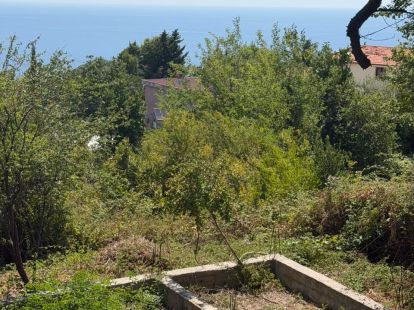
- 332m2
Sutomore, Montenegro
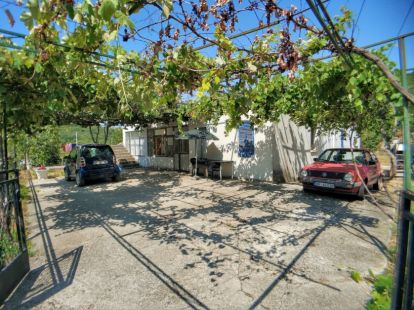
- 192m2
- 1
- 4
- 3
Sutomore, Montenegro
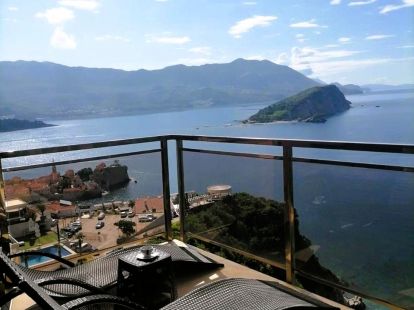
- 78m2
- 5/6
- 1
- 1
Budva, Montenegro
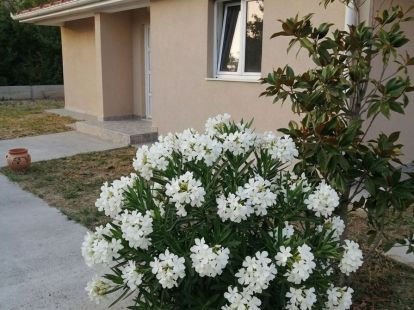
- 130m2
- 1
- 2
- 1
Bar, Montenegro
- 37m2
- 1/4
- 1
Baošići, Montenegro
Purchase and sale agreement and the role of the notary
The document is prepared and certified by a notary — strictly within the country, strictly in Montenegrin, and strictly with both parties or their authorized representatives present. There are two standard forms: predugovor, if the transaction needs to be secured before final settlement or while the property is still under construction, and ugovor, when both parties are ready to close everything at once. The preliminary contract specifies the date for signing the main agreement, mutual guarantees, and the consequences of default by either party.
At the same time, the buyer pays a kapara — typically 5% to 10% of the price. The property is taken off the market, and here lies the trap for those accustomed to Russian practice: the deposit is forfeited not after a cooling‑off period, but immediately upon signing. There is no "cooling‑off period" whatsoever.
When the buyer is a foreigner, a sworn interpreter from the state register must be present at the table. Their role is broader than it may seem: they read the text aloud and sign the contract themselves. No interpreter's signature — no valid transaction, and this is a matter of form, not convenience.
A reciprocal safeguard is also in place. The notary notes in the certificate of ownership that a transaction has already been concluded for the property. On the secondary market, this note is made upon the buyer's request; on new builds, it is automatic. Until the obligations are fulfilled, the same apartment cannot be resold to another party, leased, or mortgaged.
A clause often omitted from the preliminary contract
The deposit is non‑refundable if the buyer withdraws from the transaction. However, there is one situation that formally looks like a buyer's withdrawal but is not: when the notary refuses to clear the property due to an encumbrance or incomplete legalization. To ensure the deposit is returned in such a case, the clause must be written directly into the preliminary contract — providing for a refund if the legal due diligence yields a negative result or if the notary refuses certification. Sellers with clear title documents raise no objections to such a clause; resistance from the seller is a signal in itself.
Costs on top of the property price
| Item | Amount | Who pays | When |
|---|---|---|---|
| Real estate transfer tax | 3 / 5 / 6% — tiered, depending on the property price | Buyer | After signing, upon the tax authority's assessment |
| Notary fee | €70–5,000 — per the chamber's tariff: up to €5,000 — €70; €80,000–120,000 — €350 plus 21% VAT; thereafter €10 for each €15,000 | Not fixed by law — determined by the agreement | On the day of signing |
| Sworn interpreter | from €170 — oral €50 per hour plus €20 per page of written translation with apostille; typically 6–8 pages in the contract | Foreign party | On the day of signing |
| Real estate agent commission | 2–5% — for a €100,000–300,000 property about 3%; cheaper — 4–5%; more expensive — about 2% | Buyer on the secondary market, developer on the primary market | Per the property search agreement |
| Cadastre state fees | ≈€15 | Buyer | At the notary's office |
The notary fee is capped at €5,000 regardless of the property price. The transfer tax does not apply if the new build is sold by a legal entity that is a VAT payer — in that case, the tax is already included in the price.
What this works out to in practice
Let's run the numbers on a €200,000 secondary‑market apartment. The progressive tax comes to €7,000. The notary fee under the tariff scale, including 21% VAT, is approximately €420. A sworn interpreter costs around €200. At a 3% commission, the agent's fee is €6,000. Cadastre fees — €15. Total: €13,600, or 6.8% on top of the property price. The same square footage from a developer works out noticeably cheaper for two reasons at once — the transfer tax does not apply, and the agent's commission is covered by the seller. The difference between a primary and secondary purchase at this budget reaches €13,000, and this should be factored in before choosing the property, not after.

Settlement: the rule that changed the transaction in May 2026
The payment schedule is determined by the parties themselves: the full amount can be transferred in a single payment, split into installments, or paid in stages. The recipient is either the seller directly or the notary's escrow account.
Since May 8, 2026, an amendment to the anti‑money laundering legislation has been in effect: cash payments for transactions of €10,000 or more are prohibited, and at least one party to the transaction is required to use a bank account with a Montenegrin bank. The law was passed on April 27, signed by the president on April 30, and came into force on the eighth day after publication.
The wording is often read as if the local bank account is required specifically from the buyer — and this leads to a dead‑end scenario: banks are reluctant to open accounts for foreigners without a residence permit, while temporary residence is only granted after property registration. However, the requirement is phrased as "at least one party," and a resident seller, who almost invariably holds a Montenegrin account, satisfies this condition themselves. The problem remains in two cases: when the seller is also a foreigner without a local account, and when the settlement is made through the notary's escrow account — this option fulfills the condition by definition and has therefore become the standard for transactions involving foreign buyers.
Practical order: before paying the deposit, find out whether the seller has an account with a Montenegrin bank; if not, agree on settlement through the notary's escrow account. Discussing this after signing the preliminary contract is too late: the deposit has already been paid and is non‑refundable.
The declaration without which title will not transfer
Until the seller has received every last euro, the transaction is not legally closed. The final step rests with them: they appear before the notary and sign a separate document — the clausula intabulandi. Its substance consists of three affirmations: the full amount has been received, there are no claims, and title is authorized to be transferred to the buyer. The Cadastre will not move forward without this signature, no matter how many contracts are on the table or how many transfers have been made.
Tax and title registration
Once the contract is signed, the initiative shifts to the buyer: they must personally appear at the tax office, obtain the assessment, and pay the amount within 15 working days. The penalty for late payment is 0.03% per day — converted to an annual rate, this comes to approximately 11%, which is higher than a consumer loan from a local bank.
The strategy of "putting a lower amount in the contract" does not work here. Every transaction is reviewed by an inspector, and if the price is significantly below market value, they will calculate the tax on the market value rather than on yours. The situation is different if the property is genuinely inexpensive — in poor condition, with an awkward layout: in that case, an explanatory statement and photographs are attached to the documents. The inspector accepts this as a standard procedure.
Next, the notary sends the package to the cadastral office to transfer the title. The statutory deadline is 30 working days, but in practice the waiting period can stretch to six months. What you receive at the end is the original cadastral extract in your name, and your data appears in the electronic database. A subtlety of status: you become the de facto owner on the day the main contract is signed, but legally — only on the day of registration.
Off‑plan property: where the procedure takes longer
With off‑plan properties, the chain is longer, and this must be factored into the timeline. Until the building is completed, an individual apartment does not legally exist — only the building as a whole exists. To bring it into existence, a licensed surveyor measures the property and prepares floor‑by‑floor plans with each unit identified; these plans are entered into the cadastre, and only then do the parties sign the main contract and transfer title to the specific unit. Until that point, all the buyer has is the preliminary contract plus the encumbrance notation. Title comes last.
How to buy property in Montenegro without surprises: what to request before the deposit
The list is short, but each item addresses a specific risk. A fresh cadastral extract — shows encumbrances and the actual owner. A notation of the occupancy permit or confirmation that a legalization application has been filed — without this, the notary will not proceed. A certificate of no arrears on utility bills and property tax — outstanding debts follow the property, not the previous owner. The agency's license number. And the answer to whether the seller holds an account with a Montenegrin bank — this determines the settlement structure. All of this must be requested before the deposit, because once the preliminary contract is signed, there is no room for revision.
Remote transaction
Personal travel is not required. Authority is delegated by power of attorney — typically to a lawyer or a representative of the agency handling the purchase. The wording should be limited to signing the contract and collecting the accompanying paperwork: there is no need to grant broad authority to dispose of property on your behalf. The power of attorney itself is certified by a notary in your country, then apostilled, and finally translated in Montenegro by a sworn interpreter.
What should be understood in advance: the property purchase can be fully completed by power of attorney, but filing for temporary residence cannot — personal presence is required for biometric data submission. If residency status is part of your plan, one visit will still be necessary.