Properties in Montenegro
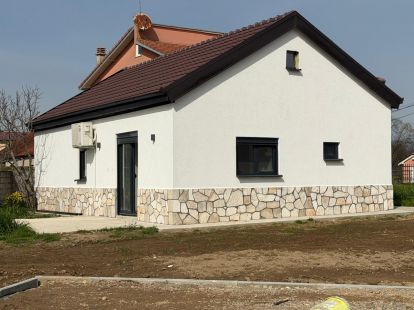
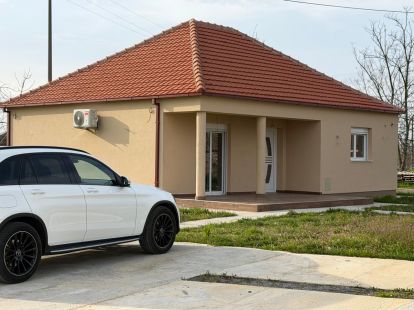
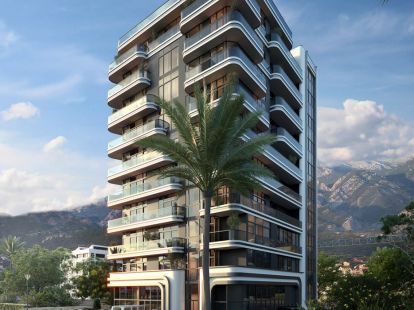
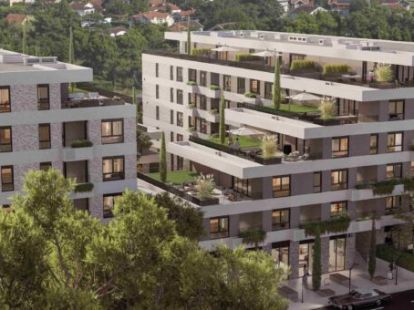
Real estate in Montenegro includes apartments in resort complexes, houses and villas with land, townhouses, building plots, and commercial properties. On average across the country, the price per square meter in new builds is €2,200–2,500, rising to €5,000 and above on the first coastline and in luxury complexes. Prices are increasing: property has risen by 8.3% year‑on‑year, with new builds up by 19%.
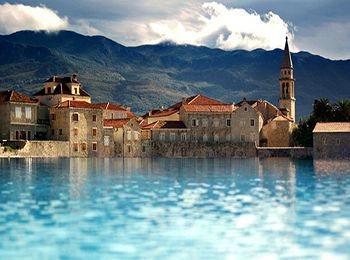
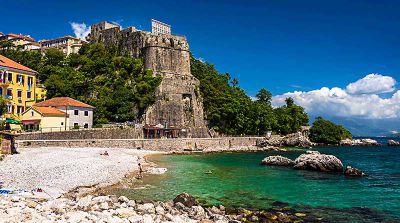
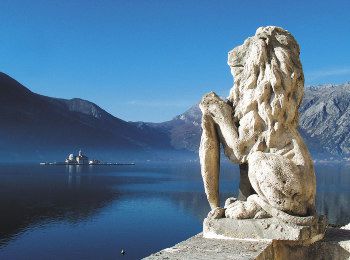
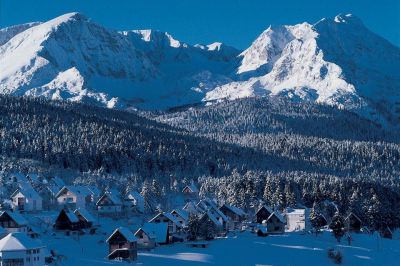
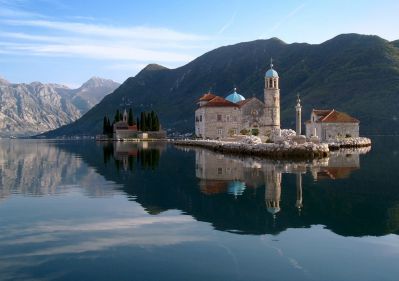
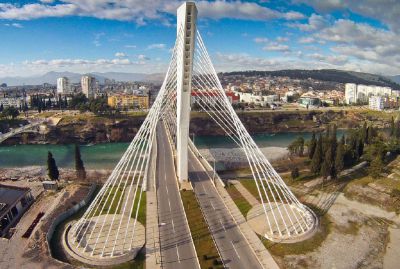
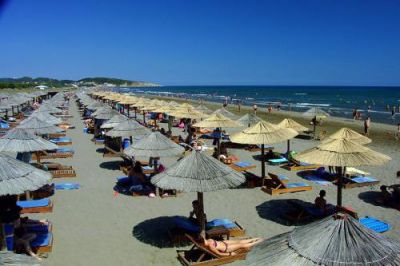
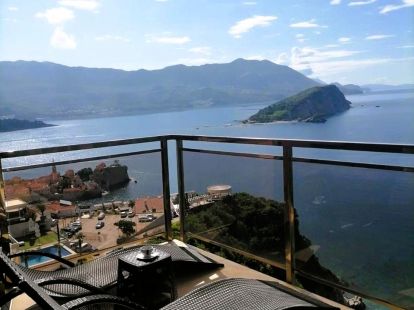
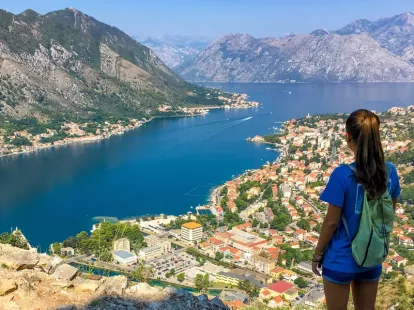
The coast is divided into four rivieras. The Bay of Kotor comprises Tivat with the Porto Montenegro marina, Kotor at the head of the bay, and green Herceg Novi. The Budva Riviera — Budva, Bečići, and Petrovac — is the country's tourist core. The Bar Riviera — Bar and Sutomore — offers the most affordable seaside housing. The Ulcinj Riviera — the south with sandy beaches. Away from the coast, buyers choose the capital Podgorica and the mountain towns of Kolašin and Žabljak.
Foreigners may own property on the same terms as locals, with no government permits required; restrictions apply only to agricultural land and plots in border zones. A purchase from €150,000 grants the right to a one‑year temporary residence permit, renewable annually.
- 80m2
- 1
- 1
- 1
- 99m2
- 1
- 2
- 1
- 91m2
- 1/2
- 2
- 1
- 332m2
- 192m2
- 1
- 4
- 3
- 78m2
- 5/6
- 1
- 1
- 130m2
- 1
- 2
- 1
- 37m2
- 1/4
- 1
- 127m2
- 6/8
- 3
- 2
- 46m2
- 3/6
- 1
- 1
- 178m2
- 3
- 2
- 2
- 69m2
- 2/4
- 2
- 2
- 50m2
- 3/6
- 1
- 1
- 70m2
- 3/4
- 2
- 1
- 50m2
- 2/4
- 1
- 1
- 36m2
- 2/4
- 1
Montenegro в цифрах
Buy real estate in Montenegro: prices by city
The difference in price per square meter between cities is threefold, yet rental yields do not follow the price curve — where entry is higher, returns are typically lower. Below — what each city offers and who it suits.
| City | Price per m² | Average house or villa price | Rental yield | Best suited for | What to consider |
|---|---|---|---|---|---|
| Budva | €2,800–4,500 | €350,000–700,000 | 6–9% | Short‑term rentals: the country's main tourist center | Population density in peak season reaches 14,000 people per km² — in winter the city empties along with rental demand |
| Tivat | €3,000–6,000 villa in the marina — from €1,200,000 | €600,000–1,500,000 | 5–7% | Year‑round living: airport, yacht marina, international schools | The most expensive entry to the market, yet the most liquid on resale |
| Kotor | €2,500–5,000 | €300,000–500,000 | 5–7% | Those seeking views and history: the bay is a UNESCO World Heritage site | In the old town, almost all buildings are listed monuments — any renovation requires separate approvals |
| Herceg Novi | €1,800–3,200 | €200,000–400,000 | 5–7% | Permanent living: mild climate, greenery, and a promenade | The city is built on slopes — access to the sea almost always involves stairs, which matters for elderly buyers |
| Bečići | €2,200–3,500 | €350,000–700,000 | 6–8% | A compromise between Budva's price and beach access | Beachfront strip and walking distance to Budva at a price about 25% lower |
| Petrovac | €1,500–2,800 | — | 5–7% | Family holidays: quiet resort, pebble beaches | The season is shorter than in Budva — yield calculations should be based on three months, not five |
| Bar | €1,200–2,500 | €150,000–250,000 | 5–7% | First purchase: the most affordable seaside housing | Port and the Belgrade–Bar railway line: the city is alive year‑round, not just seasonally |
| Ulcinj | €1,000–2,000 | — | 4–6% | Long‑term horizon: a growth area with the lowest entry point | Thirteen kilometers of sandy beach — rare for a country with a predominantly pebble coastline |
| Kolašin | €800–1,500 | — | 4–6% | Winter rental: ski resort near Biogradska Gora National Park | The only location in the country with reverse seasonality — occupancy peaks in winter |
| Podgorica | €900–1,800 | €180,000–300,000 | 4–5% | Work and study: the capital, with demand from diplomats and businesses | The only city with year‑round long‑term rentals and no seasonal gaps |
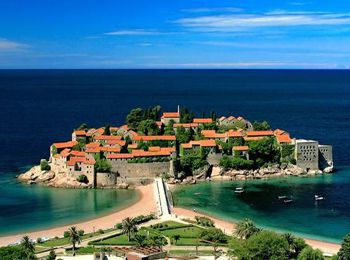
Prices and yields are based on market data from mid‑2026; yields are quoted as gross. Within each city, prices are influenced by sea views, beachfront location (plus 30–50%), pool, parking, and furnishings. A dash means there are no confirmed average values for houses in that city — use the price per square meter as a guide. The most expensive address in the country is Sveti Stefan, with villas from €3,000,000.
Which property in Montenegro is bought most often
Demand falls into three budget tiers. Studios and one‑bedroom apartments for €100,000–140,000 are bought for tourist rentals — the entire payback calculation is built on three summer months. Family homes for €160,000–250,000 are the most active segment, precisely because they meet the threshold for temporary residence and suit those relocating. Sea‑view villas start from €350,000 and reach several million in gated communities such as Luštica Bay. For a country‑wide benchmark: the median price for an apartment is €148,000, a house — €220,000, a land plot — €127,000, and a commercial property — €540,000.
Important nuances of buying property in 2026
Transactions above €10,000 must be settled only through licensed Montenegrin banks — cash deals are not permitted at this level. The property title document (list nepokretnosti) has been digitized, so legal due diligence takes days rather than weeks.
Purchase tax
The property transfer tax is paid by the buyer and is progressive: up to €150,000 — 3%, from €150,000 to €500,000 — a fixed €4,500 plus 5% on the amount above the threshold, and above €500,000 — €22,000 plus 6% on the excess. For a €440,000 property, this comes to €19,000. When buying directly from a developer that is a legal entity, this tax is not paid at all: instead, 21% VAT is already included in the price — for the same value, a new build works out cheaper than resale by the full amount of the tax. The tax is calculated by the authorities, and not always based on the contract: if the price is understated relative to market value, the base will be reassessed at their own valuation. Payment is due within 15 days of receiving the assessment.
Annual costs for the owner
Next are the recurring annual expenses. Property tax is set by the municipality, with rates from 0.25% to 1% of the market value, and is payable by whoever is recorded as the owner on January 1. Rental income is taxed at 15%, but the base is not the full amount: 25% is deducted as expenses, meaning that on €12,000 of rental income, the tax would be approximately €1,350. The return must be filed by March 31. On resale, capital gains are also taxed at 15%.
Temporary residence in Montenegro: new threshold from 2026
From January 17, 2026, temporary residence based on property is granted only to those whose property is valued at a minimum of €150,000, and they must hold at least a half‑share. The key detail: the taxable value is based on the municipal assessment, which is regularly below the transaction price — a property bought for €165,000 may easily be assessed at €120,000 and would not qualify for residence. The valuation certificate must be obtained before the preliminary contract, not after the purchase. The threshold does not apply to citizens of the EU, Norway, Switzerland, Iceland, or Liechtenstein. Those who purchased earlier and fall short have one year to either buy an additional property or combine several into a single qualifying investment.
It is important to understand the limitations of the status in advance. Residence based on property does not grant the right to work as an employee, does not provide visa‑free access to the Schengen Area — Montenegro is not a member — and years spent under this status do not count toward the naturalization period. For citizenship, another basis is required, such as running an actual business with real activity.
Why residency status is becoming more important
Montenegro is aligning its visa policy with EU standards: from November 1, 2026, a visa regime will be introduced for citizens of all countries whose entry rules have not yet been aligned with EU policy — including China, Turkey, Saudi Arabia, and several other states. Applications will be processed through accredited visa centers, with the issuance procedure to be confirmed. For the buyer, this changes the calculus: if previously one could travel to one's own apartment with just a passport, now citizens of these countries will need a visa or a residence permit. For property owners affected by the new rules, holding residency status allows visa‑free travel.
The main risk on the secondary market
A separate check is the legality of the construction. The main risk on the secondary market is properties built without a construction permit (građevinska dozvola). Such properties do not qualify for temporary residence, are difficult to resell, and cannot be insured for their full value, with the legalization burden falling on the new owner. This must be verified before paying the deposit: once the preliminary contract is signed, the deposit is non‑refundable if the buyer withdraws.
Property in Montenegro: what is happening in the market in 2026
The country has been an EU candidate since 2010, and accession remains the main driver of expectations — the visa changes in 2026 are themselves part of that harmonization. At the same time, buyers are roughly equally split across three scenarios: investors seeking rental income, families relocating for schools and the sea, and entrepreneurs acquiring commercial properties for hotel and hospitality businesses.
Mortgage calculator
Questions from property buyers
Yes. Citizens of Russia and other countries can buy property as full owners without restrictions — Law No. 8/2022 "On Foreign Investments" guarantees foreigners the same rights as citizens. The transaction is notarized and registered with the state Cadastre. Remote purchase by power of attorney is possible.
From two to four months. The process is as follows: property selection and legal due diligence, a preliminary contract with a deposit (typically 10% of the price), followed by the main contract before a notary and submission of documents to the Cadastre. The buyer needs a passport and a tax identification number; the seller provides the ownership certificate and a fresh Cadastre extract. The longest part is the title registration — the notarial deed itself is signed in a single day. When purchasing off‑plan, the timeline is determined by the developer's construction schedule, and ownership is registered after the building is completed.
Five documents. The Cadastre extract — it shows the owner, encumbrances, mortgages, and liens. The construction permit and the occupancy permit — without them the property is considered illegal. The municipal valuation certificate, if temporary residence is planned. A certificate of no arrears on utility bills and property tax — any outstanding debt transfers with the property. And for new builds — the developer's land title and project documentation. The due diligence is conducted by an independent lawyer, not the seller's lawyer.
On the secondary market — property transfer tax plus notary and stamp duties. On the primary market, VAT is included in the developer's price — no additional transfer tax is charged. The full table with all rates and annual expenses is in Block 3 above.
Yes. Buying a property of any value is grounds for applying for a temporary residence permit; the threshold, processing time, and path to permanent residence and citizenship are described in Block 3. Montenegro has been an EU candidate since 2010, which gives resident status real value.
The lowest entry point is Ulcinj, Bar, and Sutomore in the south of the country: apartments there cost one and a half to two times less per square meter than in Budva and Bečići, with the same sea. Specific figures for each city are in the table above. When choosing a budget option, look at three things that are not reflected in the price: the actual walking distance to the beach rather than the straight‑line distance on the map; whether the city operates year‑round or shuts down with the season; and whether a construction permit exists — because cheap listings are most often cheap precisely because it is missing.
Gross yields along the coast range from 4% to 9% per annum depending on the city, and almost all of it is generated over three to four summer months. Two‑bedroom apartments on the Budva Riviera rent for up to €120 per night in high season, but from November through March demand drops to zero everywhere except Podgorica and Kolašin. From the gross figure, deduct tax, utilities, the management company's commission — typically 15–25% of turnover — and cleaning between stays. The net yield ends up noticeably lower than the figures advertised in listings.
Legal verification of the property before signing the contract: compliance of the cadastral plan with the actual property, availability of a building permit, absence of mortgage encumbrances and claims from heirs. Without this step, the risk of buying a property with "invisible" problems is high. We carry out a full check as part of our turnkey transaction support.
Montenegrin banks do not lend to non-residents. However, developers offer interest-free installment plans.
This is handled by property management companies: they take care of finding tenants, check‑ins, cleaning, utility bills, and minor repairs, while sending the owner reports and transferring the income. The cost is typically 15–25% of rental revenue, with lower rates for long‑term rentals. Separately, verify who files the annual tax return — some companies handle it on behalf of the owner, others leave it to the owner. To pay utility bills and receive income, a local bank account will be needed — it is opened during the transaction stage.
Property purchase procedure in Montenegro 2026
Montenegro is a small state in the southern Adriatic, between Croatia and Albania: roughly 13,800 km² of territory, about 620,000 residents, and 293 kilometers of coastline. The country is not a ...
Temporary residence in Montenegro through property purchase
Who can obtain temporary residence in Montenegro through property purchase
Temporary residence in Montenegro through property is an annual resident status issued by the Ministry of Interior to the ...