
Plants of Montenegro: Endemics, Palms and Nature of the Balkans in 2026

What is the flora of Montenegro and why is it unique
The flora of Montenegro is a natural treasure of the Balkans, numbering about 3,500 plant species, which is 1.2% of the entire world flora. This small country confidently ranks first in Europe in terms of the number of plant species per unit area . What makes local nature so special? First of all, geographical location and relief. The average altitude of Montenegro above sea level is 1,500 meters, which provides plants with an abundance of sunlight and ultraviolet radiation — a key factor for the manifestation of healing properties. Most of the local species are endemics found only on the Balkan Peninsula, or relicts that have survived from prehistoric times. Among them are medicinal, aromatic and honey-bearing plants, which for centuries have been used by local residents for treatment and cooking.
Climate factors play an equally important role. A significant amount of precipitation, most of which falls in spring and autumn, combined with summer drought, creates ideal conditions for the formation of essential oils in plants. Mountain species receive additional moisture from night dew. The diverse composition of soils — from limestone to brown soils — only enhances this diversity, creating unique ecological niches.
Part 1. Botanical wealth: main species and their characteristics
Snowdrop (Galanthus nivalis) — the first messenger of spring
In Montenegro, snowdrop is called "visibaba" or "dremuljka". This perennial bulbous plant reaches a height of 10–30 cm. Its delicate smooth stem bears one white flower with a pleasant faint aroma, drooping like a bell. Interestingly, the leaves appear simultaneously with the flowers — two oblong, flat plates.
Snowdrop blooms from January to April, often breaking through loose snow. As soon as a few sunny days arrive, the slopes turn white with flowers, and the first bee buzz fills the air. Beekeepers are especially pleased with this time: snowdrops provide not only pollen (orange-yellow powder), but also nectar. True, due to changeable winter weather, bees rarely manage to fully use this gift.
In Montenegro, snowdrop grows in sparse deciduous forests, clearings and meadows. It reproduces mainly by bulbs, less often by seeds. Despite its external fragility, this plant is perfectly adapted to mountain conditions and can withstand temperature changes.
Common Hazel (Corylus avellana) — the "breadwinner" of bees
Hazel, called "leshka", "leshnik" or "leska obichna" in Montenegro, is a deciduous shrub up to 5 m high, sometimes growing into a tree up to 7 m with a trunk diameter of up to 20 cm. Its leaves are large, oval, pointed at the top and heart-shaped at the base, with a double serrated edge.
Of particular interest to beekeepers is the flowering of hazel. Male flowers are catkins, collected in groups of 2–4, forming in autumn. Female flowers develop in January into dense dark red inflorescences resembling small buds. One catkin contains about 4 million pollen grains, and flowering of one bush lasts about 7 days. Hazel pollen contains up to 30% protein — a valuable resource for the early development of bee colonies when queens begin laying eggs in January.
Hazel grows in oak and mountain beech forests, often forming dense thickets. It can be found from lowlands to 1700 m above sea level. Hazel is also valued for its fruits — nuts containing valuable oil used in medicine for treating vein inflammation and hemorrhoids. For beekeepers, it is recommended to plant hazel near apiaries: it serves as an excellent windproof hedge.
Hellebore (Helleborus odorus) — the "Christmas rose"
Hellebore, known in Montenegro as "kukurek", "mirisni kukurek" or "sprezh", is a perennial plant up to 60 cm high. Its stem is straight, leafless in the lower part and slightly branched at the top. At the base is one leathery leaf on a long petiole, palmately divided into 7–11 oval parts with fine serration along the edges. The leaves persist even in winter.
The plant is surrounded by legends: according to tradition, it was found near the stable where Christ was born, which is why it is sometimes called the Rose of Christ. Hellebore usually blooms in March, but in warm weather — in February or even January, immediately after snow melts. Flowering lasts about 40 days, providing bees with both nectar and pollen, which is extremely important for early brood development.
Hellebore grows in light forests, among shrubs, in meadows and near fences, from lowlands to mountain regions. It reproduces by seeds and shoots. Important: the plant is poisonous! Its rhizomes contain alkaloids and glycosides used in medicine in strictly controlled doses. Decorative hybrid forms are used in gardening.
Palms of Montenegro: which ones grow and how much they cost
Surprisingly, the first association with a southern resort — a palm tree — is not so obvious for Montenegro. The local climate, although mild, is suitable only for certain species. With a high degree of certainty, only the Mediterranean fan palm can be considered native, naturally growing in Italy, France, Spain and Portugal. Its characteristics: slow growth, bushy shape and thorny leaf petioles that can easily cut you.
However, thanks to the love of Montenegrins for exotic plants, dozens of palm species from around the world have been imported and planted here in recent decades.
Canary Date Palm (Phoenix canariensis)
The most majestic and spectacular of the palms found in Montenegro. Originally from the Canary Islands, today it decorates parks, embankments and private gardens throughout the country. In state landscaping, it is used for ceremonial avenues, and in private estates — as a status accent. The price of an adult specimen reaches 500 euros or more.
Washingtonia (Washingtonia filifera)
A native of North America that has proven excellent in Montenegro due to its unpretentiousness and resistance to cool winters. There is also Mexican Washingtonia, but the classic one is more common — it tolerates temperature drops better. A fast-growing palm with fan leaves, creating a "shaggy" silhouette.
True Date Palm (Phoenix dactylifera)
Rare, but found in Montenegro. These are the same date palms from Africa that we are used to seeing in pictures. However, the local climate is not enough for full fruit ripening — dates do not reach condition. Nevertheless, the majestic appearance of this palm makes it the pride of any gardener.
Prices and where to buy
Almost all of the listed palm species can be purchased or ordered in Montenegrin nurseries. Nurseries are located both in cities (Tivat, Bar, Podgorica) and along intercity roads. Price range: from 50 euros for a young seedling to 500+ euros for an adult formed plant.
Срочная продажа
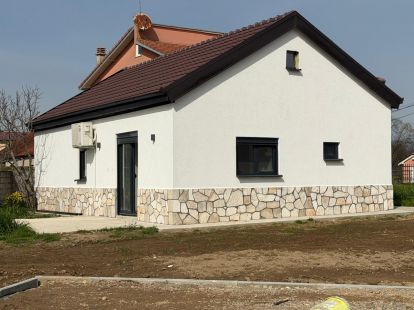
- 80m2
- 1
- 1
- 1
 Podgorica, Montenegro

- 99m2
- 1
- 2
- 1
Podgorica, Montenegro
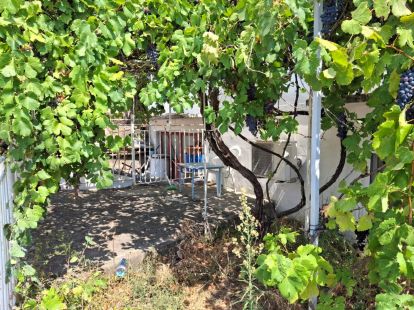
- 91m2
- 1/2
- 2
- 1
Sutomore, Montenegro
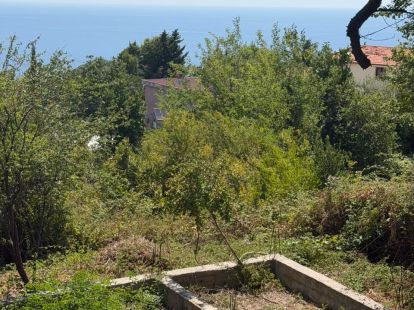
- 332m2
Sutomore, Montenegro
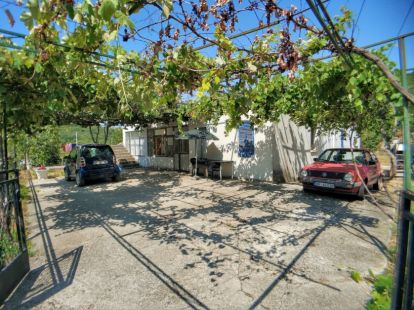
- 192m2
- 1
- 4
- 3
Sutomore, Montenegro
- 78m2
- 5/6
- 1
- 1
Budva, Montenegro
- 130m2
- 1
- 2
- 1
Bar, Montenegro

- 37m2
- 1/4
- 1
Baošići, Montenegro
Nature as a tourist destination
Where to see wild plants: national parks
The best places to observe the wild flora of Montenegro are its five national parks :
-
Durmitor National Park: A UNESCO World Heritage Site. In spring, the slopes around the Black Lake are covered with a carpet of crocuses, gentians and dwarf irises. In autumn, the forests here turn golden.
-
Biogradska Gora National Park: One of the last three virgin forests in Europe. Trees reach 500 years of age, and the undergrowth amazes with the diversity of ferns and rare grasses.
-
Lovćen National Park: Located above the Bay of Kotor. Here you can find endemic Balkan species adapted to rocky slopes.
-
Lake Skadar National Park: The largest lake in the Balkans. Its shores and surrounding hills in April–May turn into a real botanical garden with dozens of orchid species.
-
Prokletije National Park: The youngest (established 2009) and most wild park. A place for experienced hikers seeking solitude among endemic mountain flora.
What to see for a tourist: popular tours and excursions
In 2026, Montenegro offers dozens of excursion programs for nature lovers:
-
Flora of Durmitor — hiking with a botanist around the Black Lake, collecting herbs (under supervision), picnic with local cheeses. Price: from 40 euros.
-
Orchids of Skadar Lake — specialized tour in April–May to observe wild orchids (bee, lizard, monkey orchids). Price: from 50 euros .
-
Palm valleys of the Adriatic — tour of the best private gardens and nurseries of Tivat, Herceg Novi, Bar with the possibility of purchasing plants. Price: from 35 euros.
-
Mussel and wine tour — visiting mussel farms near Kotor, tasting with local wine (about 50 euros per person) .
-
Ethno-tour "Honey of Montenegro" — visit to mountain apiaries, acquaintance with honey plants, mead tasting. Price: from 25 euros.
When is the best time to go: seasonal calendar
| Season | What to see | Air temperature | Water temperature |
|---|---|---|---|
| January–March | Snowdrops, hellebore, hazel (first pollen) | +5…+15°C | — |
| April–May | Orchids of Skadar Lake, flowering meadows | +15…+22°C | +16…+18°C |
| June–August | Palm blossom, oleanders, beach season | +25…+35°C | +22…+26°C |
| September–October | Grape and pomegranate harvest, golden autumn in the mountains | +20…+26°C | +21…+24°C |
| November–December | Olive harvest, mandarins, citrus blossom in the south | +10…+17°C | — |
Life and real estate in Montenegro in 2026
Currency and prices
The official currency of Montenegro is the euro (EUR), despite the country not being a member of the Eurozone. This makes financial planning convenient for tourists and buyers.
Average prices in 2026:
-
Lunch in a restaurant: 10–20 euros
-
Coffee: 1.5–2.5 euros
-
Excursion: 25–60 euros
-
Apartment rental per day: from 40 euros (low season) to 120 euros (high season)
-
Seedling of an adult palm: 50–500+ euros
Real estate: expensive and budget areas
In 2026, the Montenegrin real estate market continues to grow, but the differentiation by region remains .
Expensive areas (premium):
-
Budva: The main resort of the country, prices from 2,500 to 4,000 euros per m². Apartments in the old town can reach 6,000 euros/m².
-
Kotor: A UNESCO-protected city. Prices from 2,200 to 3,500 euros/m². Properties with bay views are especially valuable.
-
Tivat and Porto Montenegro: A modern marina for yachts, prices from 3,000 to 5,000 euros/m², penthouses — up to 10,000 euros/m².
-
Sveti Stefan area: Exclusive villas from 1.5 million euros.
Affordable areas (budget):
-
East of the country (Bijelo Polje, Berane, Plav): Prices from 800 to 1,200 euros/m². Great for eco-tourism and mountain recreation.
-
Bar (except the old town): From 1,200 to 1,800 euros/m². A large port city with good infrastructure.
-
Ulcinj (southern region): From 1,000 to 1,600 euros/m². The warmest sea and the lowest prices on the coast.
-
Suburbs of Podgorica: From 900 to 1,400 euros/m². Ideal for those working in the capital.
What's happening in the country in 2026
2026 promises to be an eventful year for Montenegro:
-
Continued tourism growth: After the 2025 season, an increase in tourist flow by 8–10% is expected.
-
Infrastructure development: Completion of the first section of the Bar–Boljare highway, which will significantly reduce travel time from the coast to the north.
-
Eco-trend: Increasing popularity of agritourism and eco-farms. More and more tourists choose authentic recreation in nature.
-
Milder winters: Due to climate change, winters are becoming warmer, which contributes to earlier flowering of plants and a longer beach season.
-
Real estate market: Prices are expected to rise by 5–7%, especially in the coastal zone.
How to get there and where to stay
The main air gates of Montenegro are two international airports:
-
Tivat Airport (TIV): Closer to the resorts of Budva, Kotor, Herceg Novi. Receives mainly seasonal flights.
-
Podgorica Airport (TGD): The main airport of the country, year-round flights from major European capitals.
From the airports, you can take a taxi (25–50 euros to the main resorts) or rent a car — the best way to explore the country independently.
What else to see: architecture and culture
Botanical excursions in Montenegro can be perfectly combined with visits to cultural landmarks:
-
Kotor Old Town: A labyrinth of medieval streets and the Cathedral of St. Tryphon (1166).
-
Perast and the island of Our Lady of the Rocks: An artificial island with a church where sailors brought stones for centuries.
-
Stari Bar: The ruins of a medieval city surrounded by olive groves with a 2,000-year-old olive tree.
-
Cetinje: The historical capital with royal palaces and monasteries.
-
Ostrog Monastery: A monastery carved into a vertical cliff — one of the most famous pilgrimage sites in the Balkans.
Conclusion
The plants of Montenegro are not just a natural resource, but a real gateway to understanding this amazing country. From the first snowdrops breaking through the January snow to the majestic Canary palms decorating the Adriatic coast — every plant here tells its own story. In 2026, Montenegro invites travelers not only to enjoy the sea and the sun but to truly immerse themselves in its botanical wealth. And for those who decide to stay longer, there are options for buying real estate — from budget apartments in the east to luxury villas on the coast with a private palm garden. Welcome to Montenegro, where every flower has its own character!