Property Insurance in the Dominican Republic: A Complete Guide for Owners and Investors

- Essence, Audience, and Key Policy Components
- What Does Basic Coverage Include? Key Terms and Structure.
- Finances, Documents, and Specifics of Different Property Types
- What Documents Are Needed and How Does Insuring an Apartment Differ from a House?
- Selection Practice, Geography, and Working with an Expert
- How to Order: Step-by-Step Guide and Why to Choose an Expert.

Essence, Audience, and Key Policy Components
What is Property Insurance in the Dominican Republic, and for Whom is it Critically Important?
Property insurance (Homeowners Insurance) in the Dominican Republic is not a mere formality but an essential financial protection tool for any owner. A key feature of the local market is the pronounced seasonality of risks, where the hurricane season from June to November dictates its own rules. The policy acts as a reliable financial shield: you pay an annual premium, and the insurance company assumes the risks of major losses from natural disasters, fire, theft, or civil liability. This coverage is absolutely essential for foreign buyers and investors from the USA, Canada, and Europe, who may not fully appreciate all local threats. Also in the high-risk zone are vacation rental (Airbnb) owners, whose properties are in intensive use, expatriates residing permanently, and, of course, local homeowners who value the long-term protection of their assets in Santo Domingo, Punta Cana, or Las Terrenas.
What Does Basic Coverage Include? Key Terms and Structure.
A standard policy in the Dominican Republic is built around two fundamental blocks that can be combined. Structural Coverage protects the building itself from the main threats: hurricanes and cyclones, fire, earthquakes, floods, and vandalism. Contents Coverage insures movable property inside: furniture, appliances, electronics, and personal belongings. A critical parameter to understand before signing the contract is the deductible. For natural disasters, it usually ranges from 2% to 10% of the insured amount. Modern packages from leading Dominican insurance companies also include Civil Liability, loss of rental income coverage, and the very useful home assistance option for emergency calls to repair services.
Срочная продажа
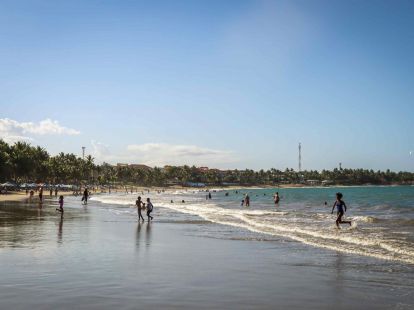
- 400m2
- 3
 Cabarete, Dominican Republic
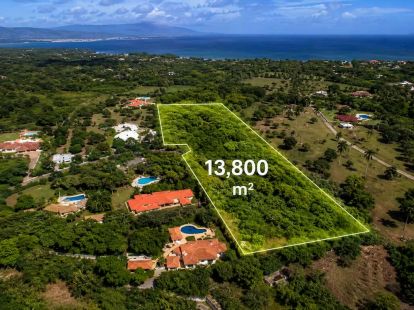
- 13 800m2
Sosua, Dominican Republic
- 840m2
- 2
- 9
- 7
Sosua, Dominican Republic

- 400m2
- 1
- 5
- 5
Sosua, Dominican Republic
- 246m2
- 2/3
- 3
- 3
Sosua, Dominican Republic
- 169m2
- 3
- 3
- 2
Cabarete, Dominican Republic
- 125m2
- 2
- 3
- 2
Sosua, Dominican Republic
- 193m2
- 2
- 3
- 4
Sosua, Dominican Republic
Finances, Documents, and Specifics of Different Property Types
Average Price for 2026 and What It Depends On.
Based on an analysis of the Dominican insurance market, the average annual cost of a comprehensive policy in 2026 is in the range of 0.3% – 0.8% of the property's insured value. For a property valued at $200,000, this translates to a premium of approximately $600 – $1,600 per year. Key factors influencing the price: 1) Location (a first-line property in premium Cap Cana or Bavaro will be more expensive to insure due to storm surge risk compared to an apartment in calmer Santiago); 2) Type and construction materials (hurricane-resistant structures are cheaper); 3) Presence of security systems; 4) Chosen coverage limits and deductible size.
What Documents Are Needed and How Does Insuring an Apartment Differ from a House?
To arrange a policy through a licensed broker, a standard set of documents is required: owner details (customer name), exact risk address (risk location), description of the construction type (type of construction) and distance to the sea. It is also necessary to determine the insured value for the structure and contents. For valuable items (art, jewelry), providing photos and receipts is mandatory—this simplifies the claims settlement process. The fundamental difference between insuring an apartment (condo) and a house: An apartment owner often only needs to insure the interior finishes and contents, as the building structure is already insured by the homeowners association (HOA). A private house owner insures everything: from the foundation and roof to the pool and fence, making the policy more expensive but the coverage maximally comprehensive.
Selection Practice, Geography, and Working with an Expert
Locations and Areas: Which Risks and Coverages are Relevant Where.
The choice of insurance directly depends on geography. In premium coastal areas (Punta Cana, Casa de Campo, Los Corbanos), the key risk is hurricanes and floods, requiring a policy with a low deductible and high limit. In urban areas (Naco, Pietras Blancas in Santo Domingo), theft, fire, and civil liability towards neighbors come to the fore. Expatriate zones (Las Terrenas, Samana) require careful analysis of flood history and seismic activity. Working with a trusted broker allows for selecting coverage that precisely matches the risks of your area, without overpaying for unnecessary options.
How to Order: Step-by-Step Guide and Why to Choose an Expert.
The process of obtaining reliable insurance consists of several steps. Step 1: Consultation with a licensed insurance consultant who specializes in the Dominican market and works with foreigners. For example, Hernández Peguero Consultoría has been helping U.S. and Canadian citizens understand the intricacies of local policies for many years. Step 2: Data collection and obtaining multiple quotes from top-rated insurance companies—this guarantees the best price-to-quality ratio. Step 3: Analysis of terms, deductibles, and exclusions. Step 4: Policy issuance and property documentation. The key advantage of working with a broker is post-sale service: annual policy review, assistance with claims settlement, and support in English and Spanish via WhatsApp or email. This transforms insurance from a complex necessity into a tool for genuine peace of mind for your investments in the Dominican Republic.