
Real Estate Purchase Process in the Dominican Republic: Step-by-Step Guide 2026
1. We choose a real estate object in the Dominican Republic and decide on its purchase.
2. We prepare a preliminary purchase and sale agreement, which specifies: description and location of the purchased property,...


Preparation and Legal Foundations for Purchase
Acquiring property in the Dominican Republic has become a popular choice for foreign investors. The sunny climate and favorable legislation attract buyers from Europe, the USA, and Russia. The process of buying real estate in the Dominican Republic has a clear structure. It's important to understand local specifics. Knowing the key stages helps avoid common mistakes. The Dominican real estate market demonstrates steady growth. According to official statistics, the volume of transactions with foreigners increased by 35% during 2023-2025. This trend continues in 2026.
The legal framework for foreigners purchasing real estate is based on Law No. 108-05. The full text of the law is available on the official portal of the Congreso Nacional de la República Dominicana. The law guarantees equal rights to foreign and local buyers. The only exceptions are territories of national parks and reserves. Resident status is not required to buy real estate in the Dominican Republic. A passport is sufficient to start a transaction. However, long-term residence requires obtaining a residency permit (Residencia).
The first stage is defining goals and budget. Foreign buyers choose real estate for different purposes. Some look for a home for permanent residence. Others consider investments in rental property. Third parties buy villas for seasonal vacations. The choice of region and property type depends on the goals. The budget should include not only the property cost. Be sure to account for additional expenses on taxes and legal support.
The choice of region depends on personal preferences. Punta Cana is the most famous resort area. It features modern complexes with developed infrastructure. Real estate prices in Punta Cana are above the national average. Puerto Plata offers a more authentic atmosphere. This region is popular among expats choosing the Dominican Republic for permanent residence. Sosúa and Cabarete attract surfing and active lifestyle enthusiasts. Real estate prices here are 20-30% lower than in Punta Cana.
Financing the purchase requires separate attention. Most foreigners use their own funds. Bank transfer is the safest payment method. The cash export limit from Russia is $10,000 without declaration. Mortgage lending for non-residents is developing. Since 2024, several Dominican banks have started loan programs for foreigners. Requirements include proof of income and a down payment from 40%. An alternative option is purchasing through a local company.
Срочная продажа
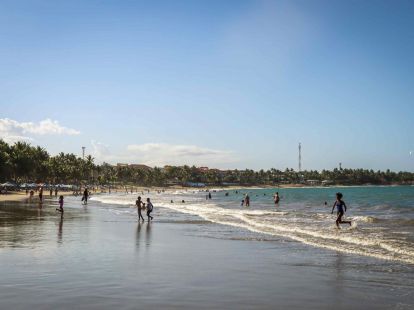
- 400m2
- 3
 Cabarete, Dominican Republic
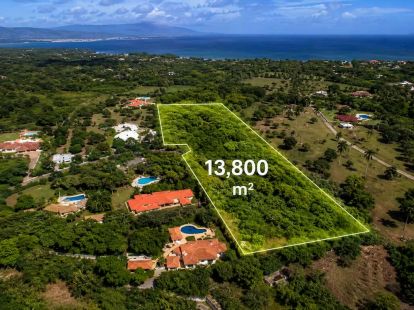
- 13 800m2
Sosua, Dominican Republic
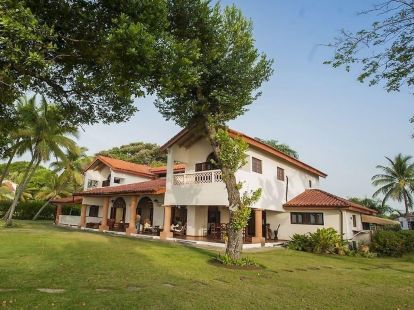
- 840m2
- 2
- 9
- 7
Sosua, Dominican Republic

- 400m2
- 1
- 5
- 5
Sosua, Dominican Republic
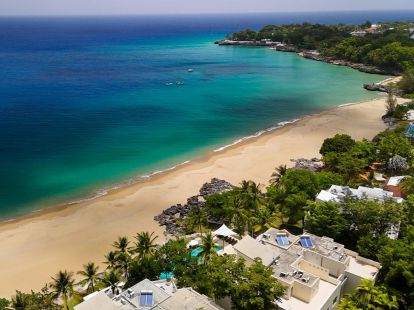
- 246m2
- 2/3
- 3
- 3
Sosua, Dominican Republic
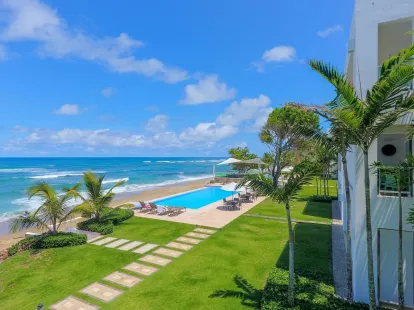
- 169m2
- 3
- 3
- 2
Cabarete, Dominican Republic
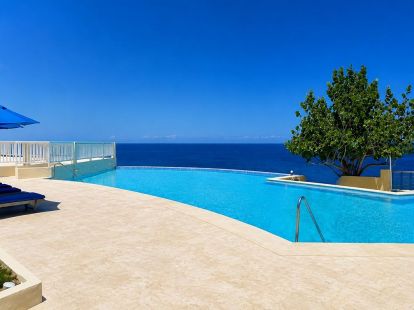
- 125m2
- 2
- 3
- 2
Sosua, Dominican Republic
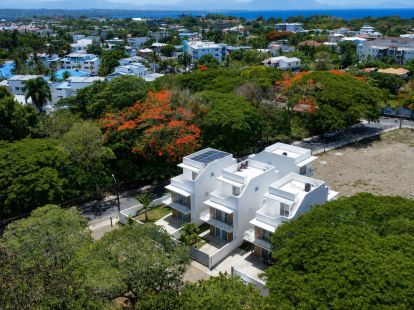
- 193m2
- 2
- 3
- 4
Sosua, Dominican Republic
Transaction Stages and Key Documents
The process of buying real estate in the Dominican Republic consists of six sequential stages. Each stage has its own timelines and specifics. Following this sequence minimizes risks. The average transaction duration is 3-5 months. This period may vary depending on the complexity of checks.
Stage 1: Search and Preliminary Agreements. Working with a realtor speeds up finding a suitable property. The agent's commission is usually 5-10% of the property value. It's important to sign a written cooperation agreement. The document should specify payment terms and obligations of the parties. It's better to plan property viewings in advance. It's recommended to view no more than 3-4 properties per day. Take photos and videos of each viewed option.
Stage 2: Promesa de Venta (Preliminary Contract). After selecting a property, the parties sign a preliminary contract. This document has legal force. Promesa de Venta fixes the main terms of the transaction. The contract specifies the exact property price. It outlines the payment schedule. Sets deadlines for Due Diligence. Determines the date for signing the main contract. The buyer makes a deposit of 5-10%. Funds are held in a notary account.
Stage 3: Due Diligence (Legal Verification). This is the most important stage for buyer security. Verification takes 2-4 weeks. Conducted by the buyer's independent attorney. What exactly is checked:
-
Título de Propiedad — certificate of title. Document authenticity is verified in the Registro de Títulos.
-
Certificación de Cargas — certificate of no encumbrances. Shows mortgages, liens, court restrictions.
-
Deslinde — survey plan for land plots. Confirms plot boundaries and land ownership rights.
-
Tax History — verification of seller's tax payments. Request to DGII (Dominican Tax Authority).
Stage 4: Main Purchase and Sale Contract. After successful verification, the parties sign the final contract. The document is formalized by a notary (Escribano Público). If the buyer cannot be present personally, a power of attorney is issued. The power of attorney is authenticated at the Dominican consulate. Final settlement is made according to the contract. Property keys are usually transferred after the seller receives the full amount.
Stage 5: Payment of Taxes and Fees. The buyer pays the real estate transfer tax (ITBIS). The rate is 3% of the cadastral value. Important point: the tax base is not the contract price. Cadastral value is determined by DGII and is usually 20-40% lower than market value. Also paid: notary fee (about 1%) and stamp duty (approximately 1.3%). Total additional buyer expenses amount to 5.5-6.5% of the property value.
Stage 6: Registration of Property Rights. The notary submits documents to the Registro de Títulos. Registration process takes 3-8 weeks. Since 2025, an electronic registration system has been implemented. This speeds up the procedure by 20-30%. After registration, the buyer receives an updated Título in their name. The transaction is entered into the foreign buyers registry for statistical accounting.
Post-Purchase and Property Management
After completing the transaction, the property management stage begins. Owners bear regular maintenance expenses. The annual property tax is 1%. Tax is levied only on amounts exceeding $130,000. For example, for a property worth $200,000, tax is paid on $70,000. The annual payment would be $700.
Utility services cost $100-150 monthly. Electricity costs $30-60 depending on consumption. Water — about $15 per month. Internet and television — $60-80. Gated communities have maintenance fees. Usually $50-200 per month. The amount depends on the complex level and service package.
For owners not residing permanently, a property manager is needed. Manager services include property condition monitoring, bill payments, repair organization. Service cost — $50-150 per month. Many owners rent out their properties. Yield depends on location and season. In Punta Cana, average yield is 5-8% annually. In other regions — 4-6%. Legal rental requires a license and payment of rental income tax.
Residency and Citizenship. Purchasing real estate simplifies obtaining a residence permit. The program is available for investments from $200,000. The value of multiple properties can be combined. The registration process takes 2-3 months. Requires submission of property documents and proof of legal fund sources. Residency is issued for one year with renewal rights. After five years, permanent residency can be obtained, and after another two years — citizenship.
Common Mistakes of Foreign Buyers:
-
Saving on attorney services — the most common mistake. An independent lawyer protects the buyer's interests.
-
Purchase without Deslinde verification — for land plots this is a mandatory procedure.
-
Incorrect budget calculation — many forget about additional 5-6% expenses.
-
Verbal agreements — all terms must be documented in writing.
-
Choosing an unverified realtor — check agent reviews and license.