How to Buy a Pre-Construction Apartment in the Dominican Republic: Areas, 2026 Prices, 5 Mistakes

What is Pre-Construction Purchase in the Dominican Republic and Who is it For?
Buying a pre-construction (or pre-sale) apartment in the Dominican Republic is a unique investment strategy that allows purchasing a property during the construction phase at a 15-30% discount from its future market value. This process, unlike buying ready-made housing, requires a deep understanding of the local market, legal norms, and thorough due diligence of the developer. The main goal of such a purchase is to obtain built-in equity by the time construction is completed, when the property's value has already increased. For foreigners, this is also a direct path to residency: an investment of $200,000 or more in a government-approved project grants the right to expedited residence permit processing.
The basic list of required actions and services includes: marketing analysis of areas and projects, legal due diligence of the developer's documents (Título de Propiedad, Licencia de Construcción), contract negotiation (Private Purchase Agreement), and organizing payments through an escrow account. This guide will be especially useful for three categories of buyers: investors looking for an asset with growth potential and rental yields of 6-9%; expats and retirees planning to move to a country with a warm climate; and those considering obtaining Dominican residency through real estate investment. It is important to understand that the process requires professional support: from selecting an object to registering the title in the National Registry (Registro de Título).
Current average prices in the Dominican pre-construction market for 2026, according to international real estate agencies and portals specializing in Caribbean real estate, vary greatly depending on location and property class. In Punta Cana and Cap Cana — the flagship resort zones — prices for one-bedroom apartments start from $180,000, while villas and penthouses in premium complexes reach $800,000 and more. In Sosúa and Cabarete, popular among expats, you can find offers from $120,000 to $400,000 for two-bedroom apartments with ocean views. In Santo Domingo, urban apartments in modern towers in the Piantini and Naco districts are priced at $100,000–$350,000. When analyzing prices, it is important to consider not only the cost per square meter but also final expenses: property transfer tax (approx. 3%), attorney fees (1-2%), and annual maintenance fees (HOA fees).

Срочная продажа
- 400m2
- 3
 Cabarete, Dominican Republic
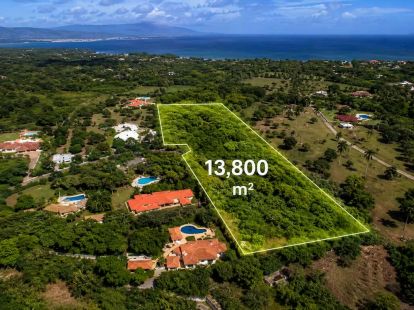
- 13 800m2
Sosua, Dominican Republic
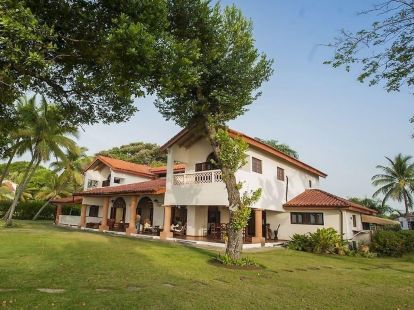
- 840m2
- 2
- 9
- 7
Sosua, Dominican Republic

- 400m2
- 1
- 5
- 5
Sosua, Dominican Republic
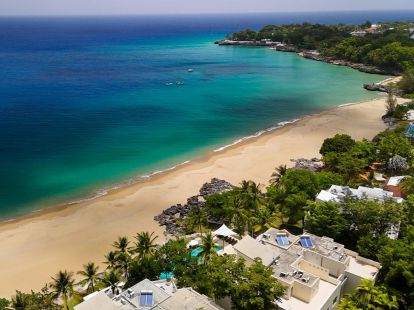
- 246m2
- 2/3
- 3
- 3
Sosua, Dominican Republic
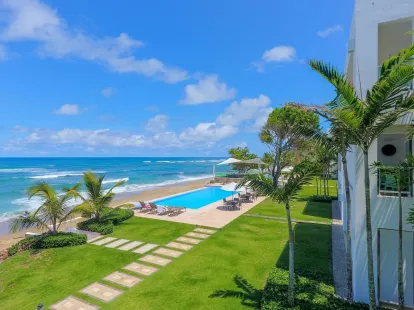
- 169m2
- 3
- 3
- 2
Cabarete, Dominican Republic
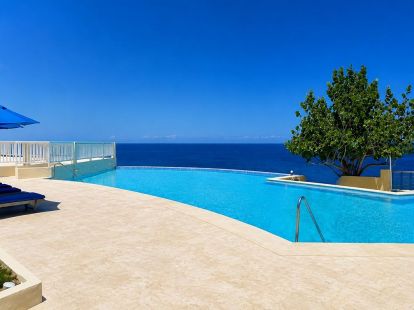
- 125m2
- 2
- 3
- 2
Sosua, Dominican Republic
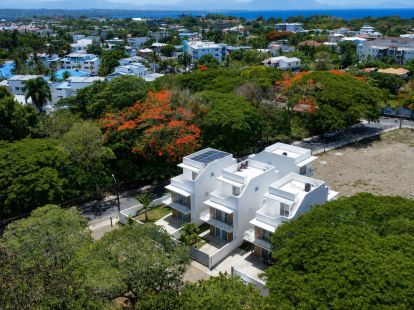
- 193m2
- 2
- 3
- 4
Sosua, Dominican Republic
Choosing Areas and 5 Fatal Mistakes When Buying
Key areas for investing in new construction in the Dominican Republic fall into several categories, each with its own specifics. Punta Cana (including Bavaro and Cap Cana) is the undisputed leader in terms of construction volume and service level, dominated by large resort complexes with a full set of amenities: golf courses, private beach clubs, and spa centers. This is an ideal choice for those focused on passive income from tourist rentals and ready to invest from $200,000. Cabarete attracts a niche audience — kitesurfing enthusiasts and those with an active lifestyle; local projects are smaller in scale but often have direct beach access. Sosúa offers the most balanced combination of price and comfort: a well-established expat community, developed infrastructure, and relatively democratic prices. Las Terrenas is a destination for connoisseurs of boutique format and European quality, with many projects developed by French developers. Santo Domingo is the choice for those who value urban dynamics, business activity, and long-term professional rentals.
Mistake #1. Rushing Under Pressure of "Exclusive Pre-Launch Offers."
Sales managers often create artificial hype, claiming that a "25% discount is valid for only 72 hours." The truth is that quality projects from reliable developers rarely require impulsive decisions. Your main protective tool is the reservation agreement, which usually provides for a 7–14-day due diligence period. During this time, you are only required to make a refundable deposit ($5,000–$10,000), giving you time to calmly verify all aspects of the deal. Never sign the main contract (Private Purchase Agreement) on the day of your first visit, no matter how attractive the offer may seem.
Mistake #2. Trusting a Developer Without Independent Legal Due Diligence.
The Dominican Republic lacks a centralized system for protecting equity holders, similar to Russia's 214-FZ, so all responsibility for verification falls on the buyer. The minimum set of documents for audit includes: the land title (Título de Propiedad), confirming the developer's ownership rights; the construction permit (Licencia de Construcción), issued by local authorities; and the company's financial statements. Be sure to visit the developer's previous completed projects, talk to owners, and inquire about construction quality and adherence to deadlines. Accreditation by a major bank (e.g., Scotia Bank) is a serious, but not the only, positive signal.
Mistake #3. Chasing Anomalously Low Prices Without Analyzing the Reasons.
If a property's price is 35–40% below the market average for similar parameters, this is a serious red flag. Ask yourself: how is such savings achieved? Common reasons include cheaper finishing materials, lack of essential infrastructure (backup generator, water purification system, security), or unfavorable location (view of a parking lot instead of the ocean, proximity to a noisy road). Request a detailed specification sheet (spec sheet) from the developer listing specific brands of plumbing, finishing materials, and type of glazing, and include this document as an appendix to the contract.
Mistake #4. Believing Marketing Promises of "Beachfront" or "Panoramic Ocean View."
Terminology in advertising is often vague. "Beachfront" may mean that the beach is 200 meters away via a busy street, and "ocean view" might mean you can see the sea from a ninth-floor balcony only if you stand on tiptoes. The technical solution: the contract text must have clear wording — "direct beach access," "unobstructed ocean view from the main terrace." It is also necessary to check the public cadastral plan (plan catastral) for easements and potential future construction between your building and the shoreline.
Mistake #5. Failing to Calculate Real Logistics and Hidden Operating Costs.
A picturesque project in a mountainous area may mean a daily commute on a winding dirt road to the supermarket, which will quickly become tiring. Be sure to take a test drive from the site to key points: the international airport, a modern clinic, a shopping mall — at different times of the day. Separately, request a detailed calculation of monthly maintenance fees (Homeowners Association fees, or HOA fees), which cover the upkeep of pools, security, generators, garbage collection, and can range from $200 to $800 per month depending on the complex's class.
Transaction Stages, Investment Protection, and Final Recommendations
The standard step-by-step instruction for buying a pre-construction property in the Dominican Republic consists of seven key stages. The first stage is reservation: you make a refundable deposit and obtain exclusive purchasing rights for a specific lot for an agreed period. The second, most important stage is the due diligence period (7–14 days), during which your independent attorney (abogado) conducts a comprehensive verification of the developer's documents and contract terms. The third stage is signing the main Purchase and Sale Agreement (Private Purchase Agreement) and agreeing on a payment schedule, which typically looks like this: 30-50% of the cost is paid in equal installments during construction (12-24 months), and the remaining 50-70% is due at closing.
The fourth stage is ensuring financial security: make sure all interim payments until project completion go to a protected escrow account, not directly to the developer. The fifth stage is the pre-delivery inspection: 2-4 weeks before closing, you visit the property and compile a detailed list of defects (punch list) for correction. The sixth stage is closing the deal (closing): making the final payment, signing the deed of sale before a notary (Notario), and receiving the keys. The seventh and final stage is property title registration: your attorney submits the documents to the National Registry (Registro de Título) to process the Certificate of Title in accordance with Law No. 108-05.
What to Remember: Final Checklist for a Safe Investment. First, hiring an English-speaking local attorney specializing in real estate is not an area for savings but a mandatory investment in the security of the entire transaction. Second, an escrow account is a non-negotiable condition; if the developer refuses to provide one, it is a serious reason to abandon the project. Third, the detailed finishing specification (spec sheet) must be an integral part of the contract. Fourth, verify not only the documents but also the reputation: visit the developer's office, talk to actual owners in their past projects. Fifth, calculate the total cost of ownership: property price + transfer tax (approx. 3%) + attorney fees (1-2%) + annual property tax (IPI, 1% on value over ~$172,000) + HOA fees.
By following this detailed guide, you can transform the process of buying real estate in the Dominican Republic from a risky venture into a thoughtful investment strategy, maximizing the protection of your capital and gaining access to all the benefits of living in one of the most hospitable Caribbean countries, including the possibility of obtaining residency and stable rental income.