How to Buy Real Estate in the Dominican Republic in 2026: A Complete Guide for Foreign Buyers
Buying property in the Dominican Republic is not a myth but a pretty real thing.
Today the procedure of buying property in the Republic of Dominikanski minimized, especially if the purchase will be made through the real estate office. Then you as customer should have only a foreign...

- Part 1. Legislation and Tax Benefits for Foreigners
- Law No. 108-05: Equal Rights with Citizens
- CONFOTUR: 15 Years Tax-Free
- Taxes and Fees When Buying Real Estate
- Part 2. Comparison of Districts: Where to Buy Real Estate in 2026
- Premium Segment: Cap Cana and Punta Cana
- Mid-Range Segment: Bávaro, Las Terrenas, Sosúa
- Budget Segment and New Hotspots: Samaná, Miches
- Part 3. Step-by-Step Real Estate Purchase Procedure
- Stage 1. Property Selection and Reservation
- Stage 2. Legal Due Diligence
- Stage 3. Signing the Purchase Agreement
- Stage 4. Payment and Fund Transfer
- Stage 5. Property Rights Registration
- Investment Returns and Market Forecast
- Buying Real Estate and Residence Permit
- Risks and Pitfalls
- Conclusion
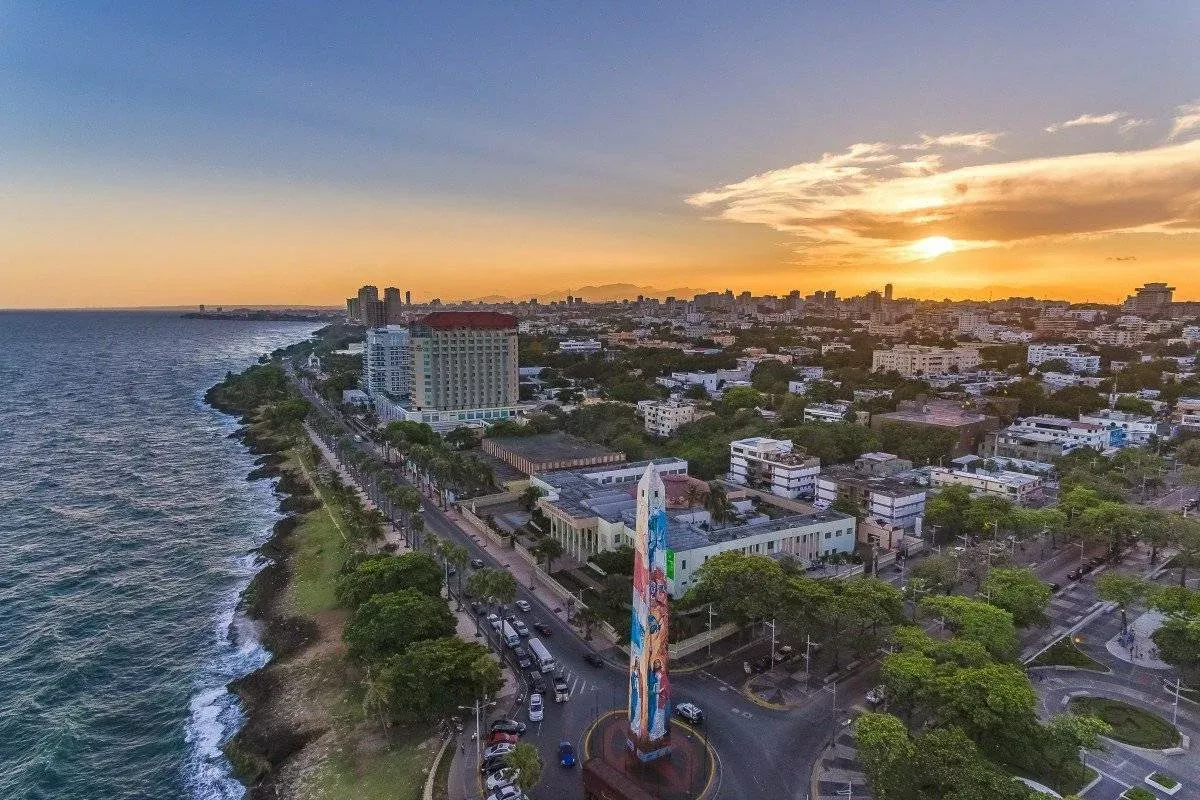
The Dominican Republic in 2026 remains one of the most attractive destinations for foreign real estate buyers. A record 12.5 million tourists annually, stable price growth of 10.7%, and equal rights with citizens of the country — all this makes the Caribbean market particularly interesting for investors. Law No. 108-05 of 2007 guarantees foreign buyers the same conditions as local residents. The only exception is specially protected areas of national parks.
Over the past five years, real estate prices in the Dominican Republic have risen by 60% in nominal terms. The average cost per square meter for apartments has reached $2,200, and for houses — $1,760. At the same time, rental yields range from 6–12% annually depending on the location. CONFOTUR-certified projects are particularly attractive: they exempt owners from taxes for 15 years. In this guide, we will analyze all stages of purchasing, current prices by district, and pitfalls that realtors keep silent about.
Part 1. Legislation and Tax Benefits for Foreigners
Law No. 108-05: Equal Rights with Citizens
Since 1998, the Dominican Republic has completely lifted all restrictions on real estate purchases by foreigners. Today, all transactions are regulated by Law No. 108-05 of April 4, 2007. A foreigner can purchase any property: an apartment, villa, land plot, or commercial real estate. The only formal difference is that when concluding a transaction, it is necessary to make an entry in the State Register of Rights for Real Estate Acquisition by Foreigners. This is required exclusively for statistical purposes and does not in any way limit your property rights.
A transaction can be registered either as an individual or as a legal entity. The choice of ownership form affects taxation when maintaining and transferring the property as inheritance. Individuals are exempt from the annual IPI tax if the value of all their real estate does not exceed RD$10,190,833 (approximately $166,000 as of 2025). For legal entities, there is no such threshold — a 1% tax is charged on all company assets. Therefore, when purchasing a property worth up to $166,000, registration as an individual is more advantageous.
CONFOTUR: 15 Years Tax-Free
Law No. 158-01 (CONFOTUR) is the main trump card for investors in Dominican real estate. This regulatory act was adopted in 2001 to stimulate the tourism industry. CONFOTUR-certified projects receive unprecedented benefits: exemption from property transfer tax (3%), from annual IPI tax (1%), and from rental income tax — all for up to 15 years. In practice, this means savings of $9,000 when purchasing a condo for $300,000 on transfer tax alone.
CONFOTUR certification applies to hotels, resort complexes, residential projects in tourist zones, and even eco-lodges. Most new developments in Punta Cana, Cap Cana, Las Terrenas, and Samaná have this status. Important: the benefits apply equally to all buyers — both residents and non-residents, as well as foreigners without any immigration status. This is rare in the global real estate market. When choosing a property, always request confirmation of CONFOTUR status from the developer or notary.
Taxes and Fees When Buying Real Estate
|
Tax/Fee |
Rate 2026 |
Note |
|
Transfer tax |
3% |
Based on assessed value. Not paid under CONFOTUR |
|
IPI (annual tax) |
1% |
Only on amounts exceeding $166,000 |
|
Notary fee |
~1% |
Includes registration fees |
|
Stamp duty |
~1.3% |
For property rights registration |
|
Inheritance tax |
3–4.5% |
4.5% for non-resident heirs |
In total, the buyer pays 4.5–5.5% above the property price in standard cases. This is significantly lower than in the USA or Europe, where transaction costs reach 10–15%. In complex transactions involving offshore mechanisms, costs can rise to 8%. Realtor services are traditionally paid by the seller — this is 5–10% of the property value. However, when working with foreign buyers, exceptions are possible, so terms should be discussed in advance.
Срочная продажа
- 400m2
- 3
 Cabarete, Dominican Republic
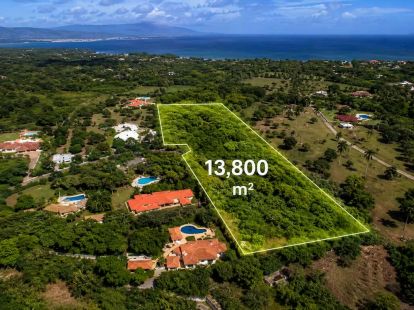
- 13 800m2
Sosua, Dominican Republic
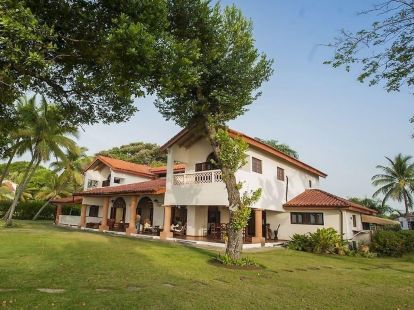
- 840m2
- 2
- 9
- 7
Sosua, Dominican Republic

- 400m2
- 1
- 5
- 5
Sosua, Dominican Republic
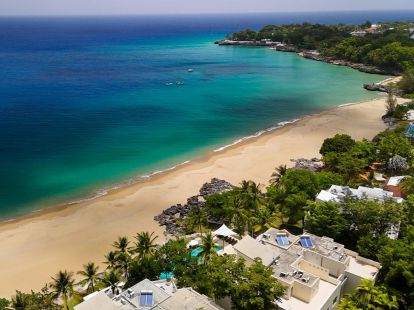
- 246m2
- 2/3
- 3
- 3
Sosua, Dominican Republic
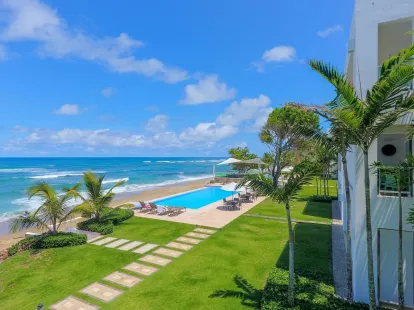
- 169m2
- 3
- 3
- 2
Cabarete, Dominican Republic
- 125m2
- 2
- 3
- 2
Sosua, Dominican Republic
- 193m2
- 2
- 3
- 4
Sosua, Dominican Republic
Part 2. Comparison of Districts: Where to Buy Real Estate in 2026
Premium Segment: Cap Cana and Punta Cana
Cap Cana is the most prestigious area on the Dominican coast. It is home to the St. Regis resort with residences and a golf course designed by Jack Nicklaus. Villa prices start at $500,000 and reach $9 million in the southern part of the island. Condos in premium complexes cost $350,000–700,000. Over two years (2024–2026), real estate values in Cap Cana have grown by 15–20%. Rental yields here are moderate — 6–8% annually, but high liquidity and status compensate for this.
Punta Cana remains the main magnet for investors. The airport handles 7.8 million passengers annually — this is 64% of all air arrivals in the country. Gated communities with security offer condos from $245,000 and villas from $525,000. The average price per square meter is $1,230. Properties in the right location sell within 45–90 days. Rental yields reach 6–12% depending on management and season. The high season (December–April) provides 80–90% occupancy on Airbnb.
Mid-Range Segment: Bávaro, Las Terrenas, Sosúa
Bávaro is experiencing a real boom. Improved infrastructure, new roads, and proximity to Punta Cana airport make the area increasingly attractive. Condo prices have risen from $150,000 in 2024 to $175,000–350,000 in 2026 — a +15–17% increase over two years. International buyers from the USA, Canada, and Europe are actively purchasing properties. ROI here is among the highest on the island — 8–12% annually. The area is ideal for investments in short-term tourist rentals.
Las Terrenas on the Samaná Peninsula is a favorite among European expats. An active community of French, Italians, and Germans has formed here. Prices are growing at 20% annually — this is the fastest rate on the island. The average cost per square meter is $2,000–2,500. Developers are launching eco-projects and boutique residences. Sosúa and Cabarete on the north coast offer more affordable options: condos from $175,000, villas from $400,000. Cabarete is known as the world capital of kitesurfing, which ensures a steady flow of sports tourists.
Budget Segment and New Hotspots: Samaná, Miches
The Samaná Peninsula is developing according to a special master plan with a focus on eco-tourism. In 2025, 2,500 new hotel rooms opened here. Condo prices start at $129,000, villas — from $300,000. Growth is 15–18% annually with yields of 8–10%. Miches is a new hotspot on the east coast. Club Med has opened a large resort here, and prices are already rising. The entry ticket is from $80,000 for a plot or $100,000 for ready housing. Growth potential is 20–25% per year, but infrastructure is still underdeveloped.
|
District |
Condo Price 2026 |
Growth 2024–26 |
Rental ROI |
Segment |
|
Cap Cana |
$400,000–700,000 |
+15–20% |
6–8% |
Premium |
|
Punta Cana |
$280,000–600,000 |
+12–15% |
6–12% |
Premium |
|
Bávaro |
$175,000–350,000 |
+15–17% |
8–12% |
Mid-range |
|
Las Terrenas |
$2,400–3,000/sqm |
+20% |
7–10% |
Mid-range+ |
|
Sosúa |
$189,000–450,000 |
+8–10% |
6–8% |
Mid-range |
|
Samaná |
$150,000–350,000 |
+15–18% |
8–10% |
Budget+ |
|
Miches |
$100,000–180,000 |
+20–25% |
10–12% |
Budget |
The capital Santo Domingo is interesting for those looking for urban real estate. The Piantini, Naco, and La Esperilla districts offer apartments at $1,200 per square foot with a yield of 7.9%. Properties here sell the fastest — within 45–90 days. However, for short-term tourist rentals, the capital is less attractive than the coast. Puerto Plata on the north shore is a budget alternative with prices starting from $100,000. A new Royal Caribbean cruise port is opening here, which will boost demand.
Part 3. Step-by-Step Real Estate Purchase Procedure
Stage 1. Property Selection and Reservation
The process begins with selecting a property and agreeing on terms with the seller. The parties meet at a notary's office to sign a letter of intent. The buyer makes a deposit — usually up to 10% of the property value. The exact amount is discussed individually. From this moment, the property is taken off the market and reserved. The agreement records the parties' data, property description, price, payment terms, and obligations — for example, the seller's obligation to sign the final contract after receiving the full amount.
In the Dominican Republic, a notary is a mandatory participant in the transaction and guarantor of its legality. Unlike the USA, where a licensed realtor is required, an intermediary is not mandatory here. Most foreigners still use agents' services for property selection and negotiations. But legal verification, document processing, and contract drafting are performed exclusively by the notary. The realtor's work is paid by the seller — 5–10% of the price. However, in such a scheme, the agent is motivated to sell what is beneficial to them, not to you.
Stage 2. Legal Due Diligence
After signing the agreement, the notary needs 2–3 weeks to verify the property. They examine the title (título de propiedad), the certificate of legal status with the history of ownership changes, arrests and restrictions, as well as cadastral documents for houses and plots. The absence of cadastral records does not block the transaction, but the buyer should factor in the cost of their registration when negotiating. The notary provides copies of documents and guarantees that the property is clean and free of encumbrances. Taxes and fees are also calculated at this stage.
Stage 3. Signing the Purchase Agreement
After successful verification, the parties sign a purchase agreement for the full amount. If the property is being purchased in installments, a "promise of sale" agreement with a payment schedule is executed. The document must be certified by a Dominican notary. The buyer's personal presence is not required. The transaction can be conducted remotely through the Dominican consulate in any country. Consulate staff act as remote notaries and issue a power of attorney to the realtor or another representative.
Stage 4. Payment and Fund Transfer
The Dominican Republic does not prohibit cash payments. However, most countries have restrictions on cash exports — for example, from Russia you can export up to $10,000 without declaration. Therefore, the vast majority of transactions with foreigners are conducted via bank transfer. Money can be sent directly to the seller or through the notary's accounts. Important nuance: Dominican banks are under US financial monitoring. All transactions are verified, and the bank will require proof of the legal origin of funds.
Stage 5. Property Rights Registration
After full settlement, the notary submits documents to the General Directorate of Internal Taxes (DGII) to calculate the transfer tax — 3% of the assessed value. Then the new owner is registered in the registry. The process takes from three weeks to a month and a half — an average of 33 days according to World Bank data. All state fees are already included in the notary's fee. The buyer receives a title in their name. The moment of key handover is discussed separately and specified in the contract.
A typical transaction — from signing the letter of intent to obtaining the title — takes 3–4 months. If encumbrances are discovered, the period increases. Sellers are usually interested in a quick completion and prepare documents in advance. At the first meeting, the buyer already sees the property's history, and the notary simply confirms the data. For complex cases with non-transparent fund origins, notaries have offshore mechanisms, but this increases the fee from 1% to 3–4%.
Investment Returns and Market Forecast
The Dominican Republic demonstrates one of the best yields in the Caribbean region. The average gross yield across the country is 7.12% — this is higher than in the Bahamas or Mexico. In Santo Domingo, apartments yield 7.9% annually, in Punta Cana — 6.98–8%. After deducting taxes and management expenses, 5–6% net yield remains. Short-term rentals via Airbnb in tourist areas provide 55–70% average annual occupancy. In the high season, the rate reaches 80–90%.
The forecast for 2026–2030 remains positive. Analysts expect price growth of 3–8% annually depending on location. Leaders will be Punta Cana, Las Terrenas, and Cap Cana with rates of 6–8% per year. Growth drivers include record tourism (12.5 million visitors in 2026), limited supply of quality properties, and high construction costs restraining speculative development. Mortgage rates of 11.5% for foreigners remain a barrier, so the market depends on cash buyers.
Buying Real Estate and Residence Permit
Buying real estate alone does not automatically grant residence permit rights. However, the Dominican Republic is loyal to immigrants. An annual residence permit is issued to all foreigners upon confirmation of sufficient funds, absence of criminal records, and infectious diseases. After five years with a residence permit, you can apply for permanent residency, and after another two years — for citizenship. For investors, there is a fast track: an investment of $200,000 or more in a business (including a company that owns real estate) grants the right to an investor visa.
Law No. 171-07 provides additional benefits to retirees and rentiers. With confirmation of stable income of $1,500 per month, you can obtain residency through a simplified procedure and a 50% discount on the annual IPI tax. CONFOTUR-certified projects also provide the opportunity to apply for an investor visa. To prepare an application, it is recommended to contact a local lawyer — the procedure requires collecting documents and their legalization.
Risks and Pitfalls
Local experts do not recommend buying housing on the first line from the sea. High humidity leads to equipment corrosion, mold, and expensive repairs. The optimal option is 200–500 meters from the shore in a gated residence. When choosing a realtor, check their immigration status: cedula (local ID) and residence. There are many illegal workers acting as agents in the country. Such a "specialist" can disappear along with your deposit. Request information about the agency and verify it online.
Climate risks are a reality for the Caribbean. According to the World Bank, extreme weather events can lead to losses of up to 14% of gross national income. Coastal areas are vulnerable to hurricanes and flooding. The Transparency International Corruption Perceptions Index — 36 out of 100 points — indicates difficulties with transaction transparency. Always work with a trusted notary and demand a complete property history from the state registry. Do not trust verbal promises.
Conclusion
Buying real estate in the Dominican Republic in 2026 is a combination of affordable prices, high yields, and transparent legislation. Foreigners have equal rights with citizens, and CONFOTUR projects are tax-exempt for 15 years. The market has grown by 60% in five years and will continue to grow by 3–8% annually. The key to success is the right choice of location, legal due diligence, and working with a reliable notary. Investments of $200,000 or more open the path to residency, and quality property management ensures yields of 6–12% annually.