
What a Real Estate Buyer Needs to Know in the Dominican Republic in 2026: An Insider's Checklist from Realtors
The Dominican Republic, located in the eastern part of the island of Haiti, is famous for its snow-white beaches, crystal clear sea and magnificent tropical climate. Paradise attracts more and more tourists and real estate...

- Planning and Search: How to Avoid Fatal Mistakes from the Very Start
- Finding and Choosing a Realtor: How Not to Fall for a Scammer
- Finances and the Deal: How Not to Lose Money on Transfers, Taxes, and Hidden Fees
- How to transfer money:
- Deal Execution: What Happens in the Notary's Office
- Ownership and Income: Legal Rental, Hidden Costs, and Remote Management
Planning and Search: How to Avoid Fatal Mistakes from the Very Start
The purchase of real estate in the Dominican Republic doesn't begin with browsing photos, but with a clear answer to the question: "Why am I doing this?" This answer will be your guiding compass. If the goal is permanent residence, the focus shifts to infrastructure: the presence of schools, medical clinics, and supermarkets. For this, the North Coast, such as Sosúa or Cabarete, is ideal with their established expatriate communities. If the key objective is passive rental income, proximity to tourist clusters and the airport becomes the priority. The East of the country leads here, in areas like Bávaro and Punta Cana, where annual net yield can reach 5-8%. The specifics will also determine the type of property: apartments in a complex with a management company minimize hassle for the investor, while a private villa will require hiring staff but offers maximum privacy.
There are three types of buyers in the Dominican market. And the goal determines everything. The first type is the resident. Your priority is quality of life, not profitability. Your area is the North Coast (Sosúa, Cabarete) with established infrastructure and a Russian-speaking diaspora. Don't look for a house on the first line—due to salt air and humidity, appliances break down 2-3 times faster. The second type is the rental investor. Your task is maximum income. Your area is Punta Cana and Bávaro. But the key secret is not the property itself, but a professional management company that will take on 100% of the responsibilities. Without it, net yield tends towards zero. The third type is the speculator. The riskiest path, requiring pinpoint knowledge of future infrastructure projects.
Finding and Choosing a Realtor: How Not to Fall for a Scammer
70% of problems arise at the stage of choosing an intermediary. In the Dominican Republic, real estate brokerage is not licensed by the state, so rely only on evidence.
Working with a realtor is the main filter. In the Dominican Republic, real estate activity is not licensed, and "help from friends" is offered on every corner. Your actions: demand an official contract detailing all stages of work. Request the registration number (Cédula de Abogado) of the lawyer attached to the deal and verify it on the Dominican Bar Association's (Colegio de Abogados) website. Demand contact details for the last 3 clients. The main marker of a scammer is pressure on the deal. No honest professional will say "this is the last chance" or "pay me directly to make it faster." The realtor's commission is 5-10%, and it is always paid by the seller. If you are asked for money for the agent's services—you are being deceived. Agree on a fixed fee for the Due Diligence if the purchase does not go through.
How to choose:
-
Request the personal license number of the lawyer (Cédula de Abogado) the agency works with. Verify it online through the Dominican Colegio de Abogados.
-
Demand 3-4 real contacts of past clients (preferably Russian-speaking) for whom they completed a deal 1-2 years ago. Contact them yourself.
-
Avoid "universalists." A good agent has deep knowledge of 2-3 specific areas, not the entire country. Ask for details: municipal plans for infrastructure development in the area, price dynamics per square meter in a specific condominium, the developer's history.
The contract with the agent must clearly outline their obligations: organizing viewings, property verification (Due Diligence), notary accompaniment. The commission (5-10%) is almost always paid by the seller by law. If you are asked for a commission, it's a red flag.

Срочная продажа
- 400m2
- 3
 Cabarete, Dominican Republic
- 13 800m2
Sosua, Dominican Republic
- 840m2
- 2
- 9
- 7
Sosua, Dominican Republic

- 400m2
- 1
- 5
- 5
Sosua, Dominican Republic
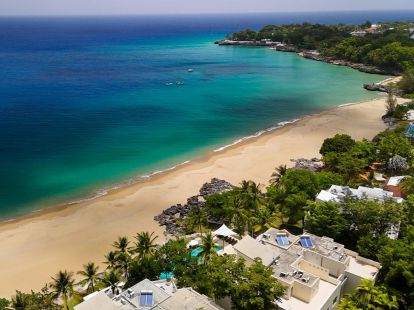
- 246m2
- 2/3
- 3
- 3
Sosua, Dominican Republic
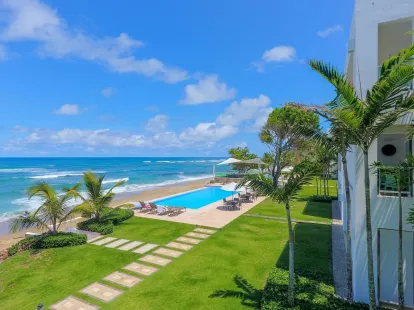
- 169m2
- 3
- 3
- 2
Cabarete, Dominican Republic
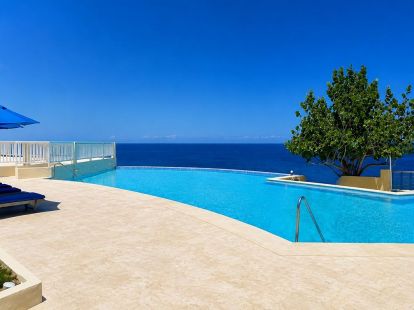
- 125m2
- 2
- 3
- 2
Sosua, Dominican Republic
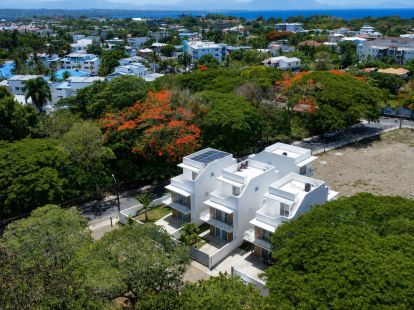
- 193m2
- 2
- 3
- 4
Sosua, Dominican Republic
Finances and the Deal: How Not to Lose Money on Transfers, Taxes, and Hidden Fees
The property cost is only 92-94% of your expenses. The remaining 6-8% are mandatory payments. Breakdown by stages: 5-10% is a deposit to the notary's account after the preliminary contract. The remaining 90-95% + taxes are the final settlement with the notary upon signing the main deed (Escritura). The main tax secret: the key payment—the transfer tax (ITBIS)—is 3% not of the purchase price, but of the cadastral value (avalúo). The state appraisal is often intentionally undervalued by 30-40%. Example: you buy an apartment for $200,000 but pay tax on $140,000, saving $1,800.
Transferring large sums always involves a bank SWIFT transfer from an account in your name to the notary's special guarantee account (cuenta de ahorros). This is the law. Any requests to send money to a private account "for speed" are fraudulent. The notary is your financial guarantor: they receive the funds and transfer them to the seller ONLY after full registration of ownership in your name. Cash transactions over $10,000 are subject to mandatory declaration and attract tax authority attention. Cryptocurrencies are not accepted for settlements with the notary or bank.
How to transfer money:
-
Bank transfer (SWIFT) from your account to the notary's account is the only safe method for large amounts. The notary acts as a guarantor: they receive the money and transfer it to the seller only after the full registration of the deal in the Registry.
-
Cash. You can bring up to $10,000 per person without declaration. For larger amounts, a bank draft (cashier's check) or declaration upon departure from the country of origin is required. This is risky and not recommended.
-
Cryptocurrencies. Virtually not accepted for official real estate transactions. Exchanging for pesos or dollars would have to be done through local unregulated exchanges, creating legal and tax risks.
Due Diligence is your armor. List of documents your lawyer must check: Título de Propiedad (check history in the Registry), Certificación de Cargas (certificate of no liens or encumbrances), Deslinde (land survey plan, without which, since 2009, a deal is impossible), seller's tax certificates (from DGII and the municipality). The main scam on the market is selling land without a Deslinde. They may show you beautiful boundaries, but legally they don't exist. You're buying a "pig in a poke." Without a complete set of documents with signatures and stamps—stop the deal.
Deal Execution: What Happens in the Notary's Office
The closing process takes 1-2 hours. If you are not in the country, a power of attorney (Poder Especial) is issued to your lawyer through the Dominican consulate with an apostille.
-
The notary (Escribano Público) reads aloud the purchase-sale deed (Escritura Pública).
-
The parties sign. You submit the payment order.
-
The notary registers the deal in the Title Registry (Registro de Títulos). This takes 4-8 weeks. Only after this do you receive the new Título in your name. Until this moment, the notary is the custodian of your funds.
Ownership and Income: Legal Rental, Hidden Costs, and Remote Management
After the registration of rights (takes 4-8 weeks), life with regular payments begins. Annual Property Tax (IPI): 1% of the amount by which the cadastral value exceeds approximately $131,500. For example, with an appraisal of $200,000, you pay about $685 per year. Utilities: electricity — $60-120, water — $15, internet/TV — $60. If you have an apartment, add community fees (HOA): $50-300 per month.
Renting out is a separate business with strict rules. Short-term (tourist) rental: requires registration with the Ministry of Tourism. You are obliged to pay an 18% tax (ITBIS) on the income. After deducting platform commissions (Airbnb, Booking), management company fees (20-30%), taxes, and utilities, net yield rarely exceeds 5-7% per annum. The trap: most "investors" rent out illegally. In 2025, the government began actively fining such owners. Fines can reach up to $10,000 and result in property blocking. Long-term rental (from one year) is simpler: tax is 10%, but yield is lower.
Remote management is impossible without a local property manager. Their basic service (paying bills, overseeing cleaning) costs $50-150/month. Full rental management is 20-30% of the income. The secret: even if you are not renting out the property, minimal service is mandatory. An empty house in the tropics will deteriorate within 3 months: mold, broken air conditioners, overgrown garden. A hired gardener and weekly cleaning are not a luxury, but an investment in preserving your capital.