Contract F DLD: Parties' Obligations, Validity Periods and Security Deposit Management

- What is Unified Contract F and why is it the foundation of every resale transaction?
- Legal framework regulating Contract F
- Responsibilities of the Seller and Buyer under Contract F
- How long does Contract F remain valid?
- Extension and expiry of Contract F
- FINANCIAL OBLIGATIONS, SECURITY DEPOSIT, AND MANDATORY CONTRACT CONDITIONS
- What is the purpose of the security deposit?
- How is the deposit managed during the transaction?
- What happens if the transaction is cancelled or a dispute arises?
- Why are additional contractual conditions so important?
- CONTRACT F IN PRACTICE: MARKET CONTEXT, TRANSACTION WORKFLOW, AND PROFESSIONAL RECOMMENDATIONS
- How does the security deposit affect the transaction budget?
- Typical Contract F workflow
- Essential terminology every market participant should understand
- Professional recommendations before signing Contract F
- Summary
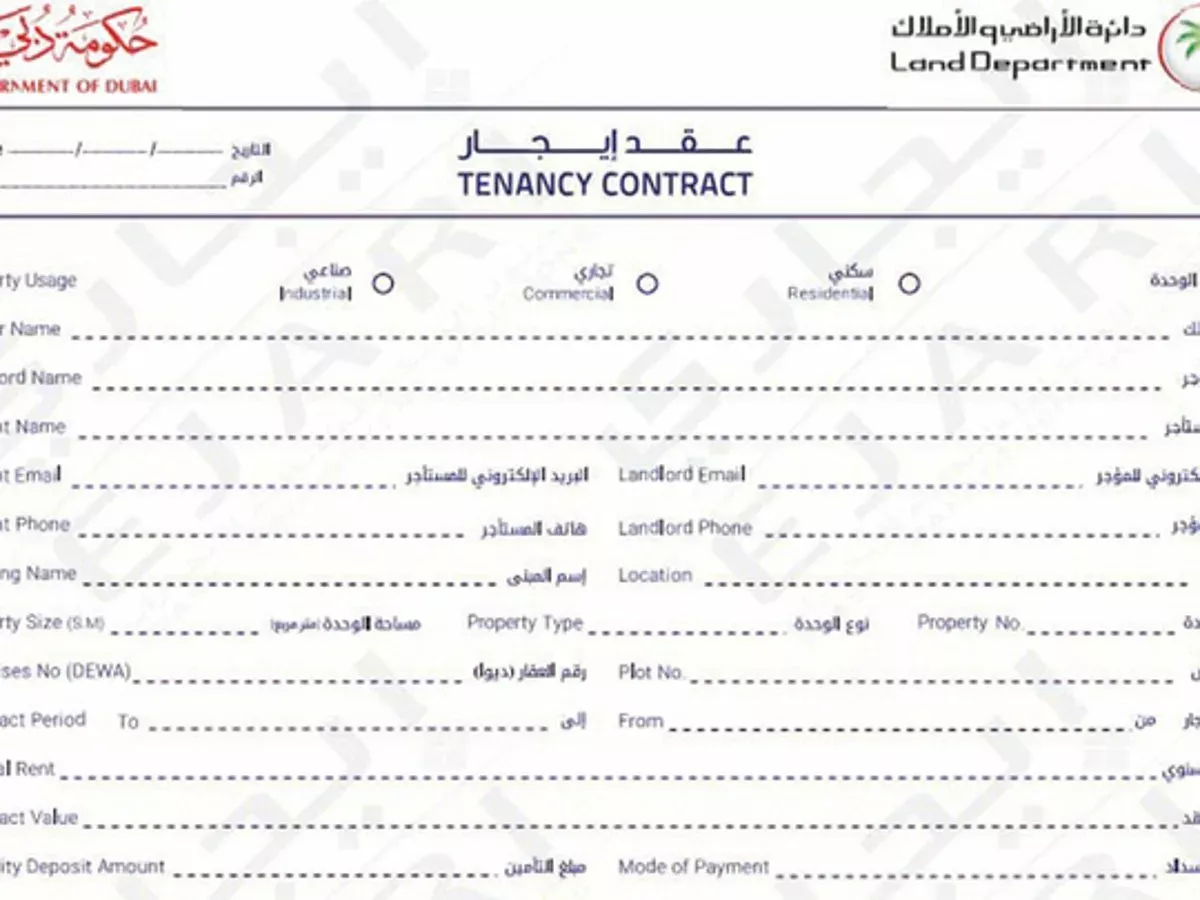
What is Unified Contract F and why is it the foundation of every resale transaction?
Unified Contract F (Form F), also referred to as the Memorandum of Understanding (MOU), is the official sale and purchase agreement approved by the Dubai Land Department (DLD) for completed residential and commercial properties. It records the agreed purchase price, payment schedule, transfer date, allocation of fees, broker commissions, and any additional contractual obligations accepted by both parties. Once signed, it becomes the primary legal document governing the transaction until ownership is transferred.
Unlike agency agreements or reservation forms, Contract F creates enforceable contractual obligations for both the Buyer and the Seller. It also serves as the reference document used during the ownership transfer through the Dubai REST platform and the Registration Trustee Office. Without a valid Form F, the Title Deed cannot be transferred into the buyer's name, regardless of whether payment has already been made.
Since 2026, DLD's digital validation system has become stricter. Mandatory fields, payment responsibilities, identification details, bank information, and additional contractual clauses must be completed correctly before the agreement can proceed. Missing information, incorrect figures, or inconsistent conditions frequently result in rejected submissions, forcing the parties to prepare a new contract and delaying completion by several weeks.
Legal framework regulating Contract F
The legal effect of Form F is supported by several layers of Dubai real estate legislation rather than by a single regulation.
The principal legal basis is Dubai Law No. 7 of 2006, which requires ownership transfers to be registered through the Dubai Land Department. Complementing this legislation are the regulations issued by the Real Estate Regulatory Agency (RERA), which govern licensed brokers, conveyancers, trustee offices, and the handling of security deposits throughout the transaction.
Operational procedures continue to evolve through DLD circulars and digital service updates. These regulations define how Form F is generated, electronically signed, amended, extended, cancelled, and stored within Dubai REST. As a result, every stage of the transaction follows a standardized workflow, reducing legal uncertainty and improving transparency for buyers, sellers, lenders, and licensed brokers.
Responsibilities of the Seller and Buyer under Contract F
One of the most important functions of Form F is the clear allocation of obligations between both parties before ownership changes hands.
The Seller is responsible for transferring a legally marketable property free from undisclosed legal restrictions. If the property is subject to an existing mortgage, the outstanding liability must normally be settled before or during the transfer process according to the agreed transaction structure. The Seller is also responsible for obtaining the developer's No Objection Certificate (NOC), providing all ownership documentation, and delivering the property in the condition described in the agreement unless additional terms specify otherwise.
The Buyer undertakes to complete payments according to the agreed schedule, provide evidence of funding where required by UAE compliance regulations, pay the agreed DLD registration fees, Registration Trustee charges, brokerage commission, and any other expenses specifically allocated to the purchaser within Contract F. The Buyer must also attend the scheduled transfer appointment or authorize a legal representative through a valid power of attorney.
Clearly defining these responsibilities inside Form F significantly reduces the likelihood of disputes during the final stages of the transaction, particularly where financing, mortgages, or delayed developer approvals are involved.
How long does Contract F remain valid?
The standard validity period of a Memorandum of Understanding is up to 90 calendar days, which reflects the typical timeframe required to complete a resale transaction in Dubai. This period generally allows sufficient time for mortgage approval, legal due diligence, settlement of existing financing, issuance of the developer's NOC, and scheduling of the ownership transfer before the Registration Trustee.
The parties may agree to a considerably shorter completion period where the purchase is fully funded in cash and all documents are already available. Premium districts with high liquidity, including Palm Jumeirah, Downtown Dubai, Dubai Marina, and Emirates Hills, often see transactions completed within only a few weeks.
The DLD system does not permit the creation of Form F with a validity period exceeding ninety days, making this the maximum contractual timeframe available under the standard procedure.
Extension and expiry of Contract F
If completion cannot be achieved before the agreed expiry date, the parties may jointly extend the agreement while it remains active. In practice, extensions are generally processed for periods ranging from 30 to 90 additional days, provided both Buyer and Seller give their written consent before the original contract expires.
Once Form F reaches its expiry date without an approved extension, the agreement can no longer be modified within the Dubai REST system. Neither cancellation requests nor extension requests can be generated after expiration. The only practical solution is to prepare and execute an entirely new Contract F, which may require repeating administrative procedures and paying applicable registration costs again.
For this reason, experienced conveyancers recommend monitoring transaction milestones well before the expiry date, particularly where mortgage financing, developer approvals, or international fund transfers may extend the overall completion schedule.

Срочная продажа

- 367m2
- 2
- 3
- 4
 Dubai, UAE

- 2
- 1
Dubai, UAE

- 50m2
- 1
- 1
Dubai, UAE

- 827m2
- 5
- 6
Deira, Dubai, UAE

- 110m2
- 2
- 2
City Walk, Dubai, UAE

- 105m2
- 2
- 2
Umm Suqeim, Dubai, UAE

- 33m2
- 1
Business Bay, Dubai, UAE

- 142m2
- 3
- 3
Business Bay, Dubai, UAE
FINANCIAL OBLIGATIONS, SECURITY DEPOSIT, AND MANDATORY CONTRACT CONDITIONS
What is the purpose of the security deposit?
The security deposit is one of the principal safeguards built into Unified Contract F. In most resale transactions, the Buyer provides a cheque equal to 10% of the agreed purchase price, although the parties may negotiate a different amount if both consent. The deposit is not an advance payment to the Seller and should not be viewed as part of the purchase price that becomes immediately available.
Instead, the cheque serves as financial security confirming the Buyer's commitment to complete the transaction under the agreed terms. Throughout the validity of Contract F, neither party has unrestricted access to these funds.
A key participant in this process is the DLD-accredited conveyancer or Registration Trustee, who acts as an independent custodian. After Contract F is executed, the Buyer issues the cheque in favour of the Seller, but it is retained by the conveyancer or trustee office rather than being handed directly to the Seller.
This arrangement protects both parties equally. The Seller receives assurance that the Buyer is financially committed, while the Buyer knows the deposit cannot be presented, negotiated, or released without the legal conditions specified in Contract F or without the written agreement of both parties.
How is the deposit managed during the transaction?
Contract F normally contains a custody clause confirming that the conveyancer will hold the security cheque until all contractual obligations have been fulfilled.
In practice, the process follows several consecutive stages:
- The Buyer prepares the security cheque in the agreed amount.
- The cheque is transferred to the licensed conveyancer or Registration Trustee acting as an independent custodian.
- The conveyancer stores the cheque under DLD procedures and cannot release, cash, or transfer it without proper legal authority.
- Once the ownership Transfer is successfully registered and all financial obligations have been completed, the cheque is released in accordance with the contract or returned where appropriate.
The important principle is that the conveyancer is a neutral stakeholder rather than a representative of either party. Their role is to preserve the security deposit until the transaction reaches its legal conclusion.
What happens if the transaction is cancelled or a dispute arises?
Questions regarding failed transactions are among the most common in Dubai real estate practice.
If the Buyer withdraws without contractual justification or fails to fulfil agreed obligations, the Seller may claim the deposit as compensation, subject to the terms of Contract F and applicable UAE law.
If the Seller is unable or unwilling to complete the sale—for example, by failing to provide clear title, refusing to transfer ownership, or breaching essential contractual obligations—the deposit is generally returned to the Buyer.
Where both parties mutually agree to terminate the transaction, they may sign a written settlement specifying how the security deposit will be distributed. The conveyancer acts strictly according to those written instructions.
If no agreement can be reached, the cheque remains frozen in custody until a competent Dubai court or another legally authorized authority determines its disposition. Neither brokers nor conveyancers are permitted to decide independently who should receive the funds.
For this reason, the security deposit should never be regarded as money immediately available to either party. Its primary purpose is to secure contractual performance rather than to function as an early payment.
Why are additional contractual conditions so important?
Although Dubai REST requires mandatory contractual clauses before Form F can be finalized, experienced real estate professionals rarely rely on standard wording alone.
Well-drafted additional conditions clarify how practical issues will be handled throughout the transaction and significantly reduce the likelihood of future disputes. Among the provisions most frequently included are:
| Contract Condition | Practical Purpose |
|---|---|
| Allocation of brokerage commission | Specifies which party pays the commission, the amount due, and the payment deadline. |
| Responsibility for obtaining the developer's NOC | Confirms whether the Seller is responsible for securing the No Objection Certificate and covering related costs. |
| Allocation of DLD and Trustee fees | Defines how government registration charges and administrative expenses are divided. |
| Mortgage settlement procedure | Establishes how existing financing will be redeemed before ownership transfer. |
| Consequences of contractual default | Explains whether the security deposit will be forfeited, refunded, or distributed under specific circumstances. |
One of the most common drafting mistakes is relying on generic clauses that fail to address the actual structure of the transaction. Omitting details about extension costs, mortgage repayment, delayed NOC issuance, or responsibility for government fees frequently creates uncertainty that later develops into expensive legal disputes.
A carefully drafted Contract F transforms a standard template into a comprehensive legal agreement, giving both Buyer and Seller a clear understanding of their financial obligations, procedural responsibilities, and available remedies if unforeseen circumstances arise.

CONTRACT F IN PRACTICE: MARKET CONTEXT, TRANSACTION WORKFLOW, AND PROFESSIONAL RECOMMENDATIONS
How does the security deposit affect the transaction budget?
Although the security deposit is refundable in many situations, buyers should treat it as temporarily unavailable capital. In a standard resale transaction, approximately 10% of the agreed purchase price remains tied to the transaction until ownership has been successfully transferred through the Dubai Land Department.
The financial impact varies depending on the value of the property. For example, a purchase of AED 1.5 million normally requires a security cheque of around AED 150,000, while transactions involving premium villas or waterfront residences may require deposits amounting to several hundred thousand dirhams.
From the seller's perspective, the deposit should never be regarded as an advance payment. Until the Transfer is officially completed, the funds remain under the custody of the conveyancer or Registration Trustee and cannot be accessed, negotiated, or released without satisfying the contractual requirements established in Form F.
Typical Contract F workflow
Although every transaction has its own characteristics, the resale process generally follows the same sequence of legal and administrative steps.
Step 1 — Agreement on commercial terms
The Buyer and Seller negotiate the purchase price, payment schedule, completion date, security deposit, allocation of DLD fees, brokerage commission, and responsibility for obtaining the developer's No Objection Certificate (NOC).
Step 2 — Preparation of Contract F
The conveyancer or licensed Registration Trustee prepares the agreement through the Dubai REST platform using the information provided by both parties.
Step 3 — Review of contractual conditions
Before signing, both parties verify all financial terms, mandatory additional clauses, payment obligations, and completion deadlines. Any special arrangements should be included in writing rather than left to verbal understanding.
Step 4 — Execution of the agreement
Contract F is signed electronically through Dubai REST or in person at the Trustee Office. The Buyer simultaneously provides the agreed security cheque for safekeeping.
Step 5 — Completion of pre-transfer obligations
During the agreed validity period, the Seller obtains the developer's NOC where required, outstanding mortgages are settled if applicable, financing is finalized, and all supporting documents are prepared for the ownership transfer.
Step 6 — Ownership transfer
Both parties attend the Registration Trustee Office, complete the financial settlement, pay the applicable government fees, and register the Transfer with the Dubai Land Department. Following successful registration, a new Title Deed is issued in the Buyer's name.
Step 7 — Release of the security deposit
Once all contractual obligations have been fulfilled and the Transfer has been completed, the conveyancer releases or returns the security cheque in accordance with Contract F or any subsequent written agreement between the parties.
Essential terminology every market participant should understand
| Term | Description |
|---|---|
| Dubai REST | The official digital platform used by the Dubai Land Department for processing real estate transactions and ownership transfers. |
| Registration Trustee | A DLD-authorized office responsible for processing property transfers and verifying transaction documentation. |
| Conveyancer | A licensed professional coordinating the legal and administrative aspects of the transfer while acting as custodian of the security deposit. |
| NOC (No Objection Certificate) | A document issued by the developer confirming that the property is eligible for transfer and that all required obligations have been satisfied. |
| Title Deed | The official ownership certificate issued by the Dubai Land Department after successful registration. |
| DLD Fees | Government registration charges, generally equal to 4% of the purchase price together with applicable administrative fees. |
Professional recommendations before signing Contract F
A properly drafted Contract F protects both parties far more effectively than attempting to resolve disagreements after they arise. Every financial obligation, deadline, and responsibility should therefore be recorded in writing.
Before signing, buyers and sellers should verify that all personal information, bank details, purchase price, payment schedule, and property information are accurate. Any amendments should be completed before execution rather than through later corrections.
Where mortgage financing is involved, allowing additional time within the agreed validity period often helps avoid unnecessary contract extensions caused by banking procedures or developer approvals.
Equally important is working only with licensed brokers, DLD-accredited Registration Trustees, and qualified conveyancers. These professionals ensure that Form F complies with current Dubai regulations and that every stage of the transaction is completed in accordance with DLD requirements.
Summary
Unified Contract F is considerably more than a standard sales agreement. It establishes the legal framework governing the transaction, defines the obligations of both Buyer and Seller, regulates the handling of the security deposit, and provides the procedural basis for transferring ownership through the Dubai Land Department.
When prepared carefully and supported by clearly drafted additional conditions, Contract F minimizes legal uncertainty, protects both parties throughout the transaction, and helps ensure that ownership is transferred efficiently, transparently, and in full compliance with Dubai's real estate regulations.