Property Taxes in the Dominican Republic 2026: The Complete Guide to Transfer Tax and IPI for Buyers


Key Taxes and Laws for Purchase and Ownership
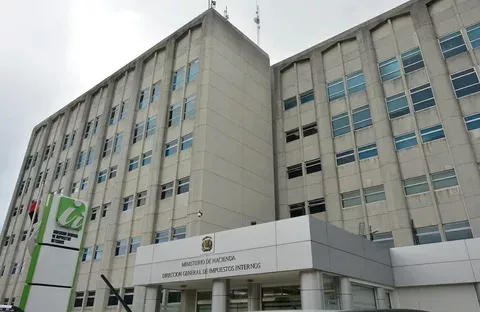
Purchasing real estate in the Dominican Republic is not just about choosing a home by the sea; it's also about integrating into a clear tax system. The key legislative act is Law 288-04, which establishes the main financial obligations for an owner. There are two primary taxes: one-time and annual. At the moment of purchase, you pay the state tax on the transfer of property rights (Transfer Tax) at a rate of 3%. Importantly, the base for calculation is not the price in the contract, but the cadastral value, determined by the tax authority DGII (Dirección General de Impuestos Internos). This prevents price manipulation and ensures a fair valuation for everyone. After registering the title deed (Título), the stage of permanent ownership begins, accompanied by the annual tax on real estate, known as IPI (Impuesto sobre la Propiedad Inmobiliaria). Its rate is 1%, but it is not applied to the entire value of your apartment or villa. The tax is levied only on the amount exceeding the non-taxable minimum (threshold), which the state regularly indexes. For 2026, this threshold remains at approximately 10,000,000 Dominican pesos (roughly $170,000 USD at the current exchange rate). Thus, if the cadastral value of your asset is below this amount, the annual IPI tax is zero. These rules are the same for everyone: from a studio in a new development in Punta Cana to a private villa in Casa de Campo.
Срочная продажа

- 400m2
- 3
 Cabarete, Dominican Republic
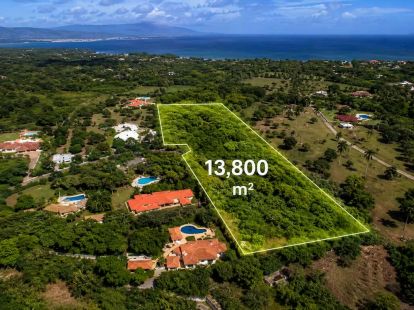
- 13 800m2
Sosua, Dominican Republic

- 840m2
- 2
- 9
- 7
Sosua, Dominican Republic

- 400m2
- 1
- 5
- 5
Sosua, Dominican Republic

- 246m2
- 2/3
- 3
- 3
Sosua, Dominican Republic

- 169m2
- 3
- 3
- 2
Cabarete, Dominican Republic

- 125m2
- 2
- 3
- 2
Sosua, Dominican Republic
- 193m2
- 2
- 3
- 4
Sosua, Dominican Republic
Registration Process, Documents, and Useful Strategies
Transaction security in the Dominican Republic is ensured by a strict procedure and the correct set of documents. The foundation of everything is the Certificate of Title (Certificado de Título), which is the indisputable proof of ownership. Before purchasing, it is essential to request a Legal Status Certificate (Certificación de cargas y gravámenes), confirming the absence of liens on the property. The process of transferring rights is as follows: after signing the preliminary contract and making a deposit, a notary prepares the final public deed of sale (Escritura Pública).
Then, this deed and the document package are submitted to DGII for appraisal and calculation of that very 3% tax. It must be paid within 30 days. After payment, the documents are registered with the Property Title Registry (Registro de Títulos), which constitutes the legal moment of property transfer. For many investors, especially those considering multiple properties or planning rentals, a useful strategy is purchasing real estate through a local limited liability company — SRL (Sociedad de Responsabilidad Limitada). This does not cancel the payment of the 3% tax during the initial title registration under the company's name, but it can simplify asset management, inheritance, and commercial activities. However, it is important to remember: the annual IPI tax for the company is calculated by the same rules — 1% of the value exceeding the non-taxable minimum.
Deadlines, Benefits, and Final Calculation for an Investor
Financial planning is the key to peaceful ownership. All tax payments have strict deadlines. The Transfer Tax (3%) is paid during the transaction. The annual IPI tax is split into two payments: the first must be made by March 11, and the second — by September 11 of the current year. Knowing the benefits allows for savings. For example, the primary residence of an owner who has reached 65 years of age is fully exempt from paying IPI. Also, resident pensioners are entitled to a 50% discount on this tax. Benefits also apply to agricultural lands and facilities. To prepare a final estimate when purchasing a property, for example, for $200,000, you should budget for: ~$6,000 (3% Transfer Tax on the cadastral value), ~$1,500-$2,000 for notarial and registration services, and the potential annual IPI (if the cadastral value exceeds the ~$170,000 threshold, the tax will be 1% of the excess amount). This system makes the Dominican Republic attractive for long-term investments in resort, commercial, and residential real estate of all types, guaranteeing owners transparency and predictability of expenses.