
Coat of Arms of Montenegro: History, Symbolism, and Meaning
- What is the Coat of Arms of Montenegro and Its Place in History
- Why the Double-Headed Eagle?
- The Leopard Lion: Legacy of Venice and Symbol of the Church
- Historical Development of the Coat of Arms from Monarchy to Socialism
- Coat of Arms of the Montenegrin Monarchy in Its Historical Development
- Coat of Arms of Socialist Montenegro
- The Modern Coat of Arms and Practical Information for Tourists (2026)
- The Modern Coat of Arms: Return to Roots
- Where to See Old Coats of Arms and What to Visit for Tourists in 2026
- Souvenirs, Prices, and Shopping
What is the Coat of Arms of Montenegro and Its Place in History
The coat of arms of Montenegro is the official state symbol that has absorbed the country's centuries-old history, its religious traditions, and political ties with the major empires of Europe. Unlike many other state emblems, the Montenegrin coat of arms is inextricably linked with the history of ruling dynasties, the struggle for independence, and the influence of Byzantium, Venice, and Russia.
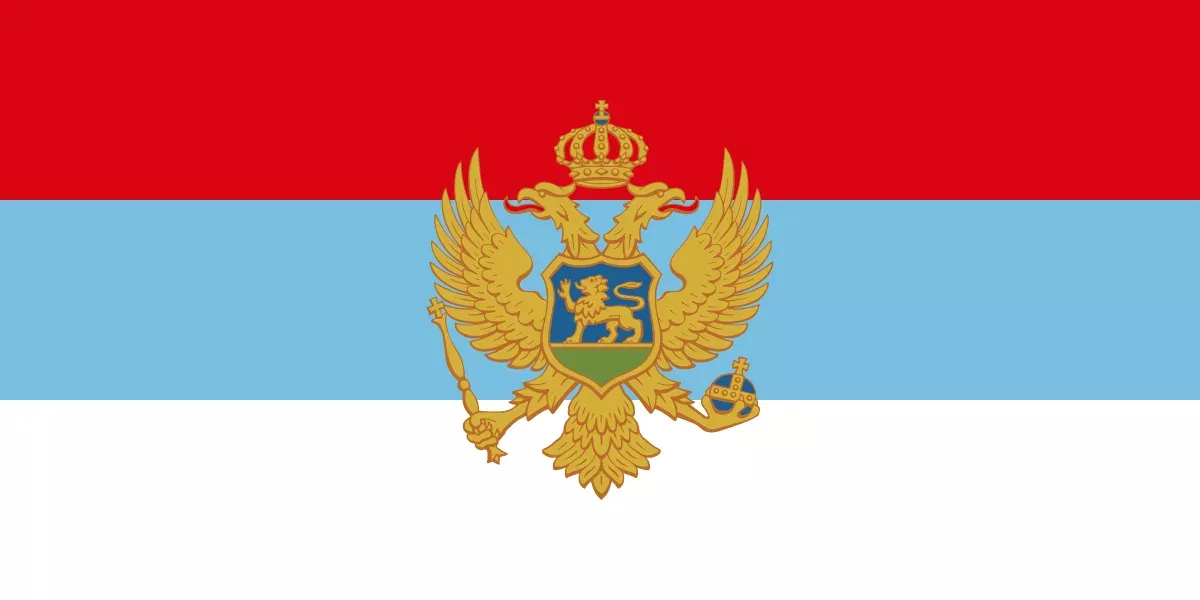
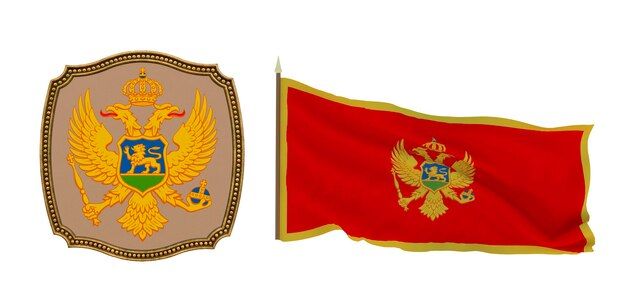
What does the modern coat of arms represent? It is a golden, crowned double-headed eagle with spread wings in flight. On the eagle's chest is a shield, horizontally divided into azure (blue) and green. On the shield is depicted a golden leopard lion with its right paw raised. In its talons, the eagle holds a scepter and an orb — traditional attributes of monarchical power. This composition has a deep meaning, rooted in the Middle Ages.
The colors of the coat of arms of Montenegro are also not accidental. The golden color of the eagle symbolizes nobility, power, and faith. The azure on the shield represents the sky and freedom, while the green represents nature, mountains, and the fertility of the Montenegrin land. The red color in historical versions of the coat of arms has always been associated with the blood shed for independence.
The coat of arms has changed several times throughout history. These changes have always reflected the political system of the country: from a theocratic principality to a kingdom, then a socialist republic, and finally a modern independent state. Each stage has left its mark on the heraldry, and today we can trace the evolution of symbols that Montenegrins revere equally with the flag and anthem.
Why the Double-Headed Eagle?
The double-headed eagle on the coat of arms of Montenegro has several sources of origin simultaneously. Firstly, it is a direct legacy of the Byzantine Empire. Trade and cultural ties with Constantinople were so close that Byzantine symbolism organically became part of Montenegrin heraldry. The eagle represents insight, vigilance, and wisdom — qualities necessary for a ruler.
Secondly, the double-headed eagle is the dynastic symbol of the House of Palaiologos, the last ruling dynasty of Byzantium. Through it, a connection with the Orthodox world is traced, which was critically important for Montenegro, which fought against Ottoman rule for centuries.
Thirdly, the appearance of the eagle bears resemblance to the coat of arms of the Russian Empire. And this is no coincidence. The Petrović-Njegoš dynasty, which ruled Montenegro, maintained close dynastic and political ties with the House of Romanov in the 19th century. Russia acted as a guarantor of Montenegro's independence, and borrowing the eagle's style emphasized this alliance.
The Leopard Lion: Legacy of Venice and Symbol of the Church
If the eagle came from the east, the lion on the shield is a western influence. The golden leopard lion with its right paw raised is a symbol originating from the coat of arms of the Republic of Venice. Venice influenced the development of the Adriatic coast for centuries, and this symbol became firmly established in the region.
But in the Montenegrin interpretation, the lion acquired additional meaning. The raised right paw symbolizes the authority of the bishop, referencing the theocratic period of the country's history. Furthermore, in the Christian tradition, the lion is one of the allegories of the Resurrection and of Christ Pantocrator Himself. Thus, the coat of arms united secular power (the eagle) and ecclesiastical power (the lion), reflecting the unique system of Montenegro, where the metropolitan was often also the political leader.
Срочная продажа

- 80m2
- 1
- 1
- 1
 Podgorica, Montenegro

- 99m2
- 1
- 2
- 1
Podgorica, Montenegro

- 91m2
- 1/2
- 2
- 1
Sutomore, Montenegro
- 332m2
Sutomore, Montenegro
- 192m2
- 1
- 4
- 3
Sutomore, Montenegro
- 78m2
- 5/6
- 1
- 1
Budva, Montenegro

- 130m2
- 1
- 2
- 1
Bar, Montenegro

- 37m2
- 1/4
- 1
Baošići, Montenegro
Historical Development of the Coat of Arms from Monarchy to Socialism
Coat of Arms of the Montenegrin Monarchy in Its Historical Development
When Montenegro, after the fall of the medieval Principality of Zeta, regained its independence in 1516, it became a theocratic state. The highest ecclesiastical and secular authority passed from uncle to nephew within the Petrović-Njegoš family. This was due to the consolidation of Christian Montenegrins against the non-believing Turks. The leading role of the Church was reflected in the heraldry of that time. The eagle and lion coexisted on the coat of arms, symbolizing the inseparable bond between state and church.
A turning point came in 1852 when Danilo I Petrović proclaimed secular princely authority. The Principality of Montenegro became a secular state, which was immediately reflected in the coat of arms. The leopard lion was moved below the eagle — it was now placed on a shield held by the eagle on its chest. The ruler's initials were still placed on the shield with the lion, emphasizing the personal power of the monarch.
On August 28, 1910, a most important event took place. In the jubilee year of the 50th anniversary of his reign, Prince Nicholas I Petrović proclaimed the principality a kingdom, becoming the first king of Montenegro. The coat of arms was again modified towards greater grandeur. The eagle changed from gold to silver. The shield with the lion became completely red. The princely crown was replaced by a royal one, and the coat of arms itself began to be depicted under a purple ermine royal mantle — an attribute emphasizing monarchical dignity.
However, this majestic coat of arms did not last long. In 1917, according to the Corfu Declaration, the unification of Montenegro with Serbia was announced. On November 26, 1918, Montenegro officially became part of the Kingdom of Serbs, Croats, and Slovenes. This act was unilateral and meant the overthrow of the Montenegrin monarchy. The efforts of Montenegrin diplomats at the Versailles Conference proved futile. The coat of arms of Montenegro ceased to be the emblem of a sovereign power for many years.
The royal coat of arms experienced a brief revival in 1941 under Italian occupation, but in 1944 it was banned by the victorious communist authorities led by Josip Broz Tito.
Coat of Arms of Socialist Montenegro
With the establishment of socialist power, the new republic faced the task of creating heraldry that would break with the monarchical past but preserve national identity. The coat of arms of socialist Montenegro was adopted on December 31, 1946, along with the flag. The author of the project is considered to be Đorđe Andrejević-Kun, who is credited with the authorship of most coats of arms of the Yugoslav republics.
This was a completely new design, having nothing in common with double-headed eagles. The coat of arms depicted Mount Lovćen — one of the main national shrines of Montenegro. On the mountain's summit stood the mausoleum of Petar II Petrović-Njegoš, the greatest poet and philosopher, ruler of Montenegro. The mountain was surrounded by the sea, symbolizing the country's access to the Adriatic. The entire composition was framed by a golden laurel wreath — a symbol of glory and victory — and the coat of arms was topped with a red star, a mandatory attribute of socialist symbolism.
This coat of arms emphasized natural wealth, cultural heritage, and belonging to the socialist camp. It existed until the breakup of Yugoslavia and was used until 1993, when the country, then part of the Federal Republic of Yugoslavia, began a return to historical symbolism.

The Modern Coat of Arms and Practical Information for Tourists (2026)
The Modern Coat of Arms: Return to Roots
In 1993, Montenegro, while still in a union with Serbia, returned to the historical image of the double-headed eagle. However, that coat of arms was transitional and was used until 2004. Finally, on July 12, 2004, two years before the restoration of full independence, the country's parliament approved the modern coat of arms of Montenegro that we know today.
On the modern coat of arms, the leopard lion is placed on a shield located on the eagle's chest. The eagle became golden (as opposed to the silver royal one), symbolizing rebirth. However, the most controversial element is the crown. Since Montenegro is now a republic, the presence of the Petrović dynasty crown crowning the eagle caused some disagreements in society during the adoption of the law. Opponents of the crown considered it a monarchical relic, supporters viewed it as a tribute to history and traditions.
Nevertheless, the coat of arms quickly gained popularity among the population. Today it can be seen not only in official institutions but also in schools, offices, and the homes of ordinary Montenegrins. It has become a symbol of the continuity of history: from medieval Zeta and theocratic lords to the kingdom and modern independence.
Where to See Old Coats of Arms and What to Visit for Tourists in 2026
For tourists interested in heraldry, Montenegro offers several unique locations where historical versions of the coat of arms can be seen.
Cetinje — the historical capital and residence of the metropolitans. Here, in the former royal palace (now a museum), you can see original documents, weapons, and household items bearing the image of the royal coat of arms from 1910. Nearby is the monastery, which houses medieval manuscripts with seals of the Crnojević dynasty.
Mount Lovćen and the Njegoš Mausoleum. This place is a must-visit not only for the panoramic views but also for understanding the socialist coat of arms. Ascending to the summit, you will see the very landscape that was depicted on the 1946 coat of arms: the mountain, the sea in the distance, and the majestic mausoleum. In 2026, the road to the mausoleum is completely renovated, and the "Lovćen - Kotor" cable car is operating. The cable car ride for an adult costs about 25 euros, entrance to the mausoleum is 4 euros.
How to get to the key places? From Budva or Kotor, the easiest way is to take a "Royal Capital" tour with visits to Cetinje and Lovćen. The average cost of a group tour in 2026 is 45-60 euros per person. An individual car excursion with a guide will cost from 150 euros.
Souvenirs, Prices, and Shopping
Where to buy souvenirs with the symbolism? The largest selection is in the Old Town of Kotor, on the waterfront in Budva, and in souvenir shops in Cetinje. Prices for magnets with the modern coat of arms start from 2-3 euros. A flag of Montenegro with the coat of arms can be bought for 7-10 euros.
More expensive and authentic items include hand-embroidered coats of arms, copper plates with embossing, or jewelry with symbols (pendants, rings). The cost of handmade items starts from 30-50 euros.
The local currency is the euro. In 2026, as before, in mountainous regions (on Lovćen), it's better to have cash, as card terminals are not available everywhere. In souvenir shops in Cetinje and Kotor, cards are accepted without issue.
Thus, the coat of arms of Montenegro is not just a picture on a flag. It is a key to understanding the country's history, where Byzantium, Venice, Russia, and the unique culture of the highlanders who managed to preserve their statehood are intertwined.