
Molise Italy is a unique part of Italy
a Property in...
- Main — Geography, History, Transport and General Information
- Important — Cities, Attractions and Culture
- Termoli — The Sea Gate of Molise
- Unique Facts About Termoli
- Campobasso — The Mountain Capital of the Region
- Isernia — City of Ancient Bridges
- Larino and Roman Heritage
- Villages with Unique Languages
- San Martino in Pensilis and Chariot Races
- Natural Attractions
- Additional — Real Estate, Prices, Festivals and Gastronomy
- Real Estate Market and Investment Attractiveness
- Festivals and Events
- Gastronomy of Molise
- Technical Details for Travelers
Main — Geography, History, Transport and General Information
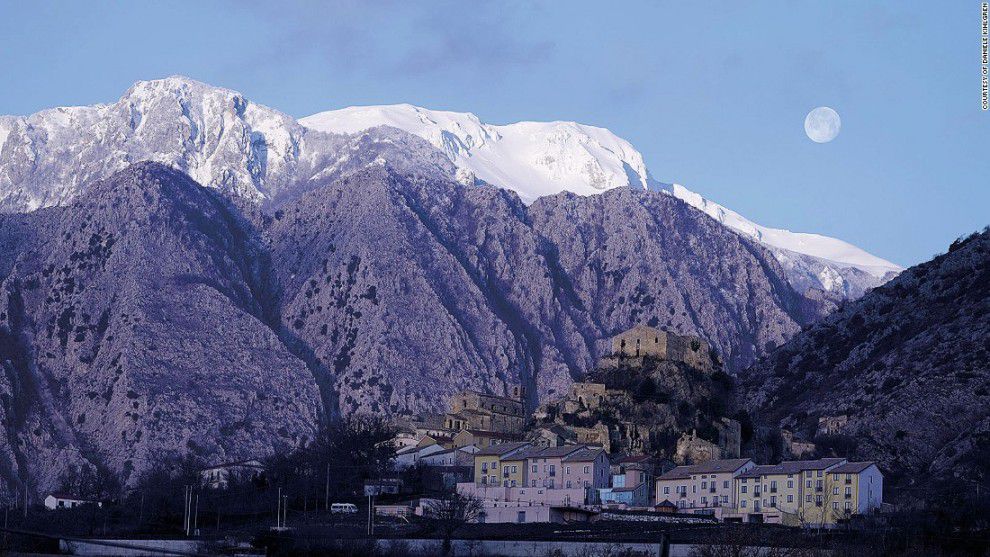
What is it? Molise is the second smallest region in Italy, located in the south of the country along the Adriatic Sea coast. Until 1963, it was part of the Abruzzo region but gained autonomy and became an independent administrative unit. Today it is one of the least known Italian regions for foreign tourists, which Italians call the "Wild West" — lost, untouched by the modern rhythm, preserving disappeared traditions. They still hold chariot races here, speak endangered languages in mountain villages, and the coastline stretching 22 miles remains one of the cleanest in Europe.
Where is Molise located and how to get there? The region borders Abruzzo to the north, Lazio to the west, Campania to the south, and Apulia to the southeast. The nearest international airports are located in Rome, Naples, and Bari. A flight from Moscow or St. Petersburg to Rome with one transfer will cost from 30 thousand rubles, to Bari or Bologna — within 60 thousand rubles one way. From the airports, the most convenient way is by train: rail connections link Termoli, Campobasso, and Isernia with Rome, Bologna, and Bari. For lovers of unusual routes, there is a ferry crossing from Dubrovnik to Bari costing about 9 thousand rubles, and a flight to Dubrovnik from Russia costs 40–60 thousand rubles.
The history of the region goes back thousands of years. The first to settle here were the Samnites and Frentani — ancient Italic tribes whose resistance to the Romans became legendary. Later, these lands attracted pirates, forest brigands, and conquerors, but each time the region preserved its identity. In the Middle Ages, the Normans and Hohenstaufen built castles here, leaving behind monumental fortresses. In the 15th century, Albanians fleeing the Ottoman invasion settled here, founding villages where the Arbëresh language is still spoken today. And in the east of the region, a unique Croatian dialect has been preserved, brought by settlers several centuries ago.
In 2026, Molise continues to be a region of contrasts: here antiquity meets modernity, mountain peaks neighbor beaches, and ultra-modern wine cellars operate on a self-service principle. The local currency is the euro, whose exchange rate remains stable for international transactions. The economy is dominated by agriculture, the production of church bells, and gradually developing tourism. The region is of particular interest to real estate investors: prices here are significantly lower than in neighboring regions, and the growth potential is enormous since few people know about Molise yet.
What are the inhabitants of Molise called? Italians from this region are called molisani. They are proud and hospitable people who have preserved the traditions of their ancestors. In the villages, you can still find artisans working with ancient techniques, hear unique dialects, and taste dishes not prepared anywhere else in Italy. The molisani are not spoiled by tourist attention, so they treat travelers with genuine cordiality, which becomes a real discovery for guests accustomed to commercialized resorts.
Is Molise a good place to live? The question requires detailed consideration. For those seeking tranquility, clean air, and a measured pace, this is an ideal option. Housing and food prices here are noticeably lower than in major Italian cities. A developed network of nature reserves, proximity to the sea and mountains create excellent conditions for outdoor activities. However, for those who need a vibrant nightlife or career opportunities in international corporations, the region may seem too provincial. At the same time, transport accessibility allows quick access to Naples, Rome, or Bari, combining a quiet life with the opportunities of megacities.
Срочная продажа
- 90m2
- 3
- 2
 Calpe, Spain
- 60m2
- 2
- 2
Calpe, Spain

- 150m2
- 2
- 2
Marbella, Spain

- 87m2
- 3
- 2
Estepona, Spain
- 75m2
- 2
- 3
Alicante, Spain
- 72m2
- 3
- 2
- 2
Alicante, Spain
 Lloret de Mar, Spain
- 491m2
- 4
- 5
Benidorm, Spain
Important — Cities, Attractions and Culture
Termoli — The Sea Gate of Molise
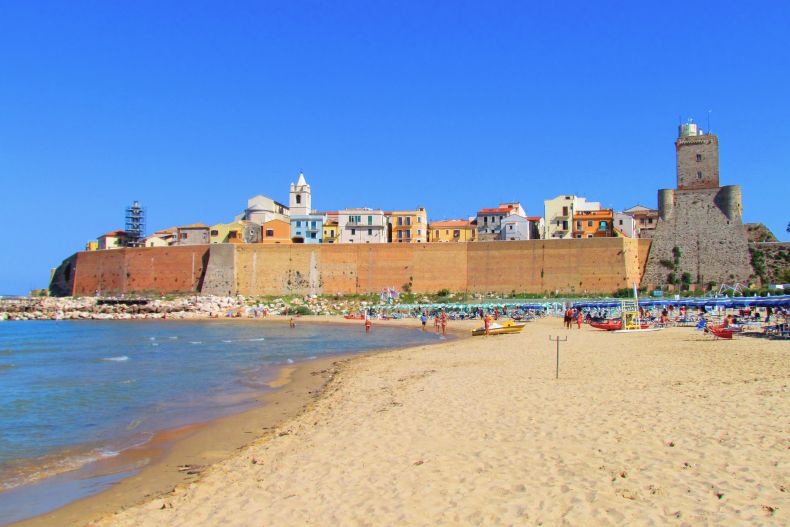
What is the most beautiful city in Molise? Many would answer — Termoli. This is the only port in the region and its largest coastal city. The old town, known as Borgo Antico, seems to have stepped out of medieval chronicles. Here rises the Swabian Castle — a monumental 13th-century structure made of sandstone and limestone, built under Frederick II Hohenstaufen. Nearby is the Belvedere watchtower, offering views of the Vasto Gulf and the Matese Mountains. On Piazza Duomo stands the Cathedral of the Mother of God, founded in the 11th century on the site of a pagan temple of Castor and Pollux — as evidenced by the figures of a griffin and lions adorning the columns.
Termoli's beaches are awarded the prestigious Blue Flag for water cleanliness and developed infrastructure. Sant'Antonio begins right at the foot of the castle — a wide sandy beach with golden-white sand. To the right of the port lies Rio Vivo, more secluded, with wooden paths among cacti and Mediterranean greenery. Termoli's promenade is ideal for walks and jogs: the route along Via Colombo is about six kilometers round trip.
The main symbol of Termoli is the trabucco. These 19th-century wooden structures resemble huts on stilts, but they are actually complex fishing machines. The principle is simple: a net stretched on protruding planks is lowered into the water at regular intervals and raised with the catch. Trabucco were placed along fish migration routes to ensure catches even in storms. The most recognizable trabucco is located not far from the center, and by special request, tourists are allowed inside to learn about the traditional fishing industry.
Unique Facts About Termoli
Rejecelle is the narrowest street not only in Termoli but in all of Italy. Its width is only 34 centimeters with a length of 7 meters 88 centimeters. In the old days, when two noble gentlemen met in this alley, a problem arose: who would give way? The issue was resolved either by nobility of surname or by duel. Today it's a photo location, a must-visit.
In Termoli, the 42nd parallel and the 15th meridian intersect, named Termoli-Etna. This meridian determines the time zone of Central Europe, making the city the Italian Greenwich. At the intersection point stands the monument Il Sogno — "The Dream," turning invisible geographical lines into a tangible object. The architects imbued it with the meaning of cultural value and memory of generations.
The wholesale fish market in the port of Termoli has operated since 1942 on the principle of Dutch auctions, which is unique for southern Italy. Bidding begins at 10:00 PM when fishermen return with their catch after many hours of "hunting." Boxes of fish move on rails, and buyers press electronic auction buttons to reserve their desired lot. For ordinary tourists, a retail market operates, best visited on weekdays before 1:00 PM.
Campobasso — The Mountain Capital of the Region
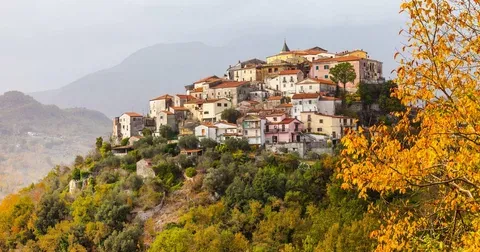
Campobasso is the administrative center of Molise, first mentioned in chronicles in 878. The city is located on a hill and impresses with its stepped streets, free from crowds of foreign tourists. The main attraction is Monforte Castle, built in the 15th century by the Normans on the site of earlier fortifications. Its windows offer a breathtaking view of the city and valley, and cultural events and festivals are regularly held inside.
In the city, it's worth visiting the Samnite Museum, which houses artifacts from the time of the Samnites — the ancient tribe that inhabited these lands before the Romans. Also interesting are the figured drinking fountains scattered throughout the city and mansions with family coats of arms on their facades. Many buildings in Campobasso were reconstructed after World War II bombings and became earthquake-resistant, which is important for this region.
Isernia — City of Ancient Bridges
Isernia is one of the oldest cities in Italy, the former capital of the Samnites. Today it is a provincial center where unique monuments have been preserved. The main pride is the ancient Roman bridge, one of the oldest in Italy, still in use today. It testifies to the engineering genius of the Romans and is a functioning historical monument.
On Piazza Fraterna stands the eponymous 13th-century fountain with Renaissance elements. The cathedral and numerous churches shape the appearance of the old city. Isernia was heavily damaged during the war but was carefully restored, preserving its historical layout and atmosphere.
Larino and Roman Heritage
In the city of Larino, there is a well-preserved Roman amphitheater where gladiator fights once took place. Today it is an active venue for concerts and cultural events, attracting spectators from all over the region. Nearby rises the Cathedral of San Pardo — a magnificent example of Romanesque architecture with richly decorated interiors. An annual festival in honor of the saint attracts pilgrims.
Villages with Unique Languages
In Molise live descendants of Albanian settlers from the 15th century who fled the Ottoman invasion. In Montecilfone, Campomarino, Portocannone, and Ururi, they still speak the Arbëresh language, sign signs, and preserve the traditions of their ancestors. And in the town of Montemitro, a unique archaic Croatian dialect has been preserved. These villages are a true paradise for linguists and ethnographers, a place where time stopped several centuries ago.
San Martino in Pensilis and Chariot Races
This picturesque city is famous for the traditional horse-drawn chariot race Carro Dei Giovani. The unique event attracts spectators from all over Italy. In addition, San Martino is known for its love of street art: fortress walls and towers are adorned with graffiti by popular street artists, turning the medieval city into an open-air gallery.
Natural Attractions
The Matese National Park is a true paradise for nature lovers. Here are hiking trails of varying difficulty, revealing mountain peaks, deep valleys, and beautiful lakes. The park is ideal for hiking, climbing, and relaxing in nature. Molise has six nature reserves and two UNESCO biosphere sites, confirming the region's status as the "Green Heart of Italy."
What are the 5 places in Italy worth visiting? If compiling a ranking of unique locations, it must include Termoli with its castle and trabucchi, Campobasso with its stepped streets, Isernia with its ancient Roman bridge, the Matese National Park, and the villages with endangered languages. These places offer a chance to see the real Italy, hidden from mass tourism.
Additional — Real Estate, Prices, Festivals and Gastronomy
Real Estate Market and Investment Attractiveness
Real estate in Molise remains quite affordable, especially compared to neighboring regions. Many forward-thinking investors are already acquiring properties here, anticipating price increases when more people learn about the region. The average cost of housing varies depending on location. The most expensive properties are located in the historic center of Termoli with sea views — luxury apartments can reach 200–300 thousand euros. In Campobasso, prices are lower: a good apartment can be found for 80–120 thousand euros. In mountain villages, houses sell from 30–50 thousand euros, but often require renovation.
Popular real estate is found in the coastal zone — apartments and houses in Termoli and Campomarino that can be rented to tourists in the summer season. Growing interest is being shown in purchasing properties in historical villages with unique languages: such houses attract buyers with their authenticity and potential for ethno-tourism. For a successful purchase, a foreigner will need a tax number (codice fiscale), a bank account in Italy, and the assistance of a local lawyer to check the legal purity of the transaction.
Where should a tourist stay? In Termoli, the guest house Salsedine is popular with a rating of 9.4 out of 10 based on reviews — a night costs from 14,400 rubles. Hotel Santa Lucia (8.6 out of 10) offers rooms from 15,700 rubles per night. Apartments Termoli Centro with a maximum rating of 10 out of 10 cost from 21,200 rubles per night. For a budget trip, it's better to choose hotels in Campobasso or small mountain towns, where prices are 20–30 percent lower.
Festivals and Events
The most festive month in Molise is August. On August 3–4, the maritime event San Basso pe' mar takes place, founded in 1761. Fishermen take the statue of Saint Basso out to sea on a chosen boat, asking for luck in fishing. They are followed by a vessel with an orchestra, and at nightfall, fireworks are launched.
On the night of August 15, the "Castle Fire" ignites over the Swabian Castle — a halo of fireworks engulfing the walls. This is a reminder of the Ottoman Empire attack in 1566 when the castle was burned. During the celebration, street food stalls operate, live music plays, and residents dress in Saracen costumes.
On the last weekend of August, the city's oldest fish festival takes place. From morning to night, various fish and shellfish are prepared, with local wine and beer flowing. The main action begins after sunset, when the fresh catch is fried to a perfect golden crisp in local olive oil.
Gastronomy of Molise
The region's cuisine is about open fire, spicy food, meat, and seafood. Arrosticini — lamb skewers on wooden spits, cooked over coals and served hot. For locals, this is so important that emigrants order frozen skewers delivered from their homeland. Spicy pork sausage soppressata and pampanella — pork stewed for many hours in a spicy sauce, often sold in food trucks as typical street food.
Popular snacks include taralli — mini rings of wheat flour with fennel. Instead of the usual bruschetta, they serve a more refined version — crostini. From the seafood menu, try angel fish fillet in herbs (pescatrice ripiena), fisherman's soup 'u bredette, cuttlefish with peas and olive oil sécce e 'pisille. A typical snack for fish soups is scescille — balls of eggs, stale bread, and cheese in tomato sauce.
For dessert, be sure to ask for coffee with grated cocoa. It pairs perfectly with the salty sea air and pistachio cannoli. Wine cellars like Ghjettone offer a unique experience: you can take bottles from the refrigerator and pour as much wine as you like. The space is run by former fisherman Antonio "Il Ghiottone" Di Cesare, who brews excellent beer and prepares fish soup according to family recipes.
Technical Details for Travelers
To visit Molise, Russian citizens need a Schengen visa. Travel insurance is mandatory. The best time to visit is May-June or September, when comfortable temperatures allow enjoyment of both beaches and excursions. In August, prices are at their maximum, and beaches are crowded with local holidaymakers. In winter, the region is suitable for mountain walks and exploring history without tourist crowds.
Mobile communication and internet work in all cities, but interruptions are possible in mountain villages. It is recommended to download offline maps in advance. Locals speak Italian; English is understood in tourist places, but knowing a few phrases in Italian will noticeably improve attitudes.
Excursions in the region are best booked in advance through local agencies. Popular tours include Molise castle tours, gastronomic tours with wine and cheese tastings, and sea cruises along the coast with trabucchi viewing. From Termoli, trips are organized to the Matese National Park and neighboring regions — Abruzzo and Apulia.