Real estate in Greece
After the first visit to Greece, it is very difficult not to fall in love with the magnificent nature, in a kind of Greek cuisine and local way of life. Along with real estate You will receive the sea, air and sunshine.
Greece is a...

- Buying Real Estate in Greece in 2026: A Step-by-Step Guide
- What Changes in 2026 Affect Buyers
- Budget Calculation: From Sticker Price to Total Cost
- Legal Start: AFM, Bank Account, and Power of Attorney
- PROPERTY SELECTION, RISKS, TRANSACTION, AND REGISTRATION
- Signing the Contract (συμβόλαιο) and Registration
- RESIDENCY PERMIT, TAXES, LIMITATIONS, AND ROADMAP
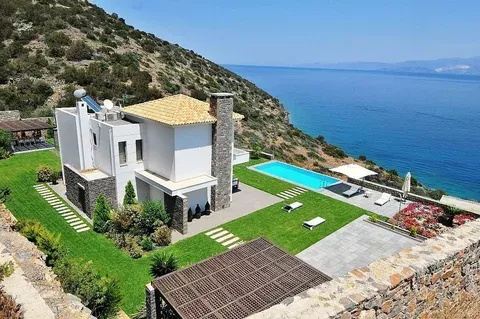
Buying Real Estate in Greece in 2026: A Step-by-Step Guide
Greek Real Estate 2026: How a Foreigner Can Buy an Apartment and Avoid Overpaying
Buying real estate in Greece in 2026: new Golden Visa thresholds, real taxes, hidden costs, and risks. A step-by-step plan from search to registration.
As of January 1, 2026, Greece has completed its transition to a unified digital cadastre (Εθνικό Κτηματολόγιο), changing the property registration procedure for foreigners. While in 2025 the registration process could be delayed due to inconsistencies between the old system (Υποθηκοφυλακείο) and the new one, in 2026 all transactions are handled centrally, reducing processing times from 3 to 1.5 months. Meanwhile, according to the Bank of Greece, housing prices in Attica have increased by 9.2% over the past 12 months, and the thresholds for obtaining a residence permit (Law 5038/2023 with 2024 amendments) are more differentiated than ever. This material provides an up-to-date action plan, a calculation of the actual cost of ownership, and an analysis of hidden risks that agencies do not mention.
What Changes in 2026 Affect Buyers
In 2026, three key changes have emerged for foreign investors. First, mandatory registration of all lease agreements on the myAADE platform. Whereas previously renting out an apartment long-term could remain in the “gray” zone, now the tax authority automatically cross-references the owner’s cadastral data with incoming income. Second, energy efficiency requirements for buildings have tightened (Law 5100/2024). Properties with a rating below “D” require mandatory upgrades within three years of purchase; otherwise, the owner faces a fine of €500 to €2,000. Third, the thresholds for the “Golden Visa” remain at 2024 levels, but now an automatic source-of-funds check applies to citizens from non-EU countries.
The main difference in 2026 is the full digitalization of the cadastre and the automation of tax controls, making it impossible to conceal ownership or rental income.
Budget Calculation: From Sticker Price to Total Cost
The advertised property price is only 85–90% of the final amount you will need to allocate. The key rule is to set aside an additional 12–15% for associated expenses. Let’s break down the structure using the example of a secondary apartment costing €300,000 in the suburbs of Athens (a region with a Golden Visa threshold of €400,000—here the purchase is suitable only for residency, not for obtaining a residence permit, which is important).
| Expense Item | Percentage / Amount | Note for 2026 |
|---|---|---|
| Transfer Tax (ΦΜΑ) | 3.09% (€9,270) | Calculated based on the cadastral value if it exceeds the contract price. |
| Notary | 1.0–1.5% (€3,000–4,500) | +24% VAT. Mandatory verification in the new unified cadastre. |
| Lawyer (Due Diligence) | 0.8–1.5% (€2,400–4,500) | +24% VAT. Starting in 2026, the review includes boundary analysis in the GIS system. |
| Agency Fee | 2% (€6,000) | +24% VAT. Typically paid by the buyer. |
| Registration Fees | 0.5–0.8% (€1,500–2,400) | Fees for entry into the new cadastre. |
| TOTAL (additional) | ≈ €22,170–27,900 | 7.4–9.3% of the price + additional costs. |
For new builds (construction permit issued after 2006), the 3.09% transfer tax is replaced by a 24% VAT, making them significantly more expensive upfront. However, between 2024 and 2026, a VAT suspension applies to certain social housing programs in Athens and Thessaloniki, though the rate remains in place for premium properties.
Legal Start: AFM, Bank Account, and Power of Attorney
A Greek tax number (Αριθμός Φορολογικού Μητρώου, AFM) is essential for any transaction. Obtaining an AFM in 2026 has become simpler: it can be requested online through the myAADE portal if you have an electronic signature (eIDAS), or via a representative with a notarized power of attorney.
Timeline: 5–10 business days.
Documents: passport with apostille and translation into Greek, completed Form Μ1.
Opening a bank account in Greece remains mandatory for payments over €500 related to the transaction (Law 4557/2018 on anti-money laundering). In 2026, remote account opening without a personal visit is not possible for citizens of Russia and Belarus. This is a critical limitation that distinguishes the 2026 process from the more flexible approach in 2024.
The process begins with obtaining an AFM and opening an account with a national bank (NBG, Alpha Bank, Eurobank, Piraeus). Without these two elements, you cannot proceed with the deposit.
Срочная продажа
- 454m2
- 3
- 4
 Athens, Greece
- 77m2
- 1
- 1
Athens, Greece
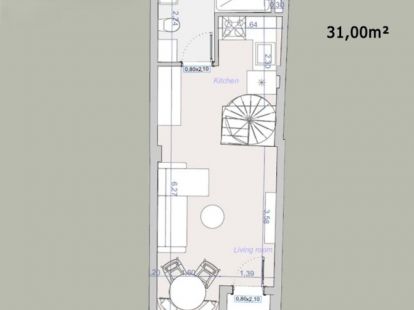
- 66m2
- 1
- 2
Athens, Greece
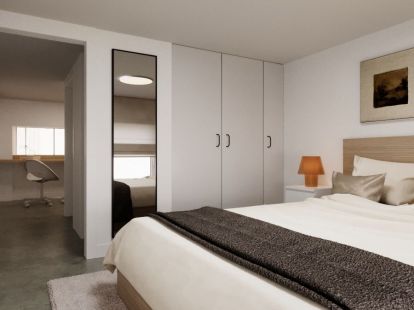
- 72m2
- 2
- 2
Athens, Greece

- 290m2
Athens, Greece
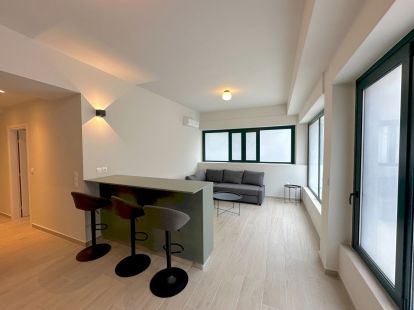
- 66m2
- 2
- 2
Athens, Greece
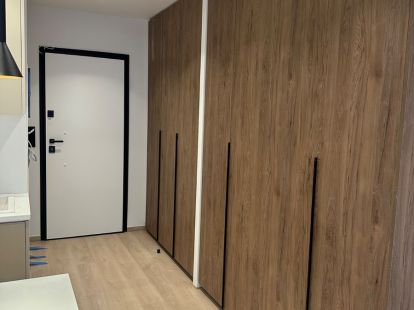
- 43m2
- 1
- 1
Athens, Greece

- 2 930m2
Athens, Greece
PROPERTY SELECTION, RISKS, TRANSACTION, AND REGISTRATION
Property Selection and Deposit: The Square Meter Trap
When viewing properties in Greece, foreigners encounter the “building coefficient” phenomenon (συντελεστής δόμησης). Greeks measure area by the external perimeter of the walls and include common areas such as stairwells and parking spaces. If a seller claims an area of 100 m², the actual living space (εμβαδόν κατοικίας) is 82–87 m².
Example: A villa in Halkidiki is advertised at 180 m² for €450,000. The engineer’s technical report (Ταυτότητα Κτιρίου, mandatory since 2024) shows a usable area of 148 m². The effective cost per actual square meter turns out to be not €2,500 but €3,040.
Deposit process (προκαταβολή): the deposit amount is 10–20% of the price. A preliminary agreement (προσύμφωνο) is signed. If the seller withdraws from the deal, they must return the deposit double. If the buyer withdraws, the deposit is forfeited. In 2026, notaries insist on including a bank guarantee clause for the deposit’s return to protect the buyer.
Comprehensive Due Diligence and Cadastral Risks
Despite the completion of the transition to a unified cadastre, about 12% of properties (according to the Ministry of Digital Governance) still have unresolved discrepancies between the old mortgage registry (Υποθηκοφυλακείο) and the new cadastre. The lawyer’s task is to obtain a “Cadastral Extract” (Απόσπασμα Κτηματολογίου) and verify:
-
Consistency of the owner’s details between the contract and the cadastre.
-
Absence of seizures (κατασχέσεις) and mortgages (υποθήκες).
-
Legality of all structures. Approximately 30% of properties have unauthorized additions. The legalization procedure (τακτοποίηση) under Law 4495/2017 remains available in 2026 but costs between €1,500 and €8,000 depending on the extent of the violation and typically falls on the buyer unless otherwise agreed.
Signing the Contract (συμβόλαιο) and Registration
The final purchase agreement (συμβόλαιο) is drafted by a notary in Greek. The presence of a translator licensed by the Ministry of Foreign Affairs is mandatory if the buyer does not speak Greek at a B2 level.
Signing process:
-
The notary reads the contract aloud.
-
The parties (or their authorized representatives) sign each page.
-
The buyer transfers the full amount minus the deposit.
-
The notary submits the electronic transfer declaration (Δήλωση Φόρου Μεταβίβασης) to the tax office.
After signing, you must wait for the entry to be recorded in the Ελληνικό Κτηματολόγιο (Greek Cadastre). In 2026, the average time to obtain the final registration certificate (πιστοποιητικό εγγραφής) is 45 days—twice as fast as in 2024, thanks to digitalization.
RESIDENCY PERMIT, TAXES, LIMITATIONS, AND ROADMAP
Comparison: Residence Permit Through Investment in 2026 (New Rules)
The “Golden Visa” program (Law 5038/2023) remains the main attraction. However, it is important to distinguish goals: a purchase aimed at obtaining a residence permit comes with a restriction—the property cannot be rented out short-term (Airbnb), only long-term (12 months or more).
| Region | Minimum Threshold | Notes for 2026 |
|---|---|---|
| Attica, Thessaloniki, Mykonos, Santorini | €800,000 | One property, minimum area 120 m². |
| Other regions, islands with up to 3,100 inhabitants | €400,000 | One or multiple properties (total value). |
| Industrial/historical buildings | €250,000 | Obligation to renovate within 5 years. |
Who this suits:
Family with children, goal of relocation: buy one property from €400,000 in the Peloponnese or Crete. Obtain a residence permit and rent it out long-term when not in use.
Investor, goal of passive income: buy 2–3 properties totaling €400,000 in high-tourism areas (Halkidiki, Rhodes). Rent them short-term only if a residence permit is not required. In 2026, short-term rental income is taxed at 15% plus social security contributions.
Budget option for a residence permit: purchase a commercial property (e.g., an office) for €250,000 in Athens and rent it out. This allows obtaining a residence permit without restrictions on residential rentals.
Annual Taxes and Limitations in 2026
After purchase, owners face mandatory payments:
-
ΕΝΦΙΑ (Uniform Property Tax): from €0.5 to €10 per m². For a 100 m² apartment in Athens, approximately €450–700 per year. Calculated automatically.
-
Rental income tax (progressive scale):
— up to €12,000: 15%
— €12,001–35,000: 35%
— above €35,000: 45%
As of January 1, 2026, all rental payments (including short-term) must be made via bank transfer or payment systems. Violation incurs a penalty of 50% of the income amount.
When NOT to buy real estate in Greece:
— If you plan to rent the property short-term while also relying on it for a residence permit—this is prohibited by law.
— If your budget is strictly limited to the property price without accounting for 15% in ancillary costs and annual taxes.
— If you are unprepared for bureaucracy: even in 2026, responses from government agencies can take 3–4 weeks.
Conclusion and Roadmap
Buying real estate in Greece in 2026 is a transparent but preparation-intensive process. The full digitalization of the cadastre and tax controls has shortened registration times but raised the bar for legal compliance and fund transparency.
Next steps:
-
Request from your chosen agency the Ταυτότητα Κτιρίου (building technical passport) and an extract from the new cadastre before signing the preliminary agreement.
-
Order an ΕΝΦΙΑ calculation for your selected property for 2026 to understand the annual tax burden.
-
If your goal is a residence permit, verify whether your chosen area falls under the €800,000, €400,000, or €250,000 threshold.