
Almeria, Spain — holiday, beaches, hotels Almeria, beaches, how to get
the Beaches of the Mediterranean sea associated with the Golden and white sand, tropical flowers, but the main thing – a friendly sun that so rarely closed by clouds. If you are looking for a town of Spain, where the hot sun shines...
- What is Almeria and where is it located?
- How to get to Almeria and where to stay
- STONE, SAND, AND CELLULOID: WHAT ALMERIA IS FAMOUS FOR
- Attractions worth visiting year-round
- Cinematic Almeria: From Lawrence to Jon Snow
- INVESTMENT, REAL ESTATE, AND QUALITY OF LIFE
- Climate and ecology: 320 sunny days a year
- Almeria's property market: 2026 prices and investment attractiveness
- Roquetas de Mar: an alternative to the congested center
- Tourist infrastructure and average prices 2026
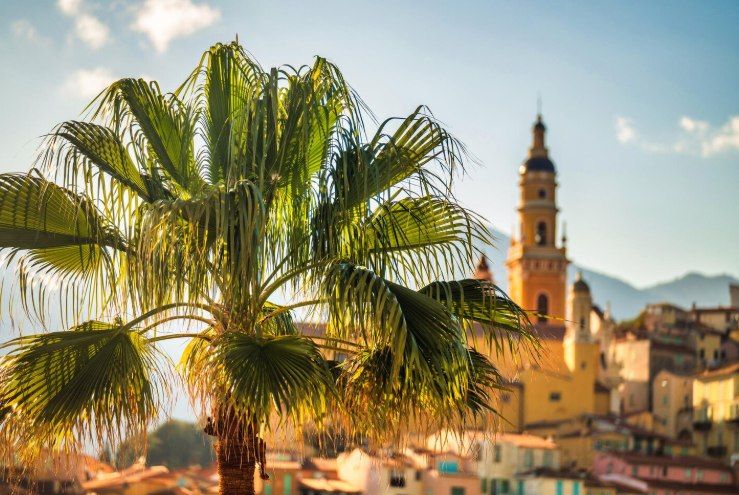
What is Almeria and where is it located?
Almeria is not just a city on the southeast coast of the Iberian Peninsula. It is the only place in continental Europe where the waves of the Mediterranean Sea lap against shores overlooked by a genuine desert. The capital of the eponymous province within the autonomous community of Andalusia, Almeria is located 200 kilometers east of Granada and just 120 kilometers from the border with Murcia. Coordinates: 36°50′ N, 2°27′ W. Natural isolation — the sea to the south, the mountain ranges of Sierra de los Filabres and Sierra Alhamilla to the north and west — has shaped a unique microclimate and distinctive culture unlike any other region in Spain. Here, European rationalism is intricately interwoven with the oriental sensibilities bequeathed by the Moors, who ruled these lands for nearly eight centuries.
Today, Almeria is a municipality with a population of 200,578 (INE, 2025), a modern commercial port, the international Leon Airport connecting the city with Madrid, Barcelona, and London, and one of the fastest-growing tourist clusters in Andalusia. But above all, it is living history. Here, Moorish fortresses stand alongside Roman cisterns, and film studios built by Hollywood producers are organically integrated into desert landscapes, as if they had stood there for a thousand years. In 2026, Almeria is experiencing a true renaissance: major investments from the UAE and Qatar are flowing into hotel infrastructure, and residential property prices have shown steady growth of 7–9% annually over the past five years.
How to get to Almeria and where to stay
The nearest airport — Almeria (LEI) — is located just 9 kilometers east of the city center. This small but modern air gateway receives regular flights from Madrid (Iberia, 1 hour 10 minutes), Barcelona (Vueling, 1 hour 30 minutes), and seasonal charters from London, Amsterdam, and Berlin. In 2025, the airport's passenger traffic exceeded 1.2 million people, a 15% increase compared to pre-pandemic 2019. Alternative options: Granada Airport (150 km, 1 hour 45 minutes by car), Malaga Airport (220 km, 2 hours 30 minutes), and Murcia Airport (130 km, 1 hour 30 minutes). Almeria is served by the Madrid–Granada–Almeria railway line; travel time from the capital is approximately 5 hours.
Accommodation options in Almeria range from budget hostels to five-star hotels. The average price for a double room in a 4* hotel during the high season (July–August) is €140–180 per night; during the low season (November–February) it is €70–90. One-bedroom apartments in the center can be rented on Airbnb for €60–100 per night. For tourists planning to visit Cabo de Gata, San José is the optimal location — prices here are 20–30% higher than in the city, but the view of volcanic cliffs compensates for the difference.
Срочная продажа

- 928m2
- 5
- 5
 Marbella, Spain

- 700m2
- 6
- 5
Santa ponsa, Spain
- 3
- 2
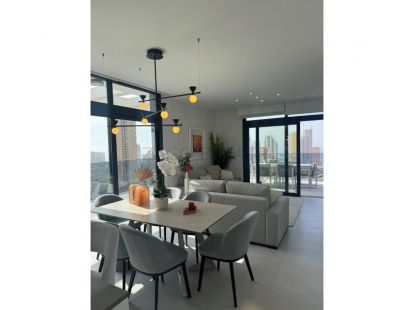
Poniente, Benidorm, Spain
- 90m2
- 3
- 2
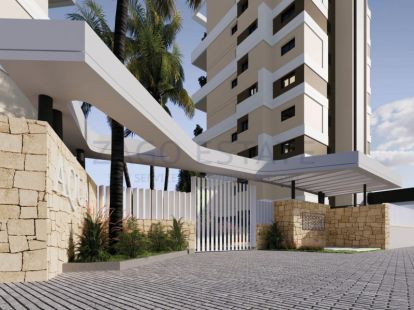
Calpe, Spain
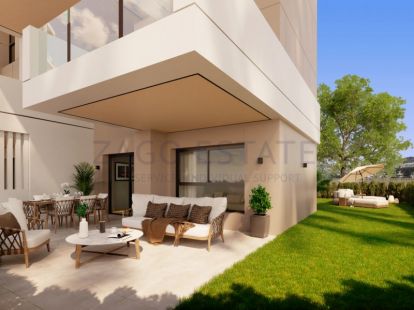
- 60m2
- 2
- 2
Calpe, Spain

- 150m2
- 2
- 2
Marbella, Spain

- 87m2
- 3
- 2
Estepona, Spain
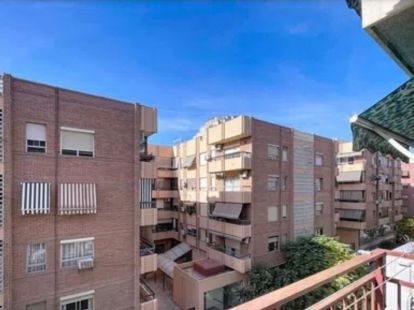
- 75m2
- 2
- 3
Alicante, Spain
STONE, SAND, AND CELLULOID: WHAT ALMERIA IS FAMOUS FOR
Attractions worth visiting year-round
The Alcazaba is the city's landmark and the second-largest Moorish fortified complex in Europe after Granada's Alhambra. The fortress was founded in 955 by Abd ar-Rahman III, the first Caliph of Andalusia. The perimeter walls exceed 1,400 meters, the masonry thickness at the base reaches 3–4 meters, and the height is 5 meters. Within the walls remain residential quarters, a mosque, baths, and vast underground cisterns for collecting rainwater, capable of holding up to 600,000 liters. In 1931, the Alcazaba was declared a National Historic-Artistic Monument. Annual attendance exceeds 700,000 visitors. Entry — €5, free for EU citizens.
The Cathedral of the Incarnation is a unique fortress-church in Europe. Built between 1524 and 1562 on the foundations of the city's main mosque, destroyed by an earthquake. Architect Juan de Orea designed the building with solid walls reinforced by buttresses and massive towers — the cathedral had to withstand attacks from Barbary pirates who terrorized the entire coastline. Inside: a late Gothic nave, a Renaissance altarpiece, and 16th-century Hispano-Flemish painting.
Tabernas Castle — atmospheric ruins from the 12th century, 15 kilometers from the city. Unlike the polished, tourist-oriented Alcazaba, Tabernas offers authentic history without embellishment. Square-shaped walls, battlements, panoramic views of the desert. There are no paved paths; the climb on foot takes 20–25 minutes. Historians locate the summer residence of the Dukes of Alba here. Entry is free, parking — €3.
Cabo de Gata-Níjar Natural Park — 50 kilometers of wild coastline, volcanic landscapes, endemic flora and fauna. Beaches: Los Genoveses (half a kilometer of golden sand, dunes), Mónsul (filming location for 'Conan the Barbarian', mushroom-shaped rock), Playa de los Muertos (pebble beach, crystal-clear water, ranked in Spain's top 10). Infrastructure is deliberately minimal — a protected natural area. Water temperature June–October: +22–26 °C.
Tabernas Desert and Oasys Mini Hollywood — Europe's only desert on the continent. Area: 280 km², annual rainfall: less than 200 mm. In 1964, Sergio Leone built a Western town set here for filming 'A Fistful of Dollars'. Today it is the Oasys Mini Hollywood theme park: zoo, swimming pools, cowboy shows, a replica saloon. Entry — €29.50, children under 10 — €19.50. Annual attendance: 400,000+ visitors.
Cinematic Almeria: From Lawrence to Jon Snow
Over 500 films have been shot in the province of Almeria since 1962. Directors and actors who have worked here include David Lean ('Lawrence of Arabia'), Sean Connery ('The Wind and the Lion'), Arnold Schwarzenegger ('Conan the Barbarian'), Anthony Hopkins, Michael Fassbender ('Assassin's Creed'). Ridley Scott filmed 'Exodus: Gods and Kings' and 'Indiana Jones' here. Sergio Leone wrote the history of the Spaghetti Western right here — the Dollars Trilogy ('A Fistful of Dollars', 'For a Few Dollars More', 'The Good, the Bad and the Ugly') was filmed in the Tabernas Desert. Clint Eastwood, who gained worldwide fame from these films, was a little-known TV actor before Almeria.
In 1966, John Lennon came to Almeria to film 'How I Won the War'. Here, in a house on Calle Santa María, he wrote the iconic 'Strawberry Fields Forever'. Today, a life-size bronze statue of Lennon stands on Plaza Flores — locals bring flowers to the 'Beatle' and leave notes. The house where the musician lived has been converted into the 'Cine Casa' (Cinema House), featuring a gallery dedicated to the history of cinema in Almeria.
In 2015–2016, the 'Game of Thrones' production team worked at the Alcazaba and in the Tabernas Desert. These locations depicted Dorne and the lands south of the Red Mountains. Since 2002, the city has hosted the Almería al Corto international short film festival.

INVESTMENT, REAL ESTATE, AND QUALITY OF LIFE
Climate and ecology: 320 sunny days a year
Almeria is the sunniest city in Spain. It records 320 clear days per year, with an average annual air temperature of +19.5 °C. The lowest average monthly temperature occurs in January (+16 °C daytime, +8 °C nighttime), the highest in August (+32 °C daytime, +22 °C nighttime). Mediterranean Sea water temperature: May — +18 °C, June — +22 °C, July–September — +24–26 °C, October — +22 °C. Even in December, the sea only cools to +16 °C. Annual rainfall is 196 mm, an absolute minimum for a European city. Rain occurs mainly in December–January; summer rainfall is non-existent.
The ecological situation is favorable. The absence of heavy industry, constant sea breezes, and low building density (unlike Barcelona or Madrid) ensure clean air. The Air Quality Index (AQI) remains in the green zone throughout the year.
Almeria's property market: 2026 prices and investment attractiveness
The Almeria real estate market shows confident post-crisis growth. The average price per square meter in the provincial capital as of Q1 2026 is €2,150/m², 8.3% higher than in 2025 and 34% above the market bottom of 2014.
Breakdown by district:
-
Almeria City Center (cathedral district, Alcazaba, Puerta de Purchena) — €2,500–3,200/m². Primarily a secondary market, apartments in buildings from 1970–1990, in high demand among investors for rental purposes. Average price for a two-bedroom apartment (70 m²) — €185,000–210,000.
-
El Cerrillo, La Charca (residential neighborhoods) — €1,700–2,100/m². New developments, townhouses. Popular with families. Price for a house with a 150 m² plot — from €290,000.
-
Roquetas de Mar — €2,200–2,800/m². The fastest-growing suburb. Sea-view apartments — from €250,000, frontline villas — from €550,000. Average transaction value in 2025 — €310,000.
-
Aguadulce, Carboneras (coast east of the city) — €1,800–2,300/m². Tourist rentals, payback period — 7–9 years.
-
Tabernas Desert — €900–1,300/m². Remote areas, cottage settlements. Low liquidity but minimal entry threshold: a 100 m² house can be purchased for €95,000–120,000.
Rental rates: one-bedroom apartment in the center — €650–800/month, three-bedroom — €950–1,200/month. Tourist rentals (Airbnb) yield owners €12,000–18,000 annual income with 65–70% occupancy.
Roquetas de Mar: an alternative to the congested center
Located 30 minutes from Almeria is the municipality of Roquetas de Mar. Once a fishing village, it is now the second-largest city in the province with a population of 96,000 and one of the most dynamically developing coastal resorts in Andalusia. Its distinguishing feature is its focus on quiet, family-oriented vacations, in contrast to the party tourism of the Costa del Sol.
Roquetas de Mar is actively being developed with modern residential complexes featuring gated communities, swimming pools, and underground parking. The average price for new builds is €2,450/m². Investment appeal stems from the scarcity of land available for development (the city is squeezed between the sea and a natural park) and the steady growth of tourist traffic. In 2025, the municipality received 450,000 tourists, with an average stay of 6.8 days.
Tourist infrastructure and average prices 2026
Almeria's hotel stock is predominantly three- and four-star properties. There are only two five-star hotels: Gran Hotel Almería (city center, port view) and Envia Almería (suburbs, golf course). Average accommodation prices in the 2026 high season:
-
3* Hotel — €85–110/night (double room)
-
4* Hotel — €140–190/night
-
5* Hotel — €260–350/night
-
Apartments — €70–120/night
-
Hostel — €25–40/bed
Restaurants: lunch at a tourist spot — €15–20 per person (menu del día), dinner at a seafood restaurant — €35–50 with wine. Cup of coffee — €1.50–2, beer (0.5L) — €2.50–3.50.
Transport: car rental — from €35/day (economy class), bus pass — €0.85 per ride, taxi from airport to city center — €18–22.
CONCLUSION: Almeria is a rare combination of authentic history, unique nature, developed tourist infrastructure, and an accessible real estate market. In 2026, the city offers investors an entry ticket from €100,000, tourists 320 sunny days and European-level beaches, and film lovers the chance to touch the place where the magic of 'Game of Thrones' and the great westerns was created. This is not the overcrowded Costa del Sol, nor is it Madrid with its high prices. This is Almeria — the city where Europe meets the East, and the past organically becomes the present.