
Beachfront Real Estate in Miami
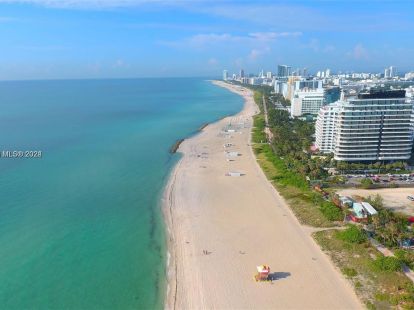
Beachfront real estate in Miami is housing right on the shore: condominium apartments from studios to three bedrooms, penthouses, branded residences, townhouses by the canal, villas, and homes with their own dock. The price includes water access, parking, and the building's amenities. The average meter on the barrier islands is $12,755; on the bay side — $9,741. Buyers purchase in Surfside, Bal Harbour, Sunny Isles Beach, and Edgewater: the ocean side is 31% more expensive than the bay side.
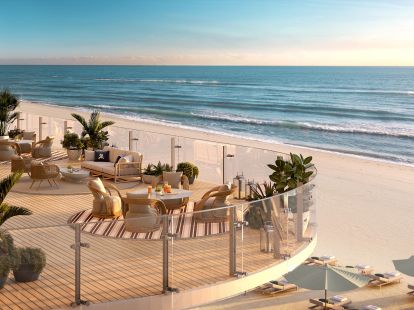
- 270m2
- 2
- 3
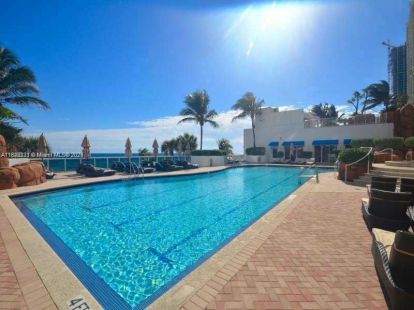
- 51m2
- 1

- 2
- 2

- 223m2
- 3
- 3

- 1
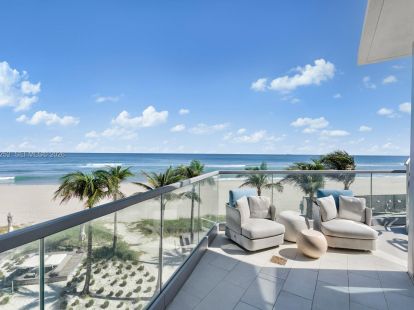
- 650m2
- 5
- 7
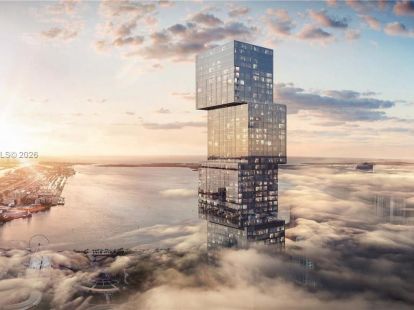
- 708m2
- 4
- 4
- 40m2
- 1
- 1

- 1
- 1

- 1
- 1

- 3
- 3


Waterfront Real Estate Prices in Miami by Line in 2026
"Front line" in Miami is five different markets, and the price in them is formed differently: on the ocean they pay for direct access to the sand, on the bay for the panorama and the sunset, on the canal for the length of the dock and the depth at the seawall. Below — what these lines are, where they are in the city, and how they differ in money and in risk.
| Line and Where It Is in Miami | Price and Supply | Who It Suits and What About Risk |
|---|---|---|
| Ocean front lineSunny Isles Beach, Bal Harbour, Surfside: towers with direct access to the sand | elite lots — above $7Mthe top tenth of the barrier islands market trades at a median price of $5,137,500 | Almost this entire stock stands in the wave action zone, and the flood policy here is the largest expense line. Who: a second-home buyer who counts not the percentage but the preservation of capital. Such a plot cannot be replicated — the coastal strip is built up entirely. |
| Second line by the oceanCollins Avenue and the Miami Beach neighborhoods across the road from the beach | median supply — $750,000506 lots for sale, time on market 117 days — the longest wait of the five lines | The ocean is visible, there is no direct access to the sand — and the price difference with the front line is a multiple. Who: a buyer with a limited budget who needs the area, not the shore. The largest choice and the most realistic negotiation: with such a sale period, the seller is more motivated than the buyer. |
| Biscayne Bay front lineEdgewater, Brickell, Bayshore in Coconut Grove: a panorama of the water and the city | median supply — $1.325M112 lots for sale; the meter here is a third cheaper than the ocean side | The wave load here is lower than the ocean's, and the sunset is visible from the balcony: the bay side faces west. Who: someone who lives in Miami permanently and commutes to the business district. The best price-to-water ratio of all the lines, while supply is four times smaller than on the ocean's second line. |
| Canal or river with its own dockVenetian Islands, the canals of Coral Gables, the banks of the Miami River | the price is set by the dock, not the floor areaswalling length, depth at the dock, and the height of the nearest bridge are calculated: your boat must pass under it | The main miscalculation of buyers — not checking the bridge clearance and the depth: a boat may simply not reach such a home. Who: a boat owner. Maintaining the seawall and repairing it fall on the owner, and this is a separate budget that an apartment in a tower does not have. |
| Private and man-made islandsFisher Island, Indian Creek, Star, Palm, and Hibiscus Islands | a separate market of several addressesisolated transactions per year, and there is practically no public statistics on them | Access by guarded bridge or ferry, its own infrastructure and its own fees. Who: a buyer who needs exclusivity. The price is determined not by the market but by a specific pair of seller and buyer, and the exit from the property is measured in seasons. |
Three numbers that explain this market. The median transaction price on the barrier islands is $745,000 against the average meter from the first paragraph: the gap shows how much the top of the segment pulls the average upward. Seven transactions out of ten are cash, so mortgage rates have little effect on the front line. And 13,817 properties on Miami Beach — 22% of the entire residential stock — are listed as vacation homes: this is the second-largest second-home market in the country, hence the seasonality of demand.
Mortgage calculator
Our offices in Miami

How to Select a Waterfront Property in Our Catalog
The Discount House filter selects by the parameters that decide the matter in this segment: the water line and its type, the floor and side of the building, budget, bedrooms, floor area, the dock and its length, the flood zone, the year the building was constructed, and the size of the fee. The last two matter more here than floor area, and the reason is explained below. If there is no suitable lot in the open part — leave a request: a manager will select options, request the building documents and footage of the plot from the seller, and conduct a viewing or video showing without your arrival.
What Counts as the Front Line and How It Differs from a Water View
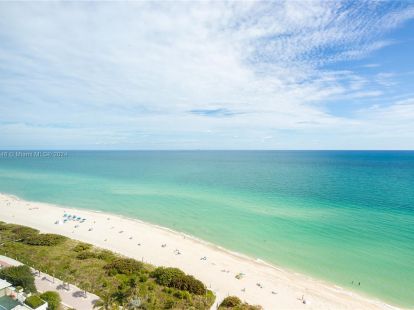
Listings contain three different formulations, and confusing them is expensive. Water access means the home's plot borders the water. Water view — that the water is visible from the window, while a road, a park, or someone else's development may stand between the home and it. Direct beach access — that one can walk out of the home onto the sand without crossing a roadway. The price between these three states differs by multiples, while in the text of a listing the difference may fit into a single word.
The second thing checked: the beach in front of the home does not belong to you. The sand beyond the coastal construction control line is public state territory, and a front-line home gives access to it, not ownership of it. Accordingly, you have no right to restrict passage, nor any obligation to maintain the sand.
The Coastal Construction Control Line: Why the State, Not the City, Issues the Permit
Along the entire coast of Florida runs the coastal construction control line. If the plot lies wholly or partly seaward of it, work on it is regulated not by the municipality but by the state Department of Environmental Protection: the procedure is set by Part I of Chapter 161 of the Florida Statutes, and the permit requirements by Chapter 62B-33 of the Administrative Code. Building seaward of the line is possible — it is not a prohibition — but the project undergoes a separate review for impact on the dune, neighboring plots, vegetation, and sea turtle nesting sites.
What follows from this for the buyer:
- Renovation without a foundation does not require a permit. Roofing, windows, doors, cladding, and even adding a second story within the dimensions of the existing home are exempt if the foundation is not touched. But a pool, a new terrace on pilings, or rebuilding the foundation — that is already a state permit and months of review.
- Thirty-year erosion projection. Rule 62B-33.024 determines where the high water line will be thirty years after the application is filed. Seaward of this projection, new construction is not permitted. Where the shore is reinforced with a seawall, the projection stops at the wall — which is why two neighboring plots with an identical view can have different development potential.
- The seller is obliged to disclose the position of the line. Section 161.57 requires delivering to the buyer an affidavit or survey showing where the line runs across the plot. The buyer may waive this document, but only in writing — and waiving it is not advisable: without the survey you do not know which part of your land is subject to the state.
Insurance: The Main Expense Line of the Front Line
The flood policy is purchased separately from the hurricane policy, and its price depends on the zone. In the coastal high hazard area with wave action, where almost the entire ocean front-line stock stands, it costs $5–20K per year. In the high-risk zone without wave action — $2–10K. Outside these zones the same policy costs $400–1,200, meaning the difference between the front line and a neighborhood inland reaches twenty times.
The second thing not written in listings: the state insurance program pays a maximum of $250K for the structure and $100K for contents. On a three-million apartment that is eight percent of the value, so the difference is covered by a private policy with a limit of up to two million and above. And one more: the state policy takes effect after thirty days, except when it is arranged for closing — this is one of the reasons not to delay choosing an insurer until the last week.
Stages of Purchase and Closing
- Offer and deposit. The deposit of 1–3% of the price goes to an escrow account at a title company or attorney and is not passed directly to the seller.
- Inspection — 10–15 days. For a waterfront property, three things are added to the usual inspection: the condition of the seawall and dock, the flood zone report, and the building's structural inspection report, if the building has undergone one. During this period one can exit the deal and take back the deposit.
- Building documents. Bylaws, budget, meeting minutes for two years, information on planned works and assessments, rental rules. In coastal buildings, the repair history of the facade and balconies is looked at separately: salt destroys concrete faster than inland, and these expenses fall on the owners.
- Financing. Banks give a non-resident a loan with a down payment of 30–40%; the decision takes about a month and a half. A transfer from abroad goes through compliance with confirmation of the origin of funds.
- Closing — 30–45 days from the contract. The title company checks the history of title, issues title insurance, and conducts the settlement. The transfer fee — $0.70 per $100 of price; by Miami custom the seller pays it, as well as the realtors' commission of 5–6%.
- Paperwork. A foreign passport and confirmation of funds are required; a non-resident's tax number is arranged after the transaction. Recording to an individual, in joint ownership, or to a company affects the tax on sale and inheritance, so it is chosen before signing. Signing can be done by power of attorney; coming in person is not mandatory.
A foreigner buys a waterfront property without residency, a local partner, or ownership restrictions. The purchase grants no visa rights: the U.S. has no residency-through-real-estate program.
Taxes, Liquidity, and Pitfalls
- Property tax — 1.76% of appraised value per year. On a change of owner the assessment is recalculated at the transaction price; there are no exemptions for a second home and a non-resident.
- Building fee. In coastal buildings it is higher than citywide: salt, humidity, and wind load mean more frequent repair of the facade, balconies, and glazing.
- The city's long-term plan. Miami Beach has approved a program for adapting to sea level rise: more than 67,000 properties under protection, with a 75-year horizon. This affects a specific address through the pace of works on its street, and the city has a priority map — it is worth looking at before the transaction.
- Rental. Building rules are stricter than the city's: minimum lease term from six months to a year, a quota on the number of rented apartments, sometimes a complete ban on short-term rental. If the calculation is built on resort rental, these clauses are read before the deposit.
- Liquidity. The narrower the circle of buyers, the longer the exit: for an apartment with a view it is wider; for a home with a dock for a specific boat it is narrow. Budget six months for the sale, not three.
- Tax on sale. From a non-resident, 15% of the transaction amount is withheld against capital gains tax; the overpayment is refunded based on the tax return. The non-taxable threshold for inheritance is $60K at a rate of up to 40%.