
Palaces and castles of Europe
What if not so easily give up their fantasies? Oh, believe me, an adult, a serious man can in our time to become the owner of your own castle. And it is real.
I Think that the difficulties are only in the high cost of such properties? Not only. Every obstacle in the...
ARCHITECTURE, HISTORY, AND EVALUATION SYSTEM
EN
Palaces and Castles of Europe 2026: 25 Places Where History Comes Alive
European Castles: How to Choose the Perfect Palace for Your Trip and Not Be Disappointed
European castles and palaces are more than just beautiful Instagram photos. Behind each one lie centuries of history, architectural breakthroughs, royal dramas, and engineering solutions that were ahead of their time. In 2026, according to the European Travel Commission, interest in cultural and historical sites has increased by 23% compared to the pre-pandemic period. But how do you choose, from among the 25,000 castles scattered across Europe, the ones truly worth seeing? This material is not just a list of beautiful places, but an evaluation system: from difficulty of access to architectural value, from hidden gems to castles still inhabited by descendants of noble families.
How European Castle Architecture Evolved: From Fortress to Palace
The first wave of castle construction came in the 9th–11th centuries, when Europe was shaken by Viking and Hungarian raids. At that time, a castle was first and foremost a fortress: thick walls (2 to 5 meters at the base), a moat, a drawbridge, a keep — the main tower where defense held out during a siege. Château de Loches in France, built in the 10th century, still demonstrates this austere functionality: no decoration, just the power of stone.
The 13th century was the golden age of defensive architecture. Concentric walls (double perimeter defense), barbicans — fortified bridgeheads — and machicolations — overhanging loopholes for pouring hot liquids on attackers — appeared. Carcassonne in France (UNESCO site No. 345, inscribed in 1997) is the perfect example of this period, with 52 towers and double walls totaling 3 km in length.
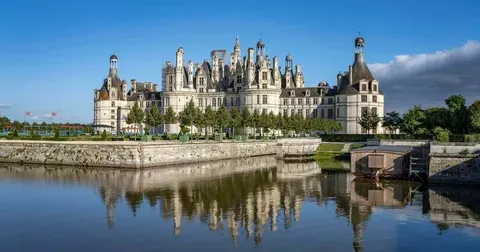
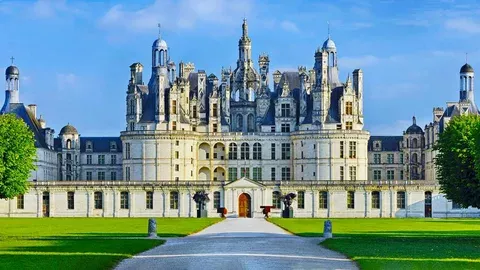
From the 14th century, castles began to lose their military significance. Gunpowder made stone walls vulnerable, and the consolidation of lands under centralized states deprived feudal lords of the need for private fortresses. In their place came palaces — residences where the primary goal was not defense, but the display of power. The Renaissance brought symmetry, arcades, and gardens. Château de Chambord (begun in 1519), with its 426 rooms and double-helix staircase attributed to Leonardo da Vinci, became a manifesto of the new era: beauty over defense.
The 19th century, the age of Romanticism, gave rise to fantasy castles. Bavarian King Ludwig II, inspired by Wagner’s operas, built Neuschwanstein — a castle that was never meant to serve as a fortress. It is an architectural illustration of myth. Today, Neuschwanstein receives over 1.5 million visitors per year, exceeding its intended tourist capacity by 40%.
Comparison of 12 Major European Castles
Neuschwanstein (Germany)
Century of foundation: 19th
Architectural style: Neo-Gothic, Romanticism
Accessibility: 2 hours from Munich Airport
Ticket price (2026): €15
Instagrammability: 5/5
Chambord (France)
Century of foundation: 16th
Architectural style: Renaissance
Accessibility: 1.5 hours from Tours Airport
Ticket price (2026): €14.50
Instagrammability: 4/5
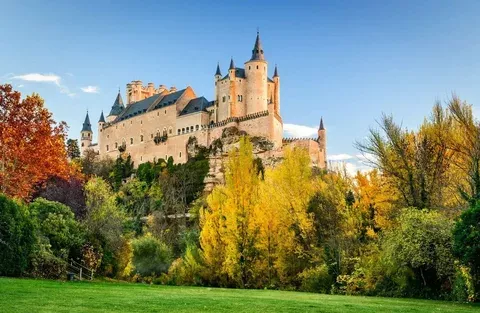
Alcázar of Segovia (Spain)
Century of foundation: 12th
Architectural style: Gothic, Mudéjar
Accessibility: 1 hour from Madrid Airport
Ticket price (2026): €9
Instagrammability: 5/5
Pena Palace (Portugal)
Century of foundation: 19th
Architectural style: Romanticism, Neo-Gothic, Moorish
Accessibility: 0.5 hours from Lisbon Airport
Ticket price (2026): €17
Instagrammability: 5/5
Peleș Castle (Romania)
Century of foundation: 19th
Architectural style: Neo-Renaissance, Neo-Gothic
Accessibility: 2 hours from Bucharest Airport
Ticket price (2026): €12
Instagrammability: 4/5
Corvin Castle (Romania)
Century of foundation: 14th
Architectural style: Gothic
Accessibility: 3 hours from Bucharest Airport
Ticket price (2026): €8
Instagrammability: 4/5
Eilean Donan (Scotland)
Century of foundation: 13th (rebuilt in 1932)
Architectural style: Medieval
Accessibility: 1.5 hours from Inverness Airport
Ticket price (2026): £11
Instagrammability: 5/5
Hohenzollern Castle (Germany)
Century of foundation: 11th (rebuilt in 19th)
Architectural style: Neo-Gothic
Accessibility: 1.5 hours from Stuttgart Airport
Ticket price (2026): €12
Instagrammability: 5/5
Frederiksborg Castle (Denmark)
Century of foundation: 17th
Architectural style: Scandinavian Renaissance
Accessibility: 0.5 hours from Copenhagen Airport
Ticket price (2026): €16
Instagrammability: 4/5
Chillon Castle (Switzerland)
Century of foundation: 12th
Architectural style: Medieval
Accessibility: 1 hour from Geneva Airport
Ticket price (2026): CHF 13.50
Instagrammability: 5/5
Bled Castle (Slovenia)
Century of foundation: 11th
Architectural style: Romanesque, Gothic
Accessibility: 0.5 hours from Ljubljana Airport
Ticket price (2026): €13
Instagrammability: 5/5
Miramare Castle (Italy)
Century of foundation: 19th
Architectural style: Neo-Gothic
Accessibility: 0.5 hours from Trieste Airport
Ticket price (2026): €12
Instagrammability: 5/5
Срочная продажа

 Barcelona, Spain
 Barcelona, Spain
 Barcelona, Spain
 Barcelona, Spain
 Barcelona, Spain
 Barcelona, Spain
 Barcelona, Spain
 Barcelona, Spain
Hidden Gems: 5 Castles You Haven’t Heard Of, But Are Worth the Trip
Bojnice Castle, Slovakia
Founded in the 12th century, but its current appearance in the style of French Renaissance and Neo-Gothic was only acquired at the end of the 19th century. The story of its reconstruction is worthy of a novel: Count Ján Pálffy spent 21 years transforming the fortress into a palace for a French aristocrat he was in love with. The woman married someone else, but the castle remained. Today, it houses a museum, and in May, Slovakia’s only International Ghost Festival takes place here. Ticket: €12.
Hohenwerfen, Austria
It towers over the Salzach River valley from a height of 155 meters. Built in the 11th century to protect trade routes. In the 16th century, after a peasant uprising, it was destroyed and then rebuilt by the same peasants — as punishment. Today, the main reason to visit Hohenwerfen is the birds of prey show. Eagles and falcons fly within a meter of spectators, demonstrating medieval hunting techniques. Ticket with show: €17.
Dunnottar, Scotland
Located on a cliff jutting into the North Sea, 2 km from the town of Stonehaven. The first fortifications appeared in the 5th century, but the castle in its current form dates from the 14th–17th centuries. In 1718, it was sold and fell into ruin. Restoration only began in 1925. Dunnottar is one of Scotland’s most photographed castles due to its dramatic location: during storms, waves crash directly against the cliffs beneath its walls. Ticket: £8.50.
Bran, Romania
The famous “Dracula’s Castle,” though Vlad the Impaler never lived here. The vampire connection is a tourist marketing invention, but that doesn’t make the castle any less impressive. Built in the 14th century by the Teutonic Knights on a 60-meter-high cliff. Inside is a collection of medieval furniture and torture devices. Important: in summer, queues to enter can reach 2 hours. The best time to visit is on a weekday at 9:00 AM. Ticket: €9.
Schwerin Castle, Germany
Located on an island in the middle of a lake in the city of Schwerin. Its current appearance was acquired in the 19th century under Grand Duke Friedrich Franz II. The architectural style is Romantic Historicism with elements of Renaissance and Baroque. The castle is called the “Neuschwanstein of the North,” but it is far less known and crowded. Inside is the parliament of the state of Mecklenburg-Vorpommern, making it one of the few castles in the world where government bodies still function. Ticket: €9.50.
How to Choose a Castle for Your Scenario: Decision Matrix
Scenario 1: “I’m here for the first time and want the most impressive”
Choose Neuschwanstein (Germany) or the Alcázar of Segovia (Spain). Both are visual benchmarks, recognizable even to those who have never been to Europe. Drawback: high visitor numbers. At Neuschwanstein in July–August, up to 10,000 visitors per day. Recommendation: book tickets online at least 2 weeks in advance and arrive by 8:30 AM before the tour buses.
Scenario 2: “I’m traveling with children aged 7–12”
The ideal choice is Hohenwerfen (Austria) with its birds of prey show or Bojnice Castle (Slovakia) with its ghost festival. Children value interactivity. At Hohenwerfen, you are allowed to hold a falcon on your arm (€5 extra, advance booking required). Bojnice offers an interactive “Medieval Kitchen” exhibit with tastings of bread baked according to a 15th-century recipe.
Scenario 3: “I’m a photographer looking for people-free shots”
Choose castles with limited access or challenging routes: Dunnottar (Scotland) — accessible only by foot along a rocky path, which deters mass tourism; Schwerin Castle (Germany) — houses parliament, so tour groups enter on a schedule, with 40–60 minute windows when halls are empty; Corvin Castle (Romania) — 70% of visitors concentrate in the Knights’ Hall, while towers and dungeons remain empty even in high season.
Scenario 4: “I want to combine a castle with wine and gastronomy”
The Loire Valley castles in France are the ideal choice. Chambord, Chenonceau, and Amboise are located in a region producing AOC wines (Appellation d’Origine Contrôlée). In 2026, Chambord has opened a new gastronomic center offering Loire wine tastings (€15 for a set of 5). Combined “castle + tasting” ticket: €24.
UNESCO, LIMITATIONS, BUYING A CASTLE, AND ROADMAP
UNESCO and Heritage Status: What It Means for Travelers
World Heritage Site status is not just a marketing label. It guarantees that the castle meets international conservation standards and that restoration work is carried out under expert supervision. As of 2026, 47 castle complexes in Europe are inscribed on the UNESCO list. Among them:
Carcassonne, France (No. 345, 1997)
Royal Palace of Budapest, Hungary (No. 400, 1987)
Belfries of Belgium and France complex (No. 943, 1999)
Alhambra, Spain (No. 314, 1984)
Important: UNESCO sites have strict restrictions on reconstruction. If you plan to visit a castle undergoing restoration (information is published on official websites 3–6 months in advance), the façade may be covered in scaffolding. In 2026, restorations are underway at: part of the towers of Carcassonne (until November 2026), the eastern wing of Neuschwanstein (until March 2027).
When NOT to Visit a Castle: Seasonal and Organizational Limitations
High Season (July–August)
At Neuschwanstein, the Alcázar of Segovia, and Bran Castle, queues to enter can reach 2–3 hours. Temperatures inside castles without air conditioning can rise to 28–30°C, while dungeons, conversely, can be too damp for extended stays (humidity up to 85%). Recommendation: postpone your visit to May–June or September–October.
Winter Months (December–February)
Many castles reduce opening hours or close upper towers due to icing. For example, Hohenzollern Castle closes its viewing platform when winds exceed 70 km/h, which occurs 12–15 days per month in winter. Eilean Donan Castle in Scotland operates only until 4:00 PM from November to March, and the road to it may be closed due to flooding.
Restoration Periods
In 2026:
Chillon Castle (Switzerland): eastern tower closed until September 2026
Pena Palace (Portugal): façade restoration, scaffolding covers the main entrance, tickets sold at 30% discount
Peleș Castle (Romania): closed on Mondays and Tuesdays from January to March 2026
Weather Factors
Castles located on peaks (Hohenzollern, Hohenwerfen, Neuschwanstein) lose visual appeal on foggy days — the surrounding views are zero. Check webcams (available on official websites) before heading out.
Lesser-Known Castles That Surpass Their Famous Neighbors
If you have already seen the main castles or want to avoid crowds, consider these alternatives:
Instead of Neuschwanstein (1.5 million/year) — Linderhof (300,000/year). Also a residence of Ludwig II, but with half the visitors, more exquisite interiors, and a park with a grotto and fountains.
Instead of Versailles (8 million/year) — Vaux-le-Vicomte (300,000/year). The prototype of Versailles, a private castle where candlelit evenings are still held on Saturdays from May to October.
Instead of Bran Castle (800,000/year) — Corvin Castle (200,000/year). A genuine Gothic fortress where Vlad the Impaler was actually held captive for 7 years.
Instead of the Alcázar of Segovia (1 million/year) — Alcázar of Toledo (500,000/year). Less hyped but no less impressive, with a unique weapons collection.
The Reality of Buying a Castle: Prices, Restrictions, and Pitfalls
In 2026, Europe’s castle market continues to attract investors, but reality is far from romantic notions. According to Sotheby’s International Realty, the average price of a castle in France is €1.2 million, in Italy €2.5 million, in Germany €1.8 million. However, the purchase price accounts for only 30–40% of future costs.
Mandatory Conditions When Purchasing:
Restoration only by licensed architects (cost: from €1,500 to €5,000 per m²)
Prohibition on altering facades and historic interiors (French Heritage Law No. 2016-925, Article 12)
Mandatory opening to the public for at least 40 days per year when receiving tax benefits
Approval of any utility work (air conditioning, satellite dishes) from the regional heritage conservation authority
Hidden Costs:
Annual maintenance: from €50,000 to €200,000 depending on area and condition
Historic building insurance: 30–50% higher than standard
Property tax: in France — up to 0.8% of cadastral value, in Italy — up to 1.06%
The Ghost Factor
According to a survey by the British agency Knight Frank, castles with documented ghost stories sell for 10–15% more than similar properties without such a “reputation.” The most famous “haunted” castles: Powis Castle (Wales), Gipsy Hill Hall (England), Bojnice Castle (Slovakia), where ghosts have become part of the tourist brand.
Conclusion and Traveler’s Roadmap
European castles are not just architectural monuments; they are living witnesses to history, each with its own character, legends, and limitations. To ensure your trip leaves an impression, not disappointment:
-
Define your scenario — family, photo tour, gastronomic, or historical. This determines your choice of castle and season.
-
Book tickets online — for Europe’s top 10 castles, tickets at the box office on the day are either sold out or sold at a 30–50% premium.
-
Check restoration status on the castle’s official website or on the European Travel Commission portal. Scaffolding on the façade can completely change the experience.
-
Consider transportation accessibility — some castles (Dunnottar, Hohenzollern, Hohenwerfen) require a 15–40 minute uphill walk, which may be challenging for travelers with limited mobility.
-
Choose the “golden hours” — morning (before 10:00 AM) and evening (after 4:00 PM) provide not only the best light for photos but also 60–70% fewer tourists.