
Lloret de Mar in Spain: A Complete Guide to the Resort with Catalan Character
- Geography, History, and Catalan Identity
- What is Lloret de Mar and Where is it Located
- The Catalan Character of the City
- History of the City: From Fishing Village to Tourist Mecca
- Climate and Weather in Lloret de Mar in 2026
- When is the Best Time to Go and How to Get There in 2026
- Architectural Treasures and Cultural Attractions of Lloret de Mar
- Sant Romà Church (Església de Sant Romà)
- Lloret de Mar Modernist Cemetery
- Santa Clotilde Gardens (Jardins de Santa Clotilde)
- Sant Joan Castle (Castell de Sant Joan)
- The Fisherman's Wife Sculpture (Dona Marinera)
- Les Alegries Hermitage and Santa Cristina Chapel
- Cat Museum and Maritime Museum
- Sant Pere del Bosc
- Beaches, Entertainment, and Practical Information for 2026
- Beaches and Coves of Lloret de Mar
- Family Entertainment
- Where to Go in the Surroundings
- Festivals and Gastronomy
- Where to Stay: Areas and Prices in 2026
Geography, History, and Catalan Identity
What is Lloret de Mar and Where is it Located
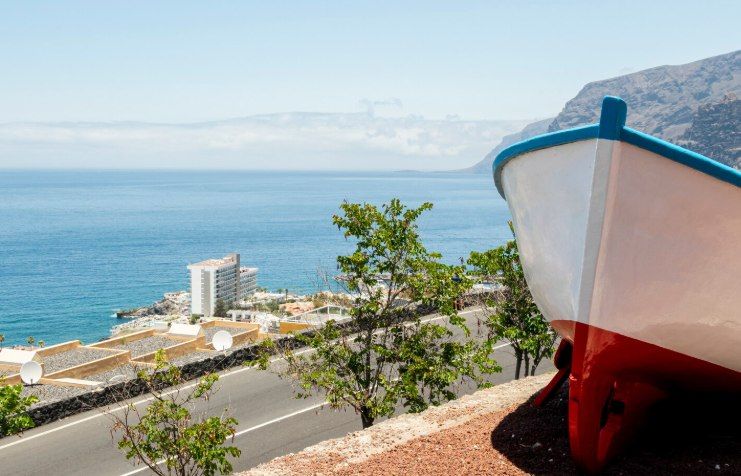
Lloret de Mar is a resort town on the Mediterranean coast of the Costa Brava, in the province of Girona, in the La Selva region. The uniqueness of this coastline lies in the fact that the last foothills of the Pyrenees here extend all the way to the sea. Majestic steep cliffs descend vertically to the water, forming cozy coves protected from the wind by rocky outcrops. Pine forests approach right up to the water's edge, giving the coastal landscapes that very picturesqueness for which the Costa Brava is famous. The mountain range on this stretch of the coast is called the Gavarres Mountains. Thanks to this mountainous surroundings, Lloret de Mar has practically no strong winds, and the climate remains extremely mild all year round.
The geographical coordinates of the resort are: 41°42′ north latitude and 2°51′ east longitude. The municipality covers an area of 49 square kilometers. There is not a single industrial enterprise in the city, resulting in an excellent ecological situation. Even the railway runs away from the residential areas, without disturbing the natural harmony.
The Catalan Character of the City
Since Lloret de Mar is located in Catalonia, the city's population historically consisted of 90% Catalans, although this figure has changed recently due to an influx of immigrants. But the character of the resort has remained special – Catalan. And this is not just exoticism, but a separate miracle within a separate state.
For travelers, Catalonia is just one of the regions of Spain, but for Catalans themselves, these are different things. They clearly distinguish between Spain and Catalonia, which, being an autonomous community in the northeast of the Iberian Peninsula, is effectively a state within a state. Catalonia has a completely unique face and character.
The official languages are Catalan and Spanish. The Catalan language has had a difficult fate: despite the fact that Catalonia has spoken its own language since the 12th century, there were times when it was prohibited. With the restoration of democracy in 1979, Catalan was recognized as official alongside Spanish. Today, all signs and notices in Lloret are in Catalan, and even school subjects are taught in it.
History of the City: From Fishing Village to Tourist Mecca
The name Lloret de Mar has Latin origins – from the word Lauretum, meaning "place where laurel grows." The first settlements in this area date back to the 4th century. The rich history is reflected in many architectural monuments: from austere Gothic churches to elegant Modernist villas.
A special role in the city's development was played by the phenomenon of the "Indians" (indianos) – local residents who in the 18th and 19th centuries set off to seek their fortune in South America, especially Cuba. Having made their fortunes there and returned to their homeland, these enterprising Catalans built luxurious colonial-style houses along the center and the promenade, constructed hospitals and schools, transforming a modest fishing village into an elegant European resort.
In the early 1950s, a new way of life entirely based on the tourism economy took shape in Lloret de Mar. This stage in the city's history is often called the "Lloret economic miracle." It was during this period that old mansions were turned into hotels, and vineyards, gardens, and fields became new urban neighborhoods. The writer Joaquim Ruyra gave an original definition of Lloret: "a jewel box, a wedding gift from the land to the sea."
Today, Lloret de Mar is an ideal place for holidays: magnificent beaches, beautiful nature, a rich cultural and sports program, and vibrant nightlife. The city has all types of services necessary for such an important resort. It is one of the largest tourist centers in Spain and, undoubtedly, the most important resort on the Costa Brava. Here there are over a hundred hotels and 200 restaurants of various categories, so tourists have plenty to choose from according to their tastes and budgets.
Climate and Weather in Lloret de Mar in 2026
Thanks to the Gavarres Mountains surrounding the city, the climate is extremely mild all year round. The average annual air temperature is about +16°C. In summer, in July and August, the thermometer rarely rises above +30°C thanks to refreshing sea breezes, making holidays comfortable even at the height of the season. In winter, temperatures range between +8...+15°C.
An important feature of the region is the tramontana wind, a cold, dry air current from the north that can unexpectedly intensify to storm force. However, for most of the year, the weather in Lloret de Mar is sunny and comfortable. The swimming season officially opens in May when the water warms up to +17-18°C and lasts until the end of October.
When is the Best Time to Go and How to Get There in 2026
The choice of travel time depends on your goals. In winter (December-February), Lloret is quiet and peaceful, many establishments are closed, but accommodation prices are minimal. This is an ideal time for excursions and exploring the Catalan cultural heritage. In spring (March-May), the resort comes alive, the weather is pleasantly warm, and hotel prices remain democratic until the May holidays. Summer (June-August) is the high season with maximum prices and an influx of young people coming for the nightclubs. Autumn (September-October) is the Indian summer season, when the sea is still warm and there are fewer tourists.
The nearest airport is Girona-Costa Brava, located just 28 kilometers from the city. Low-cost airlines from many European countries fly here. Buses run regularly from the airport to Lloret bus station. Travel time is about 30 minutes, the fare in 2026 is 12-15 euros. Many tourists prefer to fly into Barcelona El Prat airport (75 km), from which there are also direct shuttle buses (about 16 euros, 1 hour 20 minutes travel time).

Срочная продажа

 Lloret de Mar, Spain
 Fenals, Lloret de Mar, Spain
 Lloret de Mar, Spain
 Lloret de Mar, Spain
 Lloret de Mar, Spain

- 240m2
- 4
- 3
Lloret de Mar, Spain
 Lloret de Mar, Spain
 Lloret de Mar, Spain
Architectural Treasures and Cultural Attractions of Lloret de Mar
Sant Romà Church (Església de Sant Romà)
The main landmark of Lloret de Mar, located in the very heart of the city, is the Sant Romà Church, built in the 16th century. Despite its typically Modernist "gingerbread" facade, which attracts thousands of tourists with their cameras, the interior of the church is an example of strict Catalan Gothic. Do not be surprised by the embrasures and sturdy doors: in the past, the church served as a refuge from pirates who constantly attacked the Costa Brava shores. There was even a moat with water around the church, crossed by a drawbridge.
In subsequent years, the facade underwent changes, with mosaics in Arab and Byzantine styles added, which turned the church into the recognizable city symbol it is today. Sant Romà is especially loved by locals and is the epicenter of cultural life: the main holidays and festivals, concerts, and political rallies take place in the square in front of it. It is from here that the festive procession in honor of the city's patron saint, Santa Cristina, starts.
Lloret de Mar Modernist Cemetery
The famous Lloret cemetery, designed by Joaquim Artau in the 19th century, is a classic example of "golden" Catalan Modernism, a true art exhibition under the open sky. It's not the first place you'd go in wet swimwear, but for architecture enthusiasts, it's a must-visit.
The history of this place is inextricably linked with the phenomenon of the "Indians." Those who returned from America with capital invested not only in luxurious villas but also in family mausoleums and crypts. The most interesting and beautiful burials belong precisely to the successful families of emigrants. The luxurious family vaults of the urban bourgeoisie were commissioned from the best architects, including followers of the great Antoni Gaudí. The cemetery has the layout of cities of that era, with its own avenues and streets; the mausoleums are arranged according to social hierarchy. On the tombstones, you can read explanations of the symbolism of the decorations.
Santa Clotilde Gardens (Jardins de Santa Clotilde)
This unique architectural and park ensemble is located near Sa Boadella beach in a kind of natural amphitheater with a delightful view of the sea. The gardens were designed in 1919 by the Barcelona architect Nicolau Rubió i Tudurí, inspired by Italian Renaissance landscape parks. The client, the Marquis of Roviralta, wanted the gardens to impress visitors with their splendor and luxury, yet appear refined and elegant.
Lush trees and flowering shrubs descend in steps towards the sea, adorned with coquettish statues, fountains, lakes, and gazebos. Shaded paths with photogenic panoramas invite you to rest in the shade. Covering an area of 15 hectares, the gardens are recognized as a national asset of Catalonia and one of the best landscape parks in Europe. The entrance fee in 2026 is 5 euros.
Sant Joan Castle (Castell de Sant Joan)
On the top of the hill that separates Lloret beach and Fenals beach stands Sant Joan Castle, built in the early 11th century. It is one of the oldest castles on the coast, serving a defensive function during times of pirate attacks and foreign invasions. The castle was destroyed several times, and only part of the wall and the main tower have survived to this day.
The entrance fee to the tower is 3 euros, but this money is more than compensated by the breathtaking view of the surroundings from the summit. In 2026, the castle remains on the list of cultural heritage sites and is undoubtedly worth a visit.
The Fisherman's Wife Sculpture (Dona Marinera)
Another city symbol, affectionately called "La Marinera" by locals, was installed in 1966 on a rock at the end of the main beach to commemorate the millennium of Lloret de Mar. The two-meter bronze female figure, created by sculptor Ernest Maragall, symbolizes the women of Lloret who faithfully awaited their husbands returning from voyages overseas.
According to old traditions, wives saw the fishermen off to sea and waited for the breadwinners on the shore. This woman climbed to a height to meet and see off ships with a panoramic view of the entire area. The sculpture stands on a multi-level observation deck offering a breathtaking panorama of the surroundings. Legend has it that if you make a wish while touching the right foot of "La Marinera" and looking in the same direction as she does, your dream will surely come true.
Les Alegries Hermitage and Santa Cristina Chapel
Located 2 km from the center of Lloret, surrounded by pine forests, is the Les Alegries hermitage, which was the main parish church from the 11th to the 16th century. After the main parish was moved closer to the sea, to Sant Romà, the church became known as the "Old Church." Starting from the 15th century, the building underwent numerous reconstructions, and only the bell tower remains from the original Romanesque style.
The Santa Cristina Chapel, built on a high hill 3 km from the center, is the first place locals recommend visiting. The 14th-century building was the main city temple until this function passed to Sant Romà Church. The new parish in the Neoclassical style was built four centuries later with funds from the townspeople. The chapel is famous for its altar made of Italian marble and an observation deck with wonderful panoramic views.
Cat Museum and Maritime Museum
The unusual "Cat House" (Casa de Los Gatos), located a stone's throw from the sea, is a must-visit place for families with children. Three floors house a collection of 6,000 items dedicated to feline pets: paintings, figurines, toys, clocks, and jewelry. The museum complex was founded in 2002 by Russian emigrants, and the private collection gradually expanded, adding exhibits from around the world. Entrance fee is 3 euros.
The Museo del Mar, housed in an elegant villa, Can Garriga, on the promenade, introduces visitors to Lloret's rich maritime past. This villa belonged to the Garriga brothers, Catalans who went to Cuba to make their fortune and returned wealthy. The luxurious house built with "Cuban" money was later acquired by the town hall for the museum. Thanks to interactive and multimedia technologies, its halls allow you to immerse yourself in the city's history, from a fishing village to the heyday of the merchant fleet. Entrance fee is 4 euros.
Sant Pere del Bosc
The majestic Benedictine monastery of Sant Pere del Bosc, dating from the 11th century, is located 5 km from the center of Lloret de Mar. Particularly loved by pilgrims from all over Spain, it was originally built in the Gothic style, but after being set on fire by French troops in 1694 and several years of abandonment, it passed into private hands. The Modernist master Josep Puig i Cadafalch rebuilt it, and today Sant Pere is a luxurious hotel complex with a spa center and restaurant. The monastery's foundation day, May 1st, remains a cherished popular festival.
Beaches, Entertainment, and Practical Information for 2026
Beaches and Coves of Lloret de Mar
The Costa Brava is a land of high cliffs plunging into the sea, covered with umbrella pines, and small coves bathed in the scent of resin. The entire coastline consists of wide sandy areas and small harbors.
Lloret Beach (Platja de Lloret) is the largest central beach, stretching 1.6 km along the old part of the city parallel to the promenade. It is the most popular spot, packed to capacity in summer. Here you'll find sun lounger and umbrella rentals, yacht and catamaran hire, beach volleyball courts, and several cozy cafes. Be aware that in some areas, the shallow seabed drops off sharply, so caution is needed when swimming with children.
Fenals Beach (Platja de Fenals) is separated from the central one by a steep cliff crowned with the Fisherman's Wife statue. It is the second largest beach, 700 meters long. Located in a small bay, it is characterized by the absence of wind and a calmer atmosphere, making it ideal for family holidays. There is equipment rental, a kids' club, and an area for snorkeling and diving.
Sa Boadella Beach (Platja Sa Boadella) is considered the most beautiful beach in the city, although it is only 250 meters long. Surrounded by cliffs on all sides, it is located a bit further from Fenals beach. It can only be reached by car or boat, so there are far fewer people here, and the water is transparent and fresh. For its clean sea, the cove has been awarded the "Blue Flag." Nudism is permitted in one part of it.
Santa Cristina Beach (Platja de Santa Cristina) is a small beach on the outskirts of Lloret, not crowded, located between two large hills, thus well protected from wind and waves. It is here that the maritime procession in honor of Lloret's patron saint takes place on July 24th. Nearby is the "Pinya de Rosa" botanical park, so bathers can enjoy the scents of exotic flowers carried by the breeze.
Cala Canyelles Beach (Platja Canyelles) is a well-equipped and the most distant beach, surrounded by high cliffs. Awarded the "Blue Flag," it is considered the most prestigious beach on the coast. It is home to Lloret's only small yacht harbor, a kids' club, and a popular fish restaurant.
Among the picturesque coves worth mentioning are Cala Banys, a rocky cove between the two main beaches; Cala Morisca, a secluded cove that is quite difficult to reach, but the effort will be rewarded; and Sa Caleta (Platja Sa Caleta), the smallest beach in the city at the foot of the mountain. Treumal Beach (Platja Treumal), 400 meters long, is separated from Santa Cristina by a small passage between the rocks.
Family Entertainment
Water World is one of the most popular attractions, located in a natural setting near Lloret. It can be reached by a free bus that departs every half hour from the bus station. Most of the attractions are American-style water slides of varying levels of "extremeness," seawater pools, kamikazes, and toboggans. A day pass in 2026 costs 33-35 euros.
Gnomo Park is a must-visit for travelers with children. Located at the entrance to the city, surrounded by a pine forest, this amazing playground covers 40,000 m2. For children, there are carousels, slides, pools, a "gnome farm" and a "gnome ranch," trampolines, and mini-golf. Entrance fee ranges from 9 to 15 euros.
The "Pinya de Rosa" Tropical Botanical Garden is situated between Lloret and Blanes. The creation of enthusiast Fernando Riviere de Caralt, who had been collecting tropical plants from around the world since 1945, it covers 50 hectares. The collection includes over 7,000 species of succulents, including rare cacti, agaves, and aloes. Seeds and plants can be purchased at the entrance; ticket price is 4 euros.
Where to Go in the Surroundings
If you have already thoroughly explored the town, the surroundings hold many pleasant discoveries. A free bus will take you quickly to Marineland, the largest aquarium and water park on the Costa Brava with exotic bird shows and a dolphinarium. You can visit the Classic Car Museum in neighboring Sils or the thermal springs of Caldes de Malavella, the birthplace of the famous Vichy Catalan mineral water.
Shopping enthusiasts will certainly be interested in the "La Roca Village" outlet, 30 km from Lloret, a mini-village of hundreds of boutiques of leading brands. In 2026, regular excursion tours are organized here.
Festivals and Gastronomy
The main celebration of the city is the day of its patron saint, Santa Cristina, celebrated on July 24th. Colorful maritime processions, costume balls in the square in front of the town hall, fairs, fireworks, and tastings of local delicacies take place. There is a "winter version" of the festival on November 18th, the day of Sant Romà.
The traditional "American Fair" is dedicated to the cultural heritage of the "indianos." The event includes theatrical performances, concerts of vibrant Latin music, tours of colonial-style buildings, dance workshops, and rum cocktail tastings. In October, the Gastronomy Days are held, when most of the city's restaurants offer original seafood menus at affordable prices.
Where to Stay: Areas and Prices in 2026
In the center (Downtown), nightlife, shops, and the main beach are concentrated. Accommodation prices here are highest in season. The Fenals area is a quieter family option with a good beach and average prices. The outskirts (Santa Cristina, Canyelles) are prestigious, quiet areas with villas and the best beaches – expensive housing. The remote coves (Morisca, Sa Boadella) are for "wild" relaxation, free but requiring a car.
The average restaurant bill per person is 20-30 euros. A cup of coffee costs 1.5-2 euros. Renting an economy-class car in the 2026 season starts from 40 euros per day. The local currency is the euro. Cards are accepted everywhere in souvenir shops, but it's better to have cash at markets.
Lloret de Mar is a resort town with a long history, a vibrant Catalan identity, and an established way of life. The combination of modernity and adherence to traditions, coupled with the hospitality of the locals, makes this city a desirable holiday destination.