
New developments in Miami are condominiums at the construction stage: studios, one-, two-, and three-bedroom apartments, penthouses, houses, and villas. The price includes turnkey finishes, a pool, a gym, a concierge, and security. The meter costs from $7,500 in Downtown to $17,200 on Miami Beach; construction is underway in Brickell, Edgewater, Sunny Isles Beach, and Coconut Grove. Payment is made in parts: 10% upon signing, then by construction stages. Gross return is 4.6–6.6% per annum; after fees and tax — 1–2%.
- 270m2
- 2
- 3

- 2
- 4
- 4
- 650m2
- 5
- 7

- 708m2
- 4
- 4


- 2
- 1
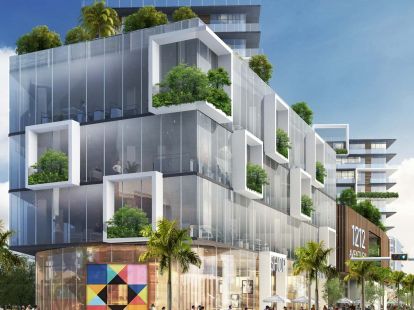
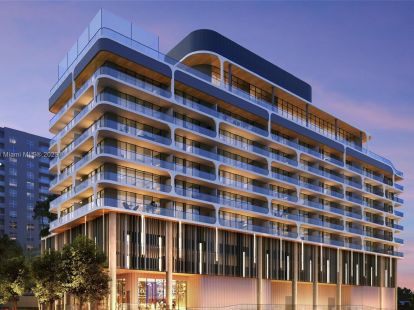
- 1
- 1

- 1
- 1

- 5
- 5

- 4
- 4

- 1
- 1

- 4
- 4

- 1 000m2
- 5
- 5
Miami New Developments by Area: 2026 Prices and Rental Returns
The areas are ordered by the price per meter in new developments at the construction stage. The one-bedroom price is calculated on the city's average floor area for such an apartment — 68 m². The return is given in two figures: gross — the annual rent to the purchase price; net — the same after two unavoidable expenses, the building association fee and property tax at a rate of 1.76%. Insurance, management, and vacancy between tenants will reduce the net further.
| Area and Projects | Meter and One-Bedroom | Rent, Return, and Who It Suits |
|---|---|---|
| BrickellSt. Regis Brickell Residences by Related Group — 152 lots from $4.6M, Cipriani Residences — 397 lots from $1.1M, Mercedes-Benz Places — 791 lots from $750K, Baccarat Residences; this entire queue hands over in 2028 | $12,900–16,150 per m²one-bedroom — about $987,000 | $3,778 per month, gross 4.6%, net 1.0%. Who: someone buying for personal use or for value growth. The highest rent in the city does not save the return: the price per meter grows faster than the rental rate, and the association fee in branded towers eats almost everything. |
| Miami Beachspot replacement of old stock, almost no free plots remain | $11,850–17,220 per m²the upper bound — the most expensive meter among areas of mass construction | Short-term rental is prohibited in entire blocks, with a $20,000 fine for violation. Who: for personal living and long-term rental. You cannot count on resort rental here — this is the main mistake of buyers who see the ocean and calculate income at hotel rates. |
| Coconut Grovelow-rise projects amid greenery, neighborhoods of private schools | $10,760–14,530 per m²one-bedroom — about $859,000 | The tenant is a family, lives for years, renews the contract. Who: a family for living. Development is low-rise, new buildings are isolated per year, so the choice is limited, but the area is not diluted by new supply and holds its price. |
| Sunny Isles Beachhigh-rises on the ocean's front line, handover 2026–2027 | $9,690–15,070 per m²one-bedroom — about $841,000 | The median association fee in the area is $1,436 per month, that is $17,232 per year for maintenance alone. Who: a buyer of a second home by the water. Apartments here are large; lots of up to two bedrooms are almost not built, so the entry threshold is set by floor area, not by the price per meter. |
| EdgewaterAria Reserve Miami — 782 lots with handover in 2027, buildings are commissioned in phases | $8,610–11,840 per m²one-bedroom — about $694,000 | $3,423 per month, gross 5.9%, net 1.5%. Who: an investor who wants the metro and the water but is not ready to pay for Brickell. Many buildings are commissioned at once — new lots will compete for the same tenant. |
| DowntownWaldorf Astoria Residences and neighboring towers on the Miami River | $7,535–10,230 per m²one-bedroom — about $603,000, the lowest entry threshold | $3,308 per month, gross 6.6%, net 1.8% — the best result in the city. Who: someone who counts the return. The reason is simple: rent is almost like Brickell, while the meter is a third cheaper. The flip side — some towers operate under a hotel license, and the residential tenant neighbors tourists. |
For comparison: the median price of an already completed apartment in Miami-Dade County is $400,000, with a supply of 11,324 lots and twelve months of inventory. New developments and the secondary market in Miami live by different price tags, and one does not indicate the other.
Mortgage calculator
Our offices in Miami

What Types of Housing Are Sold in Miami New Developments and What Is Included in the Price
Buying a new development in Miami means getting an apartment ready to move in: floors, bathrooms, a kitchen with built-in appliances, hurricane-rated double glazing, central climate control. You pay extra for furniture if the project is not sold furnished. Average floor areas citywide and what you will have to reckon with in each format:
- Studio, 43 m². The shortest search time for a tenant and the lowest association fee in dollar terms. But there can be two hundred studios in a single tower, and you will be competing with neighbors on your floor, not with the district.
- 1-Bedroom Apartment, 68 m². The most marketable format: it suits both rental and living, and it is the easiest to exit. Check what is included in the stated floor area: the developer counts the balcony and part of the corridor, but the tenant does not pay for them.
- 2–3 Bedroom Apartments, 97 and 123 m². The tenant is a family and lives long. Demand rests on schools: without a good school nearby, the lot sits vacant between tenants for months.
- Penthouses and front-line lots. Bought for personal use. Transactions are isolated per year, the exit period is measured in seasons, and rental return plays no role.
- Branded Residences. A hotel or automotive brand name, management and rental through the operator, who retains a share of revenue. The association fee here is the highest in the city, and the market does not always recover the brand premium on resale.
How You Pay for a New Development and What Happens with the Deposit
The payment scheme in Miami new developments is stricter than in Dubai or Turkey: 40–50% of the price is paid before key handover, the rest at closing. Under Florida law, the first 10% sits in a separate account at a bank, title company, or law firm and is not passed to the developer until construction is completed. Amounts above the first 10% are also held in the same account, but the contract may allow the developer to spend them on construction — this clause is read before signing, because it is precisely what separates protected money from money poured into concrete. If the developer violated the escrow procedure, the contract is deemed void, and the deposit is returned with interest.
After receiving the full set of project documents, the buyer has 15 days to cancel the deal without cause and take back the deposit in full. Beyond that, exiting is harder: the right to assign the contract does not arise on its own; it was either written into the agreement or not. Where it exists, assignment is usually permitted once, requires the developer's consent, vetting of the new buyer, and a fee as a percentage of the contract price. Counting on a resale before handover as a strategy is only possible after reading this section of the contract, not the marketing brochure.
Return: Why Gross and Net Differ by Four Times
Rent in Miami is calculated from ready housing, while the price of a new development is calculated from new. On a one-bedroom apartment in Brickell, the annual rent yields $45,336, and that is 4.6% of the price. Then the deductions begin. The association fee in buildings built in 2020 and newer is $1,514 per month at the median value, that is $18,168 per year. Property tax at the county's effective rate is another $17,371. About $9,800 remains, or 1% per annum on the money invested. In Downtown, the same arithmetic gives a better result only because the meter is cheaper while the rental rate is almost the same.
Two practical conclusions follow. First: projects must be compared by the association fee, not by the rooftop pool — in new towers the average fee reaches $2,273 per month, and the difference between two buildings can easily outweigh the difference in price per meter. Second: payback on rent is not counted in Miami; the market earns on value growth. Over the year, contracts in under-construction projects closed 12–18% above the starting price list, whereas ready apartments in the county became 1.5% cheaper. These are not one market movement but two different ones, and the buyer needs to understand which of them they are participating in.
What the Owner of a New Development Pays Besides the Price
- Association fee — every month, for life. It covers common property insurance, maintenance, security, amenities, and contributions to the capital repair fund.
- Property tax — assessed annually on the appraised value; for a non-resident and for housing not in primary use, there are no assessment exemptions.
- Apartment insurance — separate from the common policy. In Florida it has become more expensive and depends on the flood zone and the year built; new homes are insured more cheaply for hurricanes than old ones.
- One-time assessments. The term of the reserve fund law expired in December 2024, and buildings that had not accumulated a fund began issuing owners large additional payments. New developments are free of this in the first years, and this is their main advantage over the secondary market — but the fee there is higher from the start.
The figure that shows the direction: in buildings from the 1980s–1990s, the fee grew most of all precisely because of mandatory structural inspections and reserve formation. The older the building, the higher the risk of an assessment, and the higher the fee, the longer the apartment takes to sell: lots with a fee up to $500 per month sell on average in 140 days, those with a fee above $5,000 — in 185.
Short-Term Rental and Conditions for a Foreign Buyer
Short-term is considered a rental of less than 30 days. It is not permitted everywhere or in every building: besides zoning, you need a certificate of occupancy, a local business tax receipt, a state license to accommodate guests, and the building association's consent — and any of the four may prove insurmountable. Guest payments are subject to a 6% tourist tax, 6% state tax, and 1% county surcharge, totaling 13% on top of the rate. In Miami Beach, short-term rental is closed off across entire districts. Where it is legal, projects with a hotel license operate — they are sought separately, by license, not by the words "Airbnb allowed" in the listing.
A foreigner can buy a new development without residency, a local partner, or ownership restrictions — except for cooperative buildings, where the board of directors has the right to exclude foreign owners. The purchase grants no visa rights in any amount: this is the one fundamental difference from Dubai, and it cannot be circumvented. On sale, 15% of the transaction amount is withheld against capital gains tax; the overpayment is refunded based on the tax return. Estate tax for a non-resident begins at amounts above $60,000 at a rate of up to 40%, so large purchases are usually structured through an entity — this is decided with a U.S. tax adviser before the deal, not after.