
The festival Las Fallas in Valencia
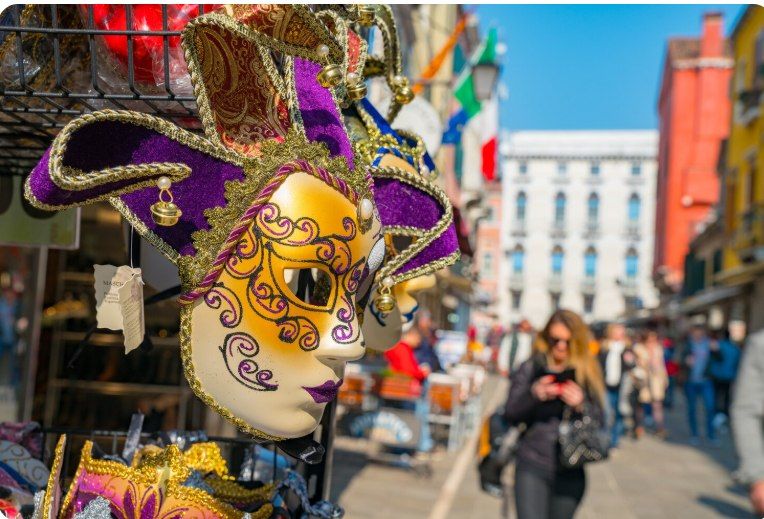
What is the Fallas Festival in Valencia and Why Everyone Should See It
The Spanish city of Valencia has always been famous for its celebrations and festivities. Throughout the year, numerous holidays are celebrated here, but after Christmas, the winter mood gives way to spring awakening on the eve of the vernal equinox. It is at this time, from March 15 to 19, that the most famous festival of Valencia takes place — Las Fallas (Fallas) — a grandiose festival dedicated to spring, fire, and fertility. In 2016, UNESCO included Las Fallas in the Representative List of the Intangible Cultural Heritage of Humanity, officially confirming its unique value. This is not just a local celebration, but an event for which up to one and a half million tourists from all over the world flock to the city to witness a unique synthesis of satire, art, and pyrotechnics. The main action is the burning of huge dolls made of wood, cardboard, and papier-mâché, called Fallas.
At one time, the church called this pagan and did not want to accept it, but eventually a compromise was reached with the residents, and the festival was timed to coincide with the church holiday — the day of San José (Saint Joseph), the patron saint of carpenters. This connection is not accidental and goes back centuries. According to the most common version, cited by the festival chronicler Soler Godez, the first mention of Las Fallas dates back to 1740. It all started with the community of carpenters: on the eve of their saint's day, they cleaned their workshops and burned all the trimmings and shavings accumulated over the winter around the "parot" — a tall pole with an oil lamp that illuminated workplaces.
The burning of the parot symbolized farewell to winter, as the days became longer in spring and the lamp was no longer needed. Later, some carpenter came up with the idea of "dressing" the pole in old clothes, turning it into a scarecrow. Then special stages began to be prepared for the burning, and the figures evolved from simple effigies into colorful satirical dolls that mocked specific characters or pointed out problems in the neighborhood. Fallas or Falles in the medieval Valencian language meant torch (from the Latin facula), which was attached to towers. It is correctly pronounced "fayas", but in the Russian-speaking environment the name "falyas" has taken root.
In 1934, an important tradition appeared — the "ninot indultat" (the "pardoned doll"). Now, out of thousands of figures, one is saved from the fire and placed in the Museo Fallero to be preserved for history. Since 2019, there have been technological changes in the production of figures: polystyrene foam is gradually being replaced by environmentally friendly pressed rice straw. Today, each composition consists of a central figure, the largest of which can exceed 40 meters in height, and many small dolls — ninots. In total, 385 adult and 385 children's figures are installed in Valencia every year.
The residents of the Valencian Community create these doll compositions, which convey the atmosphere of social and political life, mocking human vices and current issues of the city. The Fallas are always different and never repeat — professional teams of artists, sculptors, and carpenters work on their creation all year round. In 1954, the design of one of the Fallas was undertaken by Salvador Dali himself, which caused a huge scandal in conservative circles but attracted crowds of foreign tourists to the city. This Falla on the theme "Surrealist Bullfight" was installed in the Plaza del Ayuntamiento and became the most discussed in the history of the festival.

Срочная продажа
- 90m2
- 3
- 2
 Calpe, Spain

- 60m2
- 2
- 2
Calpe, Spain

- 150m2
- 2
- 2
Marbella, Spain

- 87m2
- 3
- 2
Estepona, Spain
- 75m2
- 2
- 3
Alicante, Spain
- 72m2
- 3
- 2
- 2
Alicante, Spain
 Lloret de Mar, Spain
- 491m2
- 4
- 5
Benidorm, Spain
Event Calendar, Key Stages, and Main Attractions of the Festival
The festival officially begins with the Crida ceremony on the last Sunday of February at the Torres de Serranos — one of the main architectural symbols of the city. At exactly 20:00, the mayor of Valencia hands over the keys to the city to the Fallera Mayor, symbolizing the start of the national celebration. But from March 1, whimsical figures begin to appear throughout the city, and trucks with cranes deliver parts of future compositions, wrapped in plastic to protect them from rain.
From March 1 to 19, every day at 14:00 sharp, the mascletà takes place in the main square — Plaza del Ayuntamiento. This is a unique pyrotechnic show where the main thing is not the visual effects, but the rhythmic sound. Thousands of high-power firecrackers explode in a given sequence, creating a "sound symphony" that makes the ground tremble. The sound intensity reaches 120 decibels. The mascletà lasts 5-7 minutes, and its cost to the city is 6,000-9,000 euros daily. The show is started by the Fallera Mayor from the balcony of the town hall with the phrase in Valencian: "Senyor pirotécnic pot començar la mascletá". To get a good spot on weekdays, you need to arrive half an hour in advance; on weekends, an hour or two.
In early March, Valencia hosts the Ninot Exhibition — all the dolls that will later become part of the street compositions. In recent years, this exhibition has been held at the Museo de las Ciencias Príncipe Felipe, located in the famous City of Arts and Sciences complex. Visitors vote for the best figure in two categories — children's and adult — and on March 14 the winner is announced, who will be saved from the fire.
The stage of installing the figures is called Plantà. This is a complex process during which individual parts are fitted together, joints are painted over, and technological holes are masked. Children's Fallas must be fully ready by March 15, adult ones by March 16, so that the next day the jury can evaluate them and award prizes for the best compositions and street decorations. Much attention is paid to illumination: houses and streets are decorated with garlands, patterned arches, and for the best design, the winning team receives a prize.
The next important stage is the Offering of Flowers to the Patron Saint of the Defenseless (La Ofrenda de Flores a la Virgen de los Desamparados). For two days, thousands of residents in traditional national costumes, embroidered with beads and pearls, bring flowers to the Plaza de la Virgen. There stands a 15-meter wooden figure of the Virgin with the Child. Her robe is entirely created from lilies, gladioli, carnations, and cyclamens — women lay out complex patterns with flowers, turning the statue into a work of art. Men at this time help carry heavy compositions and organize orchestras.
The culmination comes on March 19, the day of San José. In the evening, the Cabalgata del Fuego (Fire Parade) takes place. The procession is led by the Falleras Mayores. At 22:00, by order of the Queen of the Festival, the burning of the children's figures begins, and at midnight, it's the turn of the main Fallas. This night is called La Nit de la Crema. First, the main Falla burns in the Plaza del Ayuntamiento, and an hour later, the one recognized as the best by public vote, and it's there that the main mass of people heads. Firefighters at this time water the facades of historic buildings with water to prevent the fire from damaging the architecture. The whole city turns into a huge blazing bonfire, illuminated by thousands of sparks and fireworks. By morning, only ash remains of the magnificent figures, but the municipal services clean the city to perfection in a matter of hours.
Geography of the Festival, Logistics, Residential Areas, and Real Budgets
Valencia is the third largest city in Spain with a population of about 850,000 people. During Las Fallas, this number doubles due to one and a half million tourists. The city center, where the main events take place, includes Plaza del Ayuntamiento, Plaza de la Virgen, and the area around the Central Market (Mercado Central). Most of the Fallas are concentrated in the historic center (Ciutat Vella) and in the trendy neighborhoods of Russafa and El Carmen. These areas are considered the most expensive and convenient for tourists, but due to closed streets, you can only move around on foot. Almost all intersections are blocked by huge figures, so it's better to forget about parking a car — the police turn a blind eye to many violations these days, but it's physically impossible to find a spot.
More affordable accommodation options are in the districts of Extramurs, Campanar, Benimaclet, or in the suburbs along the metro lines. The Valencia metro operates even on holidays, allowing you to get to the center in 15-20 minutes. Rental prices during Las Fallas skyrocket to July-August levels, or even higher. You need to take care of an apartment well in advance — 3-4 months ahead. The cost of a 3-star hotel room in the center can reach 200-300 euros per night with a standard price of 70-90 euros. Apartments in the center on Airbnb during these dates are booked from 150 euros for a studio.
An alternative accommodation option is hostels or guesthouses 2-3 metro zones from the center. To watch the mascletà, you can rent a balcony in buildings on the Plaza del Ayuntamiento — this is a popular service. A couple of hours on such a balcony will cost from 30 to 150 euros per person, depending on the floor, proximity to the center, and the size of the group (usually 20-30 people). This is expensive but guarantees an excellent view and avoids standing in the crowd two hours in advance.
You can get to Valencia in different ways. Manises Airport is just 8 km from the city center, with metro (lines 3 and 5) and buses from there. From Madrid, it's convenient to take the AVE train — the journey takes only 1 hour 40 minutes. From Barcelona, the high-speed train takes about 3 hours. Buses are a more budget-friendly but longer option. The local currency is the euro, ATMs are on every corner, but during peak tourist flows they may run empty, so it's better to withdraw cash in advance.
Regarding food, the main gastronomic symbol of the holiday is buñuelos (donuts) with chocolate filling. They are cooked right on the streets and sold around the clock in special stalls. A portion costs 3-5 euros. Paella is also abundant, but in the center prices will be above average (15-25 euros per serving). Budget-conscious tourists prefer to eat in bars away from the main squares, for example, in the Universidad area or in Russafa, where prices remain reasonable.
In 2025 and 2026, the festival will follow the traditional schedule: preliminary events from March 1, official days from March 15 to 19. The main locations for tourists to visit are: Plaza del Ayuntamiento (where the main Falla burns and the mascletà takes place), Calle Colón (best illumination and light arches), the City of Arts and Sciences (Ninot Exhibition), and the Museo Fallero, where saved dolls from past years are kept. As for souvenirs, tourists take home miniature ninot figures, local ceramics from Manises, and, of course, photos against the backdrop of the blazing giants.