
Houses in Calpe
Buying a house in Calpe in 2026 is possible from €178,000 for a townhouse in the Canuta area — and this is not the most expensive part of the market, but the most affordable. Calpe is located in the province of Alicante on the northern Costa Blanca, 70 km from Alicante-Elche airport. Houses and villas here are on average cheaper than apartments: €3,150 per m² compared to €3,884 for apartments (Idealista data, April 2026). The range is wide: from townhouses in Canuta and Manzanera-Tosal to villas in Maryvilla from €399,000 and premium properties from €499,000. Below is a table by district, and in the text — about illegal swimming pools, rural land (suelo rústico) and other risks that do not exist when buying an apartment.
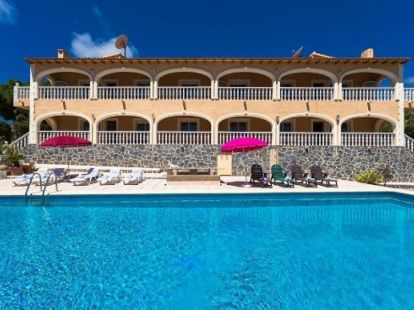
- 800m2
- 12
- 9
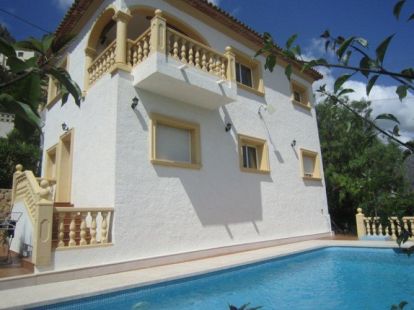
- 200m2
- 4
- 3
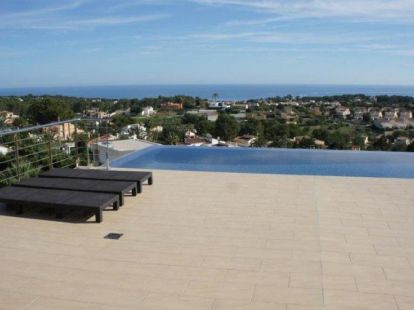
- 395m2
- 4
- 3
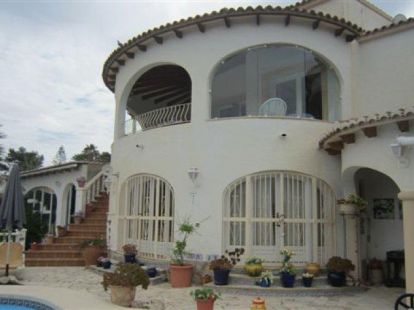
- 340m2
- 4
- 1
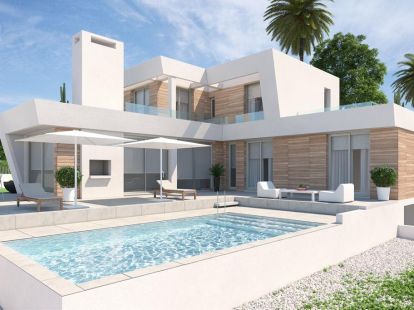
- 325m2
- 4
- 4
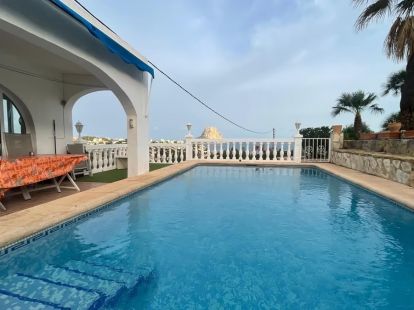
- 142m2
- 4
- 2
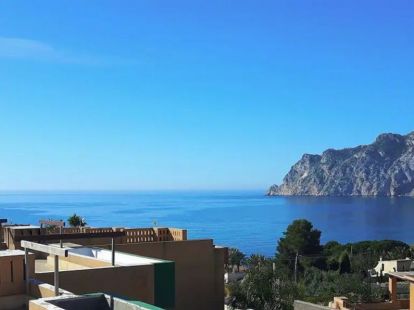
- 185m2
- 4
- 3
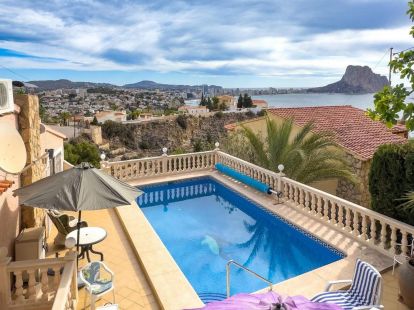
- 193m2
- 3
- 2
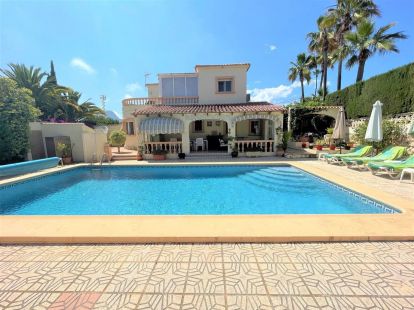
- 313m2
- 4
- 4
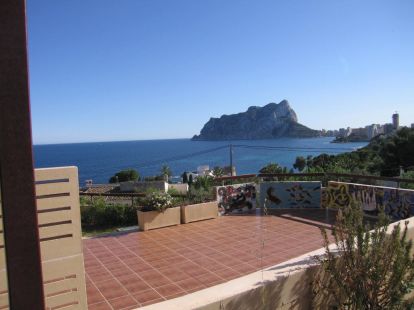
- 200m2
- 3
- 3
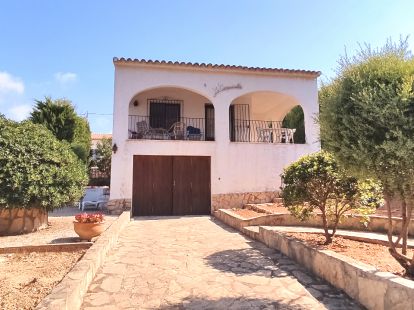
- 141m2
- 2
- 1
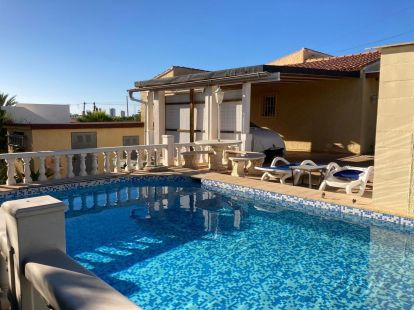
- 135m2
- 2
- 2
- 160m2
- 3
- 2
- 102m2
- 3
- 2
| District | Price from | Feature | Who it suits |
|---|---|---|---|
| Canuta | €178,000 | Close to the centre and the port, at the foot of the Sierra de Toix | Budget buyers who value proximity to infrastructure |
| Manzanera-Tosal | €190,000 | Area with Ricardo Bofill architecture (Muralla Roja), secluded coves | Connoisseurs of unusual architecture and peace and quiet |
| La Caleta | €195,000 | Coastal area, villas with sea views | Those who value a sea view from a house rather than an apartment |
| Oltamar | €340,000 | Next to a nature reserve, further from the centre | Lovers of peace and nature who are willing to drive to the centre |
| Maryvilla | €399,000 | Developed residential area, sea views, by the Sierra de Toix | Families who need both infrastructure and a sea view |
| Villas across the city in general | €499,000 | Premium segment: separate plot, pool, turnkey house | Investors and premium-segment buyers |
House, villa or townhouse — what's the difference
In property listings in Calpe, the terms are mixed up, but the practical difference is real. Chalet independiente: a detached house on its own plot, usually with a pool. Chalet adosado, or townhouse, shares one or two walls with neighbours and costs significantly less for the same floor area. Bungalow: a smaller single-storey house, often in gated complexes with a communal pool instead of a private one. Villa is not a strict legal term. It is a marketing name for a larger and more expensive house, usually with a plot of at least 400 m² and its own pool.
In the cadastre and the property register, these marketing names do not exist at all — only "vivienda unifamiliar aislada" (detached house), "unifamiliar adosada" (townhouse) or "unifamiliar pareada" (semi-detached duplex) appear. It is this entry, not the word "villa" in the listing, that determines what extensions and modifications are legally permitted on the plot.
In brief: if the listing does not state the plot area separately from the house area, it is better to clarify this before viewing. Sometimes an ordinary townhouse with a terrace is marketed as a "villa".
How much does a house cost in Calpe in 2026
According to Idealista's estimate for April 2026, the overall figure for the city is €3,519 per m², a 5.6% increase year-on-year. Houses remain cheaper than apartments per square metre: the difference is explained by the fact that a house on the outskirts with land is calculated together with the less valuable part of the plot, not just the living space by the sea, as is the case with a compact apartment in a prestigious area.
The difference between the most affordable and the most expensive segment of the house market is more than 2.5 times (compare the rows in the table above). This means that "a house in Calpe" is too broad a formulation for a budget: it is important to narrow the search down to a specific district straight away, rather than looking at the entire market at once.
An unlegalised pool — a risk that does not exist with an apartment
A house with a plot in Calpe almost always has a pool, and not every one of them is legal. Municipalities in the Valencian Community use aerial photography to find illegal structures, including pools built without permission. The fine ranges from €500 to €3,000. In some cases, the penalty is calculated as a percentage of the cost of the works themselves: from 50% to 300%.
What to check: retroactive legalisation is possible and will cost €350–3,000. It requires a technical project from an architect or technician and a certificate of completion. Before buying, it is worth asking the seller for a document specifically proving the pool's legalisation — separate from the documents for the house itself. They are not the same paper.
A house on suelo rústico: what to check before buying
In the Valencian Community, there are around 350,000 homes built on suelo rústico: rural land where construction is either prohibited or heavily restricted. This covers approximately 6,141 hectares across the region. Calpe is no exception: some houses in urbanisations away from the centre are formally on such land.
For houses built before 1975, a simplified regime applies: they are treated as legal provided the use has not changed. For later constructions, legalisation is possible through the territorial impact minimisation procedure (PEMIT). However, this does not permit any expansion of the floor area — it only regularises what has already been built.
Real case: a buyer found a house with an 800 m² plot and planned to add a veranda. After checking, it turned out the plot was suelo rústico. Any expansion of the built area is prohibited by law, even a demountable structure would have required separate approval from the Conselleria for urban planning.
Cédula de habitabilidad — what is rarely checked for houses in Calpe
For older houses, especially self-built ones from the 1980s–2000s, the notary may require a valid cédula de habitabilidad or a second occupation licence (licencia de segunda ocupación). This is a document certifying that the house is fit for habitation under current regulations. Without it, the bank may refuse a mortgage, and selling the house legally becomes more difficult.
Obtaining the document requires an architect to confirm that there are no illegal renovations. If a room was added or a terrace extended without permission over the years, it is at this stage — rather than at the notary stage — that the discrepancy emerges.
When a listing alone is not enough
Buying a house with a plot adds checks that do not exist for an apartment. The notary will require not only the nota simple for the house itself, but also a separate cadastral certificate for the plot: sometimes the cadastral boundaries do not match the actual fence line. It is also worth checking the connection status for electricity and water supply: houses on suelo rústico without legalisation sometimes have temporary or unauthorised connections instead of an official contract with the supplier, and after purchase this will have to be regularised separately in the new owner's name. Spanish law prohibits non-residents from cash payments exceeding €10,000, and for a house with a plot this rule applies just as it does for an apartment.
Important: before paying a deposit, order a separate check on the suelo rústico status and the legalisation of structures. A house with an illegal pool or unauthorised extension reduces its real value more than it appears from the photos in the listing.
Mortgage calculator
Questions from property buyers
Yes, according to Idealista's estimate for April 2026, houses and villas in Calpe cost on average €3,150 per m², while apartments cost €3,884 per m². This contradicts the common expectation that a detached house with a plot should be more expensive: the difference in price per square metre is explained by the fact that the house area is calculated together with the less valuable part of the plot and the distance from the sea.
This is stated in the nota simple and in the cadastral certificate for the plot — the land classification (urbano or rústico) can be seen there. If the house is older than 1975 and the use has not changed, it is automatically treated as legal. For later constructions on rural land, the legalisation status must be checked separately with the seller, rather than relying solely on the appearance of the house.
Responsibility for legalisation passes to the new owner together with the house. The municipal fine ranges from €500 to €3,000, and retroactive legalisation itself will cost €350–3,000 for the technical project and the certificate of completion. It is worth asking the seller for the pool legalisation document before signing, not after.
It is mandatory exactly when there is a change of ownership, if more than ten years have passed since the first occupation licence was issued — which means almost always when buying a house older than 15 years. The cost is usually €250–600: a municipal fee of €200–300 plus the technician's work at €100–300. Without a valid document, the bank has the right to refuse a mortgage, and the seller will not be able to transfer the water and electricity bills into the new owner's name.
Yes, the bank's independent appraiser calculates the value of the land and the value of the buildings separately, and the final valuation of the property is the sum of the two figures. If some structures on the plot are not legalised (for example, a pool or an extension), the bank may not include them in the valuation at all — this reduces the amount of the approved loan.
Our offices in Calpe
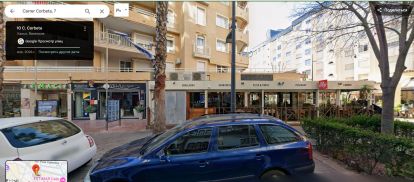
Our offices in Calpe
