
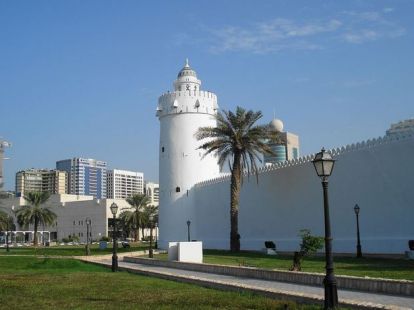
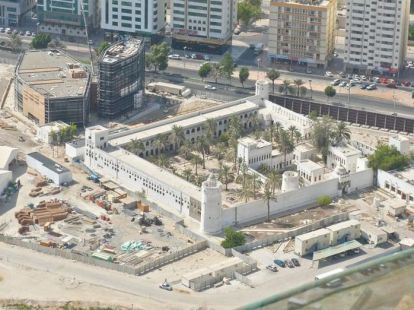
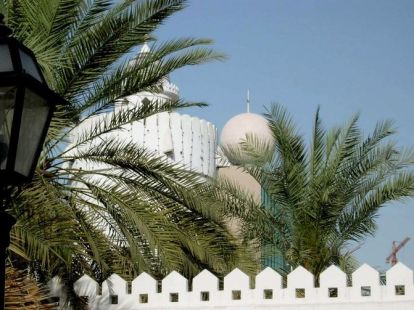
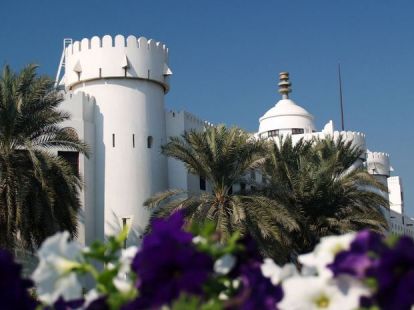
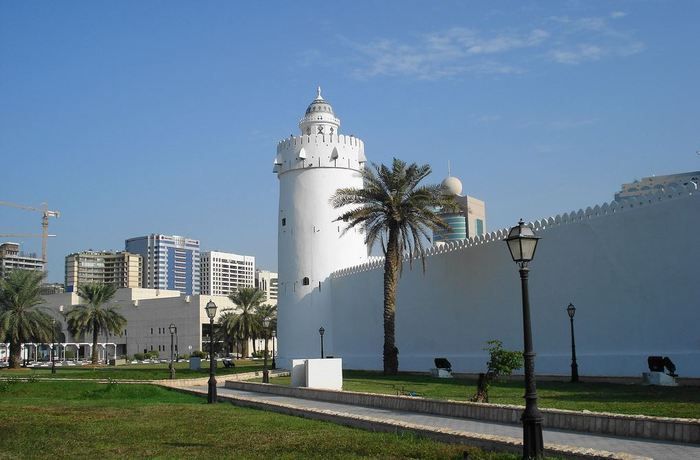
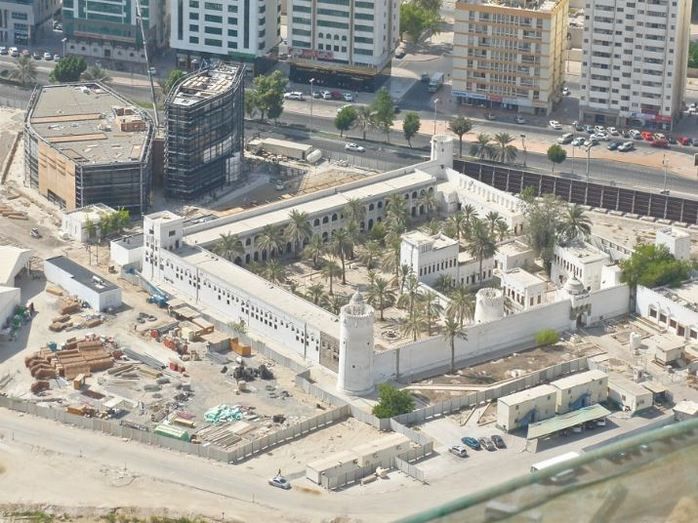
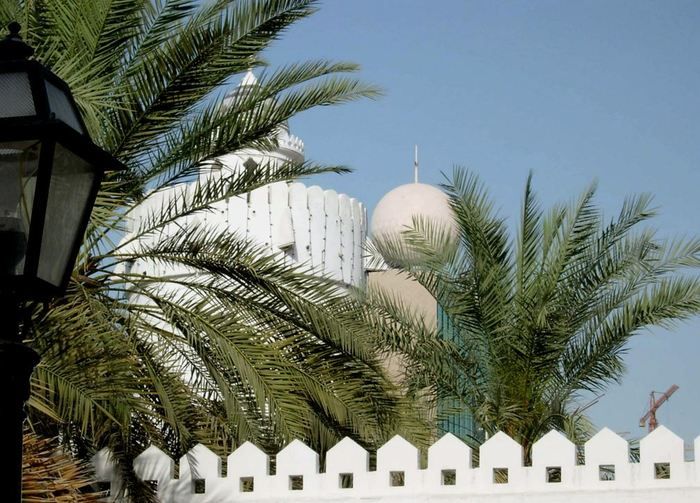
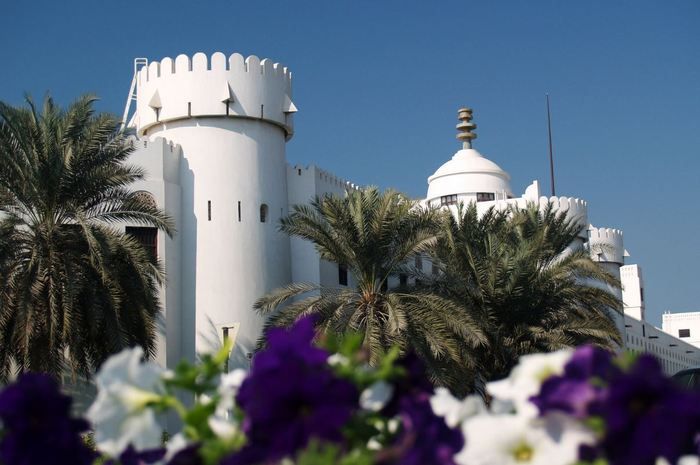
Qasr Al Hosn Fortress (White Fort) – the oldest stone building in Abu Dhabi and the symbolic birthplace of the emirate, located in the city center at the intersection of 2nd and Hamdan streets. Built in 1761 as a watchtower to protect a freshwater source, it became the residence of the ruling Al Nahyan family and the center of government of the emirate until 1966. Today it is a cultural complex with a museum, library and research center, where tourists and residents come to touch the history of the United Arab Emirates and see the place from which modern Abu Dhabi began.
History of Construction
Construction of the fort began in 1761 by order of Sheikh Diyab bin Isa of the Bani Yas tribe, when gazelle hunters discovered a freshwater spring on the island. Originally it was a round watchtower made of coral stone and shell rock, which reflected sunlight due to crushed sea shells added to the mortar – hence the name "White Fort". In 1793, Sheikh Shakhbut bin Diyab turned the tower into a full-fledged fortress, which served as the residence of the rulers and the center of power for more than 170 years. In 1939-1945, the Outer Palace was built with revenues from the first oil concession, turning the complex into a royal residence with two entrances – northern for men and southern for women. In 1968, Sheikh Zayed bin Sultan Al Nahyan turned the fort into a research and documentation center. In 2018, after an 11-year restoration, Qasr Al Hosn opened as a museum.
Practical Information
In 2026, Qasr Al Hosn is open daily: Saturday-Thursday from 9:00 to 20:00, Friday – from 14:00 to 20:00. Admission is free. Visitors can walk along the fortress walls, climb the observation tower and explore the exhibitions in the Inner Fort and Outer Palace. The site houses a library, historical document archive and research center. Free Wi-Fi and underground parking are available. Every year, a traditional crafts festival is held here, where you can see Al Sadu weaving, coffee cup making and other ancient arts inscribed on the UNESCO list. The territory has cafes and restaurants, as well as a prayer room.
Frequently Asked Questions
Why is Qasr Al Hosn called the White Fort?
Crushed sea shells were added to the mortar, which reflected sunlight, making the walls shimmer. In the 1950s, the fort was whitewashed with lime mortar, which cemented the name.
What makes this fort unique compared to others in the UAE?
This is the only surviving 19th-century fortified structure in Abu Dhabi and the only UAE fort built of coral stone and shell rock using traditional technologies. It remained the center of power until 1966, unlike other forts that performed only military functions.
Can visitors go inside the building?
Visitors are not allowed inside the main fortress, as it houses a library and research center. However, the observation tower, courtyard, Outer Palace exhibitions and the museum are open to the public, featuring the history of the ruling family and archaeological finds from excavations.