
Join us on a journey through centuries of art, culture, and architecture as we explore the historic core of Valencia, one of Spain’s most captivating cities. This panoramic walking tour offers a blend of iconic landmarks, local traditions, and hidden gems that together tell the story of a city shaped by Romans, Moors, and Christian monarchs.
We begin our adventure at the imposing Serranos Gate, one of the best-preserved medieval gateways in Spain. Built in the 14th century as part of the old city wall, these twin towers once served as both a defensive structure and a ceremonial entrance. In 1931, they were officially declared a Spanish National Heritage Site. Climb to the top for a stunning panoramic view of the Turia Gardens and old town rooftops — a perfect introduction to the city.
Just a short walk away is the Benicarló Palace, a 15th-century noble residence turned political epicenter. Today, it houses the Valencian Parliament, but its elegant Gothic-Renaissance façade still whispers tales of aristocratic power and intrigue.
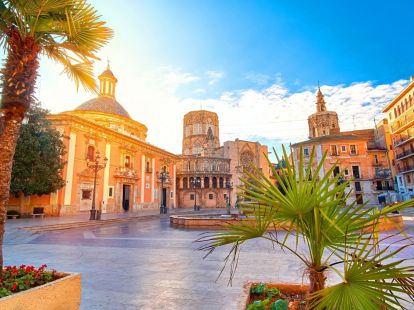
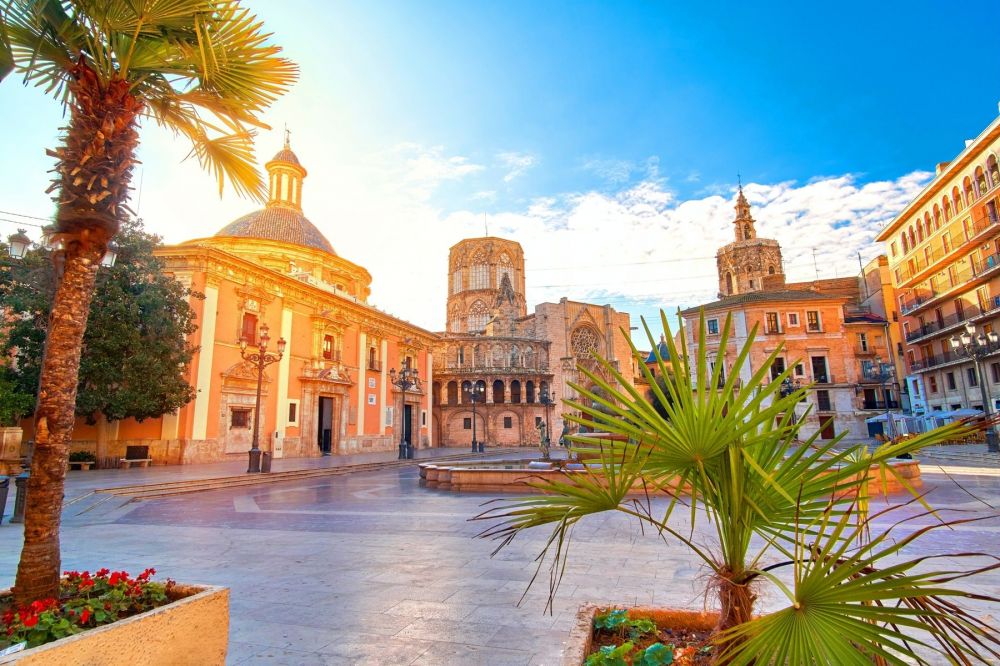
From there, we arrive at Plaza de la Virgen, the beating heart old town. This charming square is flanked by three architectural treasures: the Royal Basilica of the Virgin of the Forsaken (Basílica de la Virgen de los Desamparados), the Cathedral, and the Palacio de la Generalidad. Inside the basilica, you'll find the revered image of the city’s patron saint — a statue that locals carry in procession during the lively May festival.
Next, we explore the awe-inspiring Cathedral, a unique blend of Romanesque, Gothic, and Baroque styles. Built on the site of a former mosque, it houses the Chapel of the Holy Grail, where one of the most contested relics in Christian history — the supposed Holy Chalice used at the Last Supper — is kept. We’ll also visit the Borgia Chapel, linked to the powerful Borgia family, and the Cathedral Museum, where centuries-old manuscripts, artworks, and religious relics are preserved.
Afterwards, we’ll pause at the charming Santa Catalina square, home to a quaint orchard and a beloved local treat — horchata. This refreshing drink, made from chufa (tiger nuts), is specialty with Moorish roots. Sipping it beneath the shade of orange trees is an experience in itself.
Next, we’ll visit the Church of Saint Catalina, an often-overlooked gem whose construction began in 1245. Its baroque bell tower, added in the 17th century, has become a symbol of the city skyline.
We continue our walk to the magnificent Lonja de la Seda (Silk Exchange), an architectural masterpiece of the late Gothic period. Recognized as a UNESCO World Heritage Site in 1996, the building stands as a testament to Golden Age — a time when the city was a powerful Mediterranean trade hub. Marvel at the twisted columns of the main trading hall and the peaceful courtyard of orange trees.
Our tour concludes at the lively Plaza del Ayuntamiento — central square and a modern contrast to the medieval heart we’ve explored. Surrounded by grand buildings, fountains, and open-air cafés, it’s the perfect place to relax, reflect, and enjoy the dynamic atmosphere of this ever-evolving city.