The Bank of Israel keeps the rate unchanged and freezes mortgages. The housing market is on hold — and this is a rare opportunity for patient buyers.
On February 28, 2026, Israel and the United States launched a joint military operation against Iran, codenamed "The Lion’s Roar." That same day, the Minister of Defense declared a "special situation on the home front" across the entire country. The real estate market, already in a cooling phase, received a new external stress factor — but instead of panic, it responded with a pause.
Within days, the country’s largest banks announced an emergency relief package: mortgage holders whose property was damaged by rocket attacks or who were forced to evacuate their homes by order of the Home Front Command were granted a three-month payment deferral with no interest and no penalties. The deadline for reporting overdue payments to credit bureaus was simultaneously extended from 30 to 60 days — to prevent the military crisis from turning into a credit history crisis for thousands of families.
The Bank of Israel kept the base interest rate unchanged at 4% over two consecutive meetings. The first rate cut — from 4.25% to 4% — had taken place in January 2026, the first in a year and a half. Since then, the regulator has paused, explicitly citing "high geopolitical uncertainty" as the reason for refraining from further moves. The GDP growth forecast for 2026 has already been revised twice: the Ministry of Finance lowered it from 5.2% to a range of 3.3–3.8%, depending on the duration of hostilities.
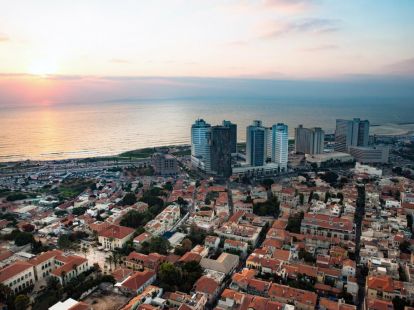
On the housing market, this has translated into prices remaining virtually unchanged in nominal terms in the first half of 2026 — analysts estimate the change around zero in real terms and roughly 2% in nominal terms. The median price per square meter nationwide stands near 22,000 shekels; in Tel Aviv, it is significantly higher — ranging from 31,000 shekels in peripheral neighborhoods to 89,000 in Neve Tzedek. For comparison, just a few years ago, Tel Aviv was appreciating 10–15% annually.
For foreign buyers, the situation has specific practical consequences. First, banks have maintained existing mortgage lending standards: stress tests, LTV, and debt-to-income ratios have not been tightened — the Bank of Israel consciously avoided adding pressure to the market. Second, developers are sitting on record volumes of unsold housing after a dismal 2025, when new home sales dropped by nearly 27% — and are now actively seeking buyers. Third, the current conditions putting pressure on distressed sales create negotiating positions unseen in the Israeli market for several years. Properties are selling on average for about 4% below the original asking price — an unusually high discount for a market accustomed to 1–2% haggling ranges.
An infrastructure factor unrelated to the war also deserves attention: the first segment of Jerusalem’s Green Line light rail is expected to open in 2026, while construction of Tel Aviv’s three subway lines continues on schedule. Analysts name areas along the planned routes — Givatayim, Ramat Gan, Bat Yam — as the most likely beneficiaries of the next growth cycle, which most forecast for 2027, provided security stabilizes.
Real estate in Israel — Tel Aviv, Jerusalem, the coast: discount-house.com/israel
More articles
Properties in Israel
Popular properties in Israel