
Сommercial properties in Miami
Commercial real estate in Miami — business properties: offices, street retail, warehouses, shops, restaurants, hotels, and income-producing buildings. Sold with existing tenants and leases. The meter costs from $2,200 in the warehouse segment to $4,760 in retail. Offices are taken in Brickell and Downtown, retail — on Miami Beach and in Wynwood, warehouses — in Hialeah, Medley, and Airport West. Since October 2025, the tax on rent has been abolished: the entire amount stays with the owner. Returns are 4.8–6.5% per annum; properties in the catalog — from $7,999,000.



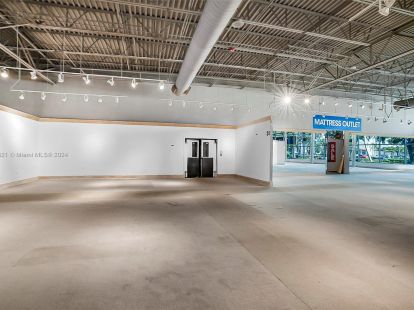
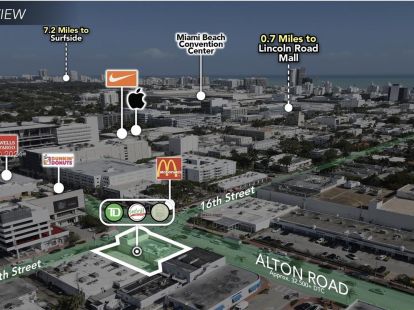
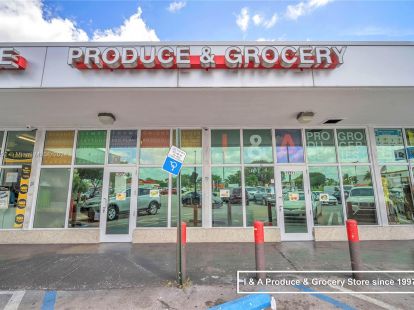

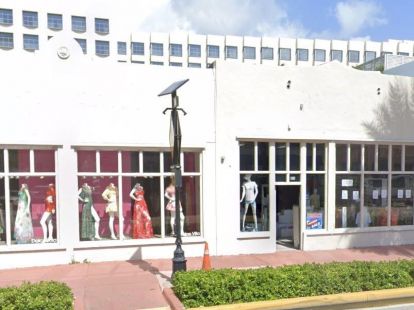
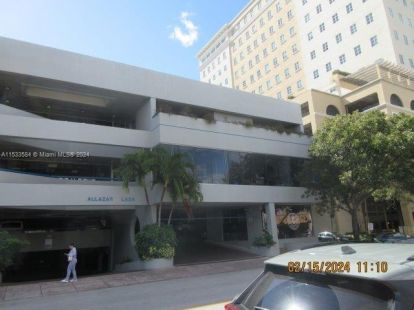
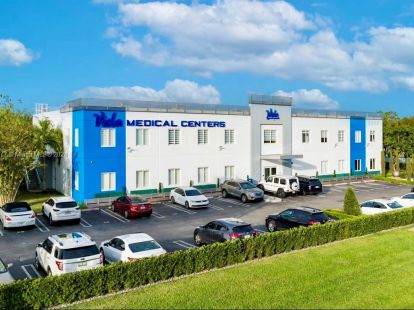
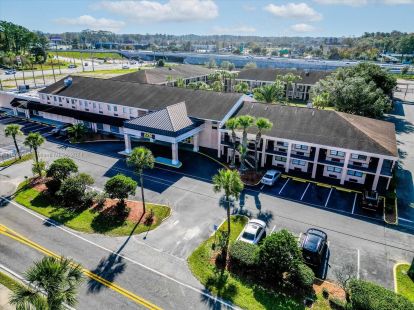
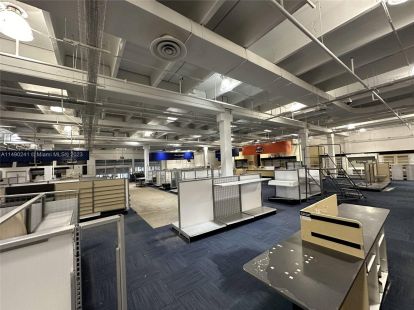
In the second column — asking rental rates by area: annual, per square meter. It is from these that the property price is calculated, because commercial real estate is bought by income, not by area. The return in the third column is the capitalization rate, that is, net operating income to price: it already takes into account expenses and vacancy, and it is correct to compare types with each other only by it.
| Property Type | Rental Rate by Area, $ per m² per year | Vacancy, Return, and Who It Suits |
|---|---|---|
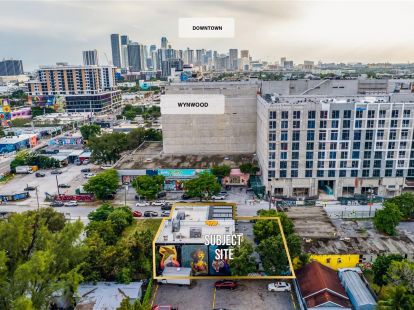
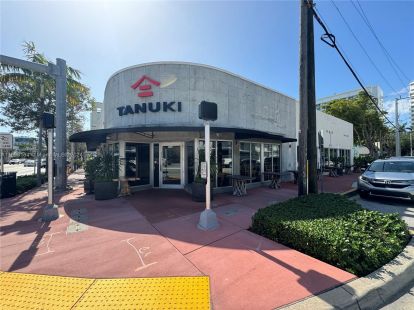
| Street Retailretail premises on the front line | Miami Beach — 1,076 Brickell — 958 Wynwood and Design District — 753 Coral Gables — 614 county average — 527 on the luxury line of the Design District, rates reach 2,690–5,380: there they pay for proximity to brands, not for meters | Vacancy 3.2% — the most scarce type. Return 5.8%, $277M in transactions for the quarter. Who: an investor who does not want vacancy. There are almost no vacant premises, but the purchase meter here is more expensive than all other types, and the county average rate is lower than any of the named areas — that is, the bulk of the market is much cheaper than the showcase addresses. |
| Officeclass A rates, full service | Brickell — 861–1,184 Coconut Grove — 646–861 Downtown — 592–807 Miami Beach — 538–807 Coral Gables and Wynwood — 538–753 Doral and Airport West — about 300 trophy towers in Brickell start at 1,290 per meter and above; this is a separate market of several addresses | Vacancy 10.9% — the worst among types, but over the quarter it shrank, and absorption is positive: 97K sq ft. Who: someone taking a property with leases of five years or longer. An empty office takes a long time to lease; buying it for a future tenant is speculation. The fourfold difference between Brickell and Doral — that is the entire logic of choosing an area for an office. |
| Warehouse and Manufacturingtriple-net leases: the tenant bears the expenses | Airport West — 253 Airport East — 237 Medley — 211 North Miami Beach — 199 Hialeah — 174 the rate comes to the owner in full: the tenant pays tax, insurance, and maintenance | Vacancy rose from 6.7 to 8.0% over the year, absorption is negative — minus 1.3M sq ft, with another 3.9M under construction. Who: a buyer with a strong negotiating position: this is the only type where supply grows faster than demand and negotiation is serious. The lowest vacancy is in Hialeah — 5.6%, and there the rate is also the lowest: a shortage of space does not always mean expensive rent. |
| Income-Producing Residential Buildingbuildings of five apartments or more | the price is calculated from income; the area influences not through the price per meter but through the rental rate and the share of vacant apartments; it is sold by a multiplier to net income | Return of 4.8–5.0% on stabilized class A buildings — the lowest on the market, and this is the price of predictability. Who: a buyer who needs a stream of payments without dependence on a single tenant. Twenty apartments carry less risk than one shop. |
| Hotel and Turnkey Businessproperties with an existing license | the price is individual and is calculated by occupancy, average nightly rate, and the contract with the operator; bought on Miami Beach, in Coral Gables, and Downtown | Income is seasonal: winter and spring generate the main revenue, summer sags. Who: a buyer with a management team or a readiness to hand the property to an operator for a share of revenue. Check whether the accommodation license transfers with the property — it is a separate document, not part of the title. |
How to read these rates. In retail, a 5.8% return on the price per meter from the first paragraph means that a little more than half of the asking rate reaches the owner: the rest is expenses, vacancy, and the difference between what is asked in the listing and what is ultimately signed. If a seller calculates yield from the listing rate, they overstate it by roughly double. Demand a calculation from net operating income and confirmations from tenants.
Mortgage calculator
Our offices in Miami

Where to Look for Properties and Through Whom to Buy
Miami's commercial real estate market is closed: a significant portion of properties is not published and goes through brokers. Open databases — LoopNet and Crexi for free search, CoStar by subscription for analytics on transactions and rates. They are convenient for checking the rate stated by the seller against the market, but they do not provide the full set of offerings.
The broker's commission in the Miami market is about 6% and is paid by the seller out of the transaction amount, meaning the buyer's representative is free for you. Take your own: the seller's broker protects the seller's interests, and that is normal, but they will calculate the yield from the full rental rate, not from net income.
Three things on which money is most often lost. First — buying based on an advertised yield without verifying confirmations from tenants. Second — a warehouse without an environmental assessment. Third — a property with a single tenant and a short remaining lease term: when the term expires, the yield is gone and liquidity falls by half. Lease terms are the first thing looked at when evaluating commercial real estate in Miami, and only then its area and address.
What Is Checked in Commercial Real Estate Before Signing
- Phase One Environmental Assessment — $2–5K. Mandatory for warehouses, auto repair shops, dry cleaners, and any sites with an industrial history. Without it, the bank will not issue a loan, and on sale the contamination passes to the new owner.
- Phase Two — $5–50K. Needed if the first phase identified a risk: soil and water samples are taken. This is the main pitfall of the warehouse segment: the cost of cleanup can exceed the price of the property.
- Survey. Basic — $2–5K; full ALTA standard with all structures and easements plotted — from $5 to $15K. It shows whether part of the building stands on someone else's land.
- Tenant confirmations. Each tenant signs a document stating the lease term, rate, deposit, and absence of claims. Without them, the seller may show leases that the tenants do not acknowledge.
- Zoning and permitted use. Requested from the municipality. The tenant's current activity does not prove that it is legal.
- Tax history and title abstract. Unpaid taxes and contractors' liens transfer along with the property.
Taxes and Expenses of a Commercial Real Estate Owner
The main change of recent years — the abolition of the commercial rent tax by law HB 7031. Until October 2025, the landlord collected 2% from the tenant for the state plus a county surcharge of 1–1.5% and remitted them to the budget; now this payment does not exist at all. On a thousand-meter premises at the rate from the first paragraph, that is from $11.8K to $13.8K per year that no longer leaves the turnover. The tax remains only on parking spaces, berths, aviation hangars, and short-term housing rental, and the Department of Revenue has the right to audit periods before the abolition within three years.
The remaining payments stay. Property tax — 1.76% of the appraised value per year: on a property from our catalog, that is about $141K. Commercial building insurance in Florida is more expensive than residential and depends on the flood zone and year built. If the property is sold by a non-resident, 15% of the transaction amount is withheld at settlement against capital gains tax; the buyer, as the withholding agent, is responsible for this before the tax authority, so the clause is closed through a title company, not by agreement of the parties.
Stages of the Transaction: From Letter of Intent to Title
- Letter of intent. A non-binding document recording the price, the inspection period, and the composition of documents to be transferred. It is the starting point so as not to spend money on lawyers before the terms are agreed.
- Contract and deposit. The deposit is usually 5% of the price — on an eight-million property, that is about $400K. The money goes to an escrow account at a title company or attorney, is not passed to the seller, and during the inspection period is returned to the buyer without explanation.
- Property inspection — 30–60 days. The main stage: while it is ongoing, one can exit the deal. What exactly is checked — below.
- Financing — 45–60 days. The equity contribution on a commercial loan is 20–30%, the rate is usually floating, and the bank requires a personal guarantee. Start it in parallel with the inspection, otherwise the timelines will stack sequentially.
- Second deposit. After the inspection ends, an additional sum is paid, and from that moment it is non-refundable. The transition date is specified in the contract — this is the point after which refusal costs money.
- Closing. When paying with own funds — 30–45 days from the contract; with a loan, 60–90; on complex properties, longer than four months. Closing costs total 2–5% of the price.
- Recording. The transfer fee — $0.70 per $100 of price; by Miami custom the seller pays it, as well as the owner's title insurance. The buyer pays the mortgage tax of $0.20 per $100 of the loan and the lender's title insurance at a discounted rate. Attorney — from $5K to $25K per side. The buyer's presence is not required; signing is possible by power of attorney.